



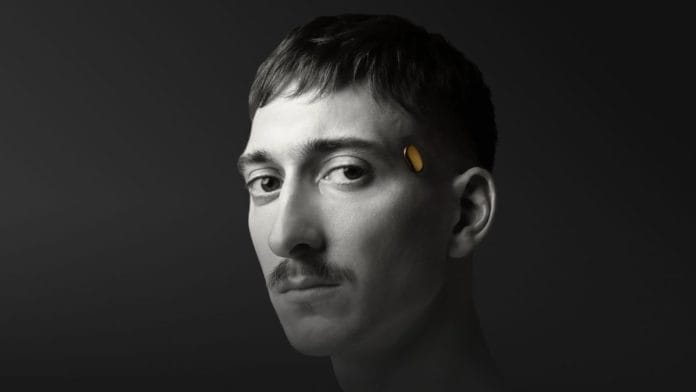

New Delhi: Temple, a wearable developed by Zomato founder Deepinder Goyal, has shown that it can track changes in the velocity of blood-flow in the brain. It can even make out the difference when blood flow increases but heart rate falls.
Goyal shared the findings on X highlighting a study titled “Concordance Between a Temple-Worn Optical Wearable and Transcranial Doppler During Exercise and Postural Transitions in Healthy Adults”.
“One study, two interventions, healthy adults only, but it’s the first step. More validations on Brain Flow, as well as on Entropy with different modalities are underway across the globe. We will keep sharing them as they trickle in,” wrote Goyal.
Temple is a multi-wavelength optical sensor worn on the side of the forehead. It can capture changes in haemodynamics — the physical laws and forces that govern blood flow through the circulatory system.
So far, brain blood-flow patterns and other physiological signals are monitored through the wrist. Temple was created so that these signals could be read closer to the brain. Unlike a person’s wrist, the head does not move around as much and its blood vessels could give a more accurate reading of how a person’s body responds to exercise, sleep, and stress.
To test Temple, researchers compared its results with a Transcranial Doppler (TDC) which measures blood velocity in the middle cerebral artery.
They tested 23 healthy adults between the ages of 18 and 30. The participants were made to cycle on an ergometer or lie down and get up several times.
“The result that stood out most to me: when participants lay down, their heart rate dropped, but their brain blood flow went up. Temple tracked this accurately, right alongside the Doppler. Any device that only measures heart rate would have gotten this completely wrong,” Goyal wrote on X.
However, it is important to note that Temple does not directly measure blood flow in the brain. The study was also conducted among a small sample size of young healthy people and is still in a pre-print stage where it is yet to face peer-review.
“We encourage researchers to replicate this. We’ll happily loan Temples to any qualified researcher who wants to pressure-test any of our metrics independently,” Goyal added.