





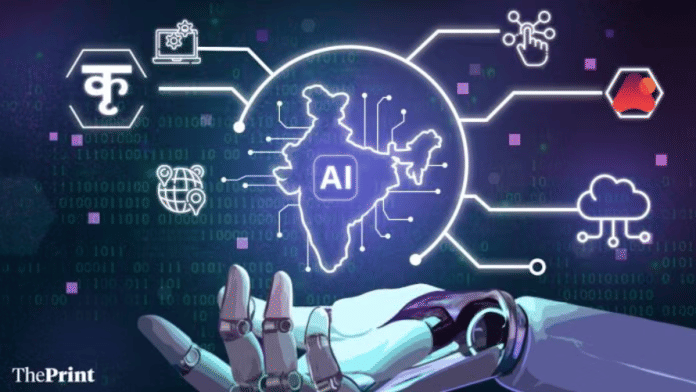

New Delhi: Warning that mid-career workers and those in declining occupations face displacement from Artificial Intelligence (AI) unless reskilling routes are built, the government think-tank NITI Aayog has recommended that employers, including public sector undertakings (PSUs), drop degree filters from job advertisements for roles where a degree is “not essential”.
The recommendations are part of the ‘Reimagining Skilling for Viksit Bharat@2047’ report prepared by the NITI Aayog’s Skill Development, Labour and Employment Division, released last week.
The report proposes a Skills-First Hiring Mandate under which National Skills Qualifications Framework (NSQF)-aligned skill levels become a prerequisite for jobs across PSUs and the private sector, job descriptions are rewritten around competencies, and candidates are selected “by skills, not degrees” through trade tests and Industrial Training Institute (ITI), apprenticeship or Recognition of Prior Learning (RPL) certificates.
It says degree filters should be removed “unless required by statute (e.g., healthcare)”, to be piloted first in select PSUs and high-volume roles such as operations, maintenance and customer service before being extended across government vendors.
The pitch is built on the report’s reading of a degree market it says is not delivering jobs. It cites the Economic Survey 2024-25 that “only 8.25 percent of graduates are employed in roles aligned to their qualifications”, records 13 percent of graduates and 20.4 percent of graduate women as unemployed, and notes that combined enrolment in Bachelor of Arts (BA), Bachelor of Science (BSc) and Bachelor of Commerce (BCom) exceeds 2 crore, with many pursuing these degrees to stay eligible for government jobs. It flags “1.86 crore applications for just 55,000 posts between November 2024 to July 2025”.
On technology, the report frames AI as both threat and instrument. It says shifts driven by AI, automation and the climate context are reshaping job requirements faster than delivery systems can adjust, and that across sectors mid-career and declining-role professionals lack structured reskilling pathways, “leaving them vulnerable to disruptions such as AI adoption”.
It adds that many “recognise the risk late or postpone action” because clear routes are missing. In his foreword, NITI Aayog vice-chairman Ashok Kumar Lahiri writes that AI, automation, the green transition and the reorganisation of supply chains are “simultaneously creating new categories of employment and rendering others obsolete”, and that India “can become the world’s talent hub, supplying human capital, both for our own growth as well as for ageing economies of the world”.
To manage those transitions, the report proposes a set of AI-enabled tools built as digital public goods. MyGuide is described as “a personalised, AI-enabled tool that supports learners with tailored pathways, decision checklists, and transition planning”.
Skill Sure would help individuals decide what to train in based on aptitude and labour-market demand; Skill Scout would help them find where, running on “BOT-powered recommendations” that give AI-driven suggestions based on goals, location and learning history. The report casts guidance as moving from a decentralised offline model to an “AI-led lifelong career companion”.
The second technology pillar is a Digital Skills Passport anchored on the Automated Permanent Academic Account Registry (APAAR) ID, holding verified credentials, skills and work experience across education, skilling and work. The report says adoption of existing platforms, including the Skill India Digital Hub and the National Career Service, “remains fragmented”, and calls for state-level Skills Digital Registries and Exchanges.
For workers who cannot step away from earnings, the report proposes a 1-3 month “Upskilling Leave” — optional, pre-planned blocks of unpaid leave for certification programmes or bootcamps, “giving them security of continued employment while they skill-up”, at no training cost to employers.
On financing, it moves the model towards paying for results. It defines Skill Impact Bonds as “a pay-for-results model in which private or philanthropic funders initially finance training delivery, and the government repays them only if predefined outcomes” are met, and proposes an Apprenticeship Impact Bond for Micro, Small and Medium Enterprises (MSMEs). It backs targeted skill vouchers routed through the National Payments Corporation of India (NPCI)’s e-RUPI, a Model Skill Loan of up to Rs 7.5 lakh at 7.9 per cent interest, and voucher redemption through e-RUPI or central bank digital currency (CBDC) wallets.
The report records that engagement from smaller firms in apprenticeships is low, with about 32,000 of some 6 crore registered MSMEs having taken on apprentices under the National Apprenticeship Promotion Scheme (NAPS), that only 8.5 percent of ITI trainees in 2018 took up apprenticeships, and that just 3 percent of women are in formal jobs.
It situates the agenda against Rs 34,000 crore allocated to skilling across Central Ministries in financial year (FY) 2025-26 and Rs 600 crore to the Ministry of Skill Development and Entrepreneurship in FY 2026-27 for the Integrated Scheme in Skilling Architecture, with state pilots in Andhra Pradesh, Odisha, Uttar Pradesh, Bihar, and Assam.
(Edited by Nardeep Singh Dahiya)