





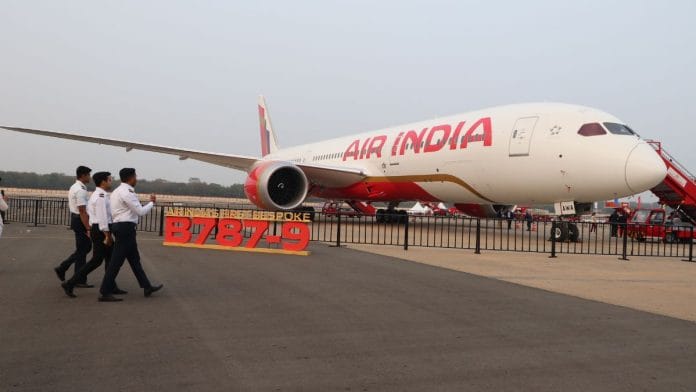



Hyderabad: The first day of Wings India 2026, which kicked off in Hyderabad on Wednesday, underscored the country’s accelerating aviation ambitions. Government and industry executives outlined the future for aviation infrastructure expansion, technological upgrades and global partnerships to meet booming passenger demand and unlock investment potential.
In a virtual address, Prime Minister Narendra Modi highlighted that India’s aviation landscape has transformed over the past decade, becoming the third-largest domestic market worldwide, driven by surging passenger traffic and expanding fleets. He added that the number of airports in the country has increased from 70 in 2014 to more than 160 in 2026.
He pointed to the success of the UDAN regional connectivity scheme, which has ferried around 1.5 crore passengers on previously unused routes. Modi projected that India could have more than 400 airports by 2047, and called on global investors to participate in advancing aircraft manufacturing, sustainable aviation fuel production and advanced air mobility technologies.
Meanwhile, addressing the event, Union Minister for Civil Aviation K Rammohan Naidu said that efforts were on to improve the aviation industry’s manufacturing ecosystem. He added that it would help India become a global exporter of aviation components and products, while also catering to the growing domestic demand.
Exponential growth
Reflecting the need to modernise operational infrastructure to handle rising flight volumes, Airports Authority of India (AAI) announced a Rs 15,000 crore investment by 2028 to upgrade air traffic control (ATC) towers, navigation systems and other critical infrastructure. AAI Chairman Vipin Kumar said that these upgrades, funded through internal accruals, will make India’s air navigation infrastructure future-ready and aligned with international standards. A crucial step to support forecast growth in air traffic.
The surge in demand is mirrored in carrier expansion plans. IndiGo’s CEO Pieter Elbers unveiled an ambitious vision for the airline to significantly boost its international network to around 40 per cent of capacity by 2030 and handle more than 200 million passengers annually through fleet expansions. He announced that the company will induct nine out of 39 Airbus A321XLR aircraft in 2026. This reflects broader industry confidence in India’s long-term passenger growth trajectory.
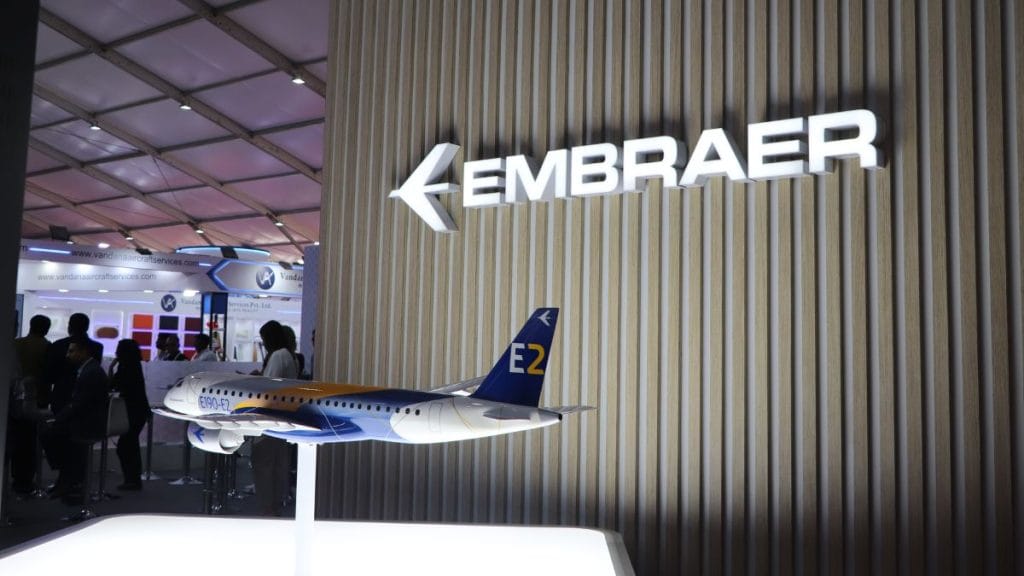
The event showcased 34 aircraft and helicopters, including a Mongolian carrier, Hunnu Air. Global companies such as AirIndia showcased its first custom-built Boeing 787-9 Dreamliner, while Embraer presented aircraft ranging from commercial airliners to helicopters. Embraer showcased its E195-E2 and E175 commercial jets, emphasising solutions for connecting India’s Tier-2 and Tier-3 cities.
Strategic manufacturing deals also made headlines. Russia’s United Aircraft Corporation (UAC) and India’s Flamingo Aerospace signed a preliminary agreement for the delivery of six Il-114-300 aircraft starting in 2028. And UAC also formalised a joint venture with Hindustan Aeronautics Limited (HAL) to facilitate licensed production of the Superjet-100 in India.
Barenya Senapati, Director (Finance) at HAL, said, “Currently, we are at a 5 per cent turnover from civil aviation. The corporate strategy is for 25 per cent of turnover to come from the civil sector.”
As global delegates and investors began engagements on Day 1, the message was clear: India’s aviation sector is poised for exponential growth, powered by policy momentum, booming passenger demand and expanding international partnerships.
(Edited by Saptak Datta)