





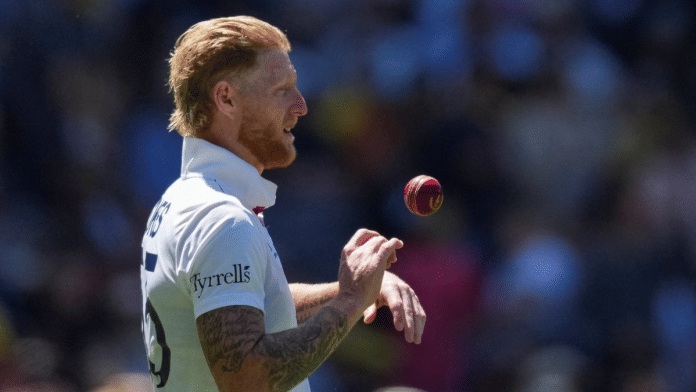



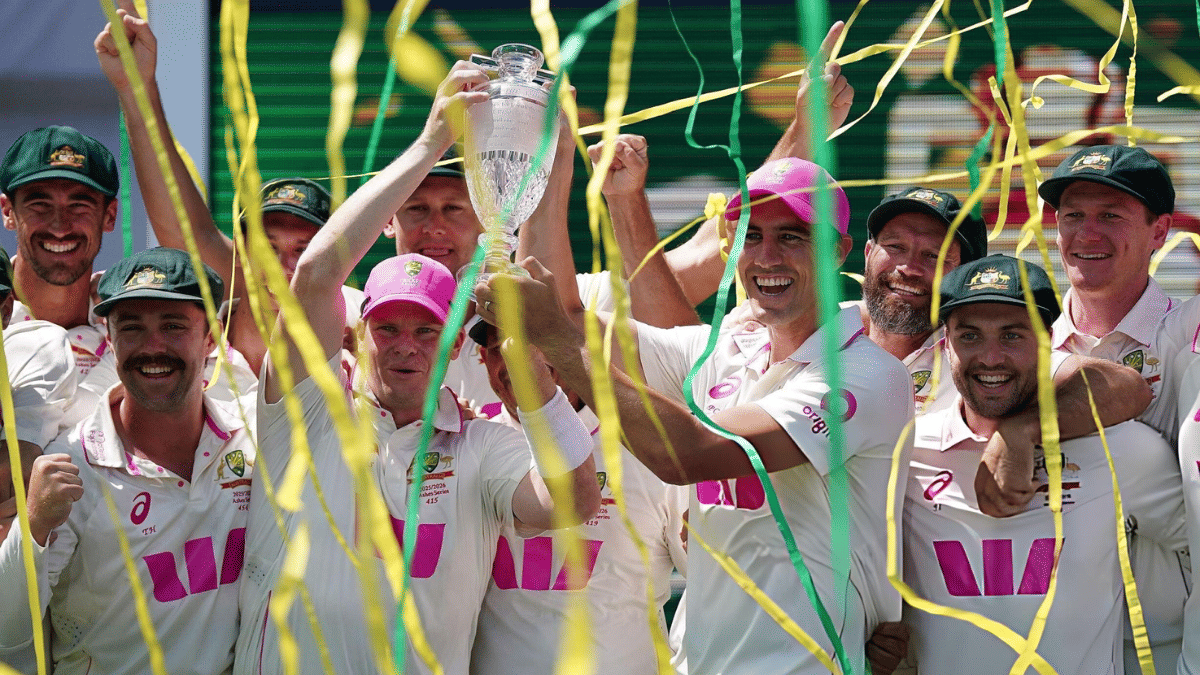
New Delhi: When Alex Carey drove that Will Jacks’ delivery past mid-off at the packed Sydney Cricket Ground Thursday afternoon, he not only completed Australia’s victory in the fifth and the final test, but also put an end to a narrative that this Ashes, England’s “best team since 2010” was up against Australia’s “worst team since 2010”.
In the end, Australia won the Ashes 4-1, but the series was decided within just 11 days of cricket, with the hosts winning the first three Tests.
The inevitable question now is what does this say about the true state of English cricket.
Before a ball was bowled, optimism flowed freely from the England camp. Australia, battling injuries and missing key players, were deemed beatable at home. Stuart Broad, former England fast bowler-turned-commentator, confidently labelled this England side the best since 2010 while simultaneously calling Australia’s current group the worst of the same period.
Reality arrived swiftly. The tourists imploded from a winning position, and lost the first Test at Perth inside two days. They never recovered from there.
They lost the second Test, and then the third, failing to mount any sustained challenge. England won the fourth Test, but Australia came on top in the fifth.
The series was gone after the first three Tests only, but Broad doubled down, saying he had no “regrets” about his assessment of Australia, instead claiming England played at only “20 percent” of their potential.
Also Read: The Ashes: The cricket’s biggest rivalry at a glance
Opportunity lost
On paper, it looked like England’s golden opportunity. Australia was without the services of their leader and main bowler Pat Cummins for four Tests, Josh Hazlewood missed the entire series, and Nathan Lyon—arguably their most reliable spinner—featured in just two matches.
If ever there was a chance for England to reclaim the urn the first time since 2015, it was this. But, England collapsed under the weight of their own mistakes.
Across the series, they committed three cardinal Test cricket mistakes: dropped catches, bowled short and wide, and batted without game awareness. Australia, by contrast, were clinical—took catches, bowled disciplined lengths, and batted with patience, maturity and clarity.
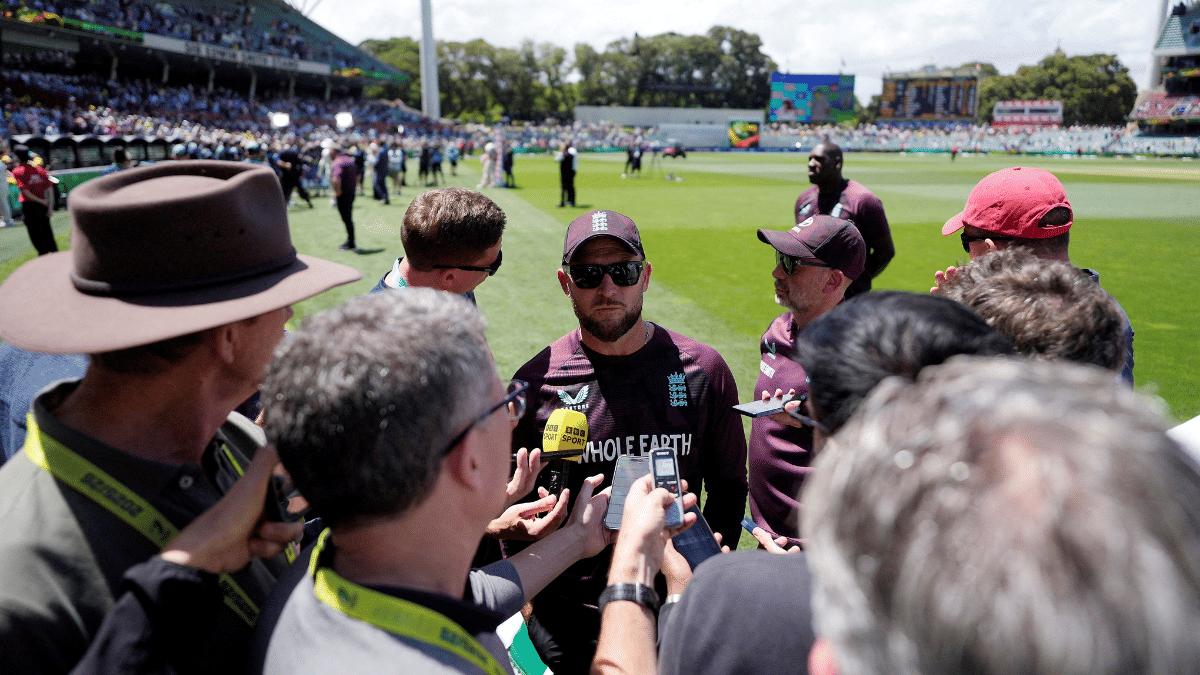
Before the start of the series, England Head coach Brendon McCullum called it “the biggest series of our lives”. Captain Ben Stokes echoed the sentiment, expressing confidence he had the best team to do the job in Australia.
Yet even a depleted Australian side prevailed 4–1. As the series ended, England found itself facing questions over everything—from the viability of Bazball to preparation and selections.
While their preparation has now become a central talking point, the selection decisions only added to the confusion.
Their number three, Ollie Pope, managed just 125 runs in six innings before being dropped in the fourth Test, replaced by an inexperienced Jacob Bethell.
Specialist spinner Shoaib Bashir who was being groomed for this tour over the last couple of years, was not picked even in a single game.
England’s much-hyped pace attack also fell apart. Mark Wood was ruled out after the first Test with a left-knee injury, while Jofra Archer lasted only three matches before a left-side strain ended his series.
On slippery slope
The old saying that “catches win matches” proved painfully accurate. England dropped 17 catches during the tour. This was not an anomaly, but a continuation of a worrying trend. According to Wisden Cricket, England have dropped 35 catches across their last 10 Test matches, including the Ashes.
Australia’s dominance was reflected in the numbers. Travis Head finished as the leading run-scorer with 629 runs, while Mitchell Starc topped the wicket charts with 31 wickets at an average below 20.
Starc also contributed significantly with the bat, scoring 156 runs in seven innings, including two fifties—just 28 runs fewer than Stokes, who managed 184 runs across 10 innings at an average under 20.
For England, Brydon Carse emerged as the leading wicket-taker with 22 wickets across all Tests, but his average of 30.32 underlined a lack of control. Josh Tongue, who played three Tests, claimed 18 wickets at an impressive average of 20.11.
Beyond that, England’s bowling returns were largely forgettable. Gus Atkinson managed only six wickets in three Tests—the same number as Pat Cummins, who played just one match.
Team on ‘self-destruct’ mode
The backlash has been swift. Several former England players have called for the removal of McCullum and Rob Key (Director of Cricket for England), accusing them of stubbornness. and an unwillingness to adapt.
Michael Vaughan told Fox Cricket that McCullum and Stokes have “created a cult around this England team….a lot of it being nonsense”. While Vaughan backed McCullum to stay, he urged him to accept mistakes, learn from them, and adapt.
Geoffrey Boycott was far less forgiving. In a scathing Telegraph column, he labelled McCullum, Key, and Stokes the “three stooges,” describing McCullum as a gambler incapable of changing his methods.
“Ego, arrogance, hubris, overtakes common sense. It has worked spectacularly at times giving us thrilling winning cricket against lesser teams but the big two of India and Australia have been good enough to wait for England to self-destruct on the same ego, arrogance and hubris,” Boycott wrote.
Across media in both countries, a consensus has emerged: England were under-prepared, reckless, and complacent.
Despite the criticism, reports suggest McCullum, Key, and Stokes are likely to retain their roles. ECB chief Richard Gould has announced a thorough review of the tour, including preparation and player behaviour.
Stokes, speaking to BBC Cricket after the series loss, admitted it was time for some “pretty honest truths”. He acknowledged that while England started well under his leadership in the first two years, it’s been a downhill for the team since then.
(Edited by Ajeet Tiwari)
Also Read: Gaali cricket: Bavuma stands tall, India’s Test ego cut to size