





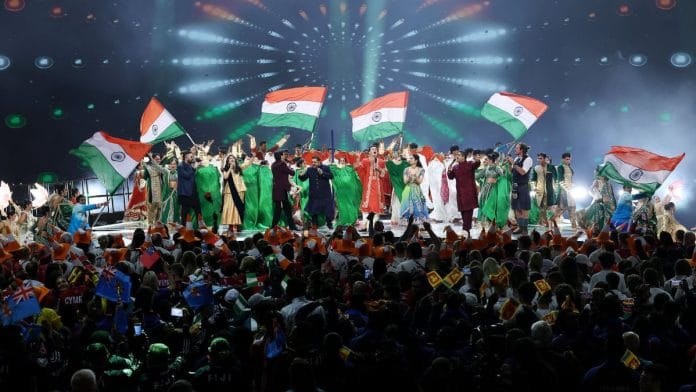


New Delhi: After India bagged 39 medals in the 2026 Commonwealth Games in Glasgow, securing fourth position, it now prepares for the 2030 edition, which is slated to take place in Ahmedabad, Gujarat. With this, India can resurrect the global standards of the Commonwealth Games, which were cut short in Scotland, while strengthening its own bid to host the 2036 Olympic Games.
Unlike Glasgow’s stripped-down 10-sport event, Ahmedabad 2030 is projected to expand to 15 to 17 sports. India will look to reintroduce its traditional stronghold sports like wrestling, badminton, hockey, and cricket to dominate the medal charts. Additionally, yoga, Mallakhambh, kho-kho and kabaddi are among the indigenous traditional sports under consideration for inclusion.
While wrestling, badminton, hockey, and cricket are popularly celebrated in other nations, yoga and kabaddi are increasingly gaining traction across the globe. Kabaddi already has professional leagues as well as international federations, and yoga has evolved from a traditional practice into a global wellness movement celebrated every year through the International Day of Yoga.
“We spoke of these sports during the meeting. Yogasana, Mallakhambh, Kho-Kho and Kabaddi were discussed. We want them as part of the Commonwealth Games in 2030. We are very much hopeful that we will see some of them played when we host the Games,” Sports Minister Mansukh Mandaviya had said.
The Amdavad 2030 Commonwealth Games—the official name of the centenary edition—serves as a critical stepping stone for India’s bid to host the 2036 Olympics. India is systematically building its sporting infrastructure, logistics, and athlete pathways to match International Olympic Committee (IOC) regulations for the subsequent 2036 Olympic Games bid.
The sports ministry is streamlining the Target Olympic Podium Scheme (TOPS) by integrating grassroots talent identification from programs like Khelo India.
“We need to focus on disciplines like aquatics, cycling and gymnastics where one can win many medals. We need to make the pool bigger. We have altogether 399 athletes under our schemes and that is not how you can win multiple medals. We are planning to increase the numbers towards higher four thousands in the next ten years,” he said.
Why the 2026 CWG format changed
The 2026 CWG format changed due to soaring financial costs and a last-minute change in host city. Victoria, Australia, withdrew from hosting because budgets ballooned from an estimated AUD 2.6 billion to more than AUD 7 billion, leaving Glasgow, Scotland, to step in as a late replacement with only a short time to prepare.
The sports lineup was cut from 19-20 to just 10 core sports to ensure affordability, with major spectator events like hockey, cricket, wrestling, badminton, and squash being removed. Additionally, organisers limited the entire event to just four existing venues used previously in 2014, bypassing the need to build a new athlete’s village or expensive new arenas.
“In July 2023 the Victorian government announced its decision to withdraw from hosting the 2026 Games. The State of Victoria has agreed to pay the Commonwealth Games parties AUS$380 million. The parties also agreed that the multi-hub regional model was more expensive to host than the traditional models,” said the Victorian government in a statement.
Also read: NEET-SS quota row—Tamil Nadu medical association challenges SC order on 151 unfilled seats
Shifting culture in global sports
The controversy surrounding Glasgow 2026 highlights a massive structural shift in global sports culture. For decades, international mega-events chased a “bigger is better” philosophy. However, that is slowly changing now, with economic realities, athlete autonomy, and changing fan habits forcing a complete overhaul of how global sports operate.
The era of cities spending tens of billions on vanity projects to host the Olympics or CWG is coming to an end. Driven by severe taxpayer backlash and skyrocketing inflation, organisers are pivoting toward sustainability.
1) Asset-light hosting: Cities now refuse to build new stadiums. Like Glasgow 2026, utilising 2014 venues, the IOC’s Olympic Agenda 2020+5 actively mandates the use of existing or temporary infrastructure.
2) Decentralised formats: Instead of forcing one city to bear the brunt, events are spreading out. The FIFA 2026 World Cup across three nations and the multi-country Euro 2028 are the new templates.
3) Regional hubs: Rather than building massive, single-use athletes’ villages, events are utilising local university dorms and hotels, among other things, to house participants.