


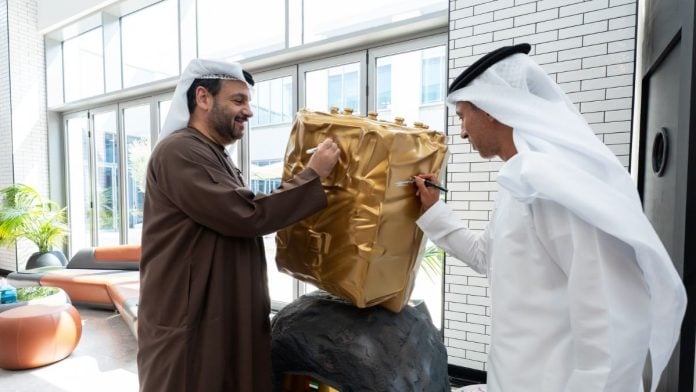
New Delhi: The United Arab Emirates has unveiled a space probe built in Abu Dhabi that will travel billions of kilometres to land on an asteroid situated between Mars and Jupiter. Scheduled to launch in 2028, the UAE Asteroid Belt mission shows that West Asia’s future ambitions lie not under their deserts, but in the skies.
Over the last decade, the Mohammed Bin Rashid Space Centre (MBRSC) in the UAE, the Saudi Space Agency, the Turkish Space Agency, and the Oman National Centre for Space, Advanced Technology and AI have all entered the global space race — from launching observational satellites to building spaceports to even announcing Mars missions.
For years, West Asia’s space ambitions were shaped largely by security imperatives, and led mainly by Israel and Iran. But now, Gulf countries are launching planetary probes, manufacturing satellites and even sending their astronauts to space in a bid to diversify oil-dependent economies, develop scientific expertise and build international prestige.
At the same time, West Asia is treating space as another frontier to navigate geopolitical relations, and balance collaborations with China and the US.
“Space cooperation gives West Asian countries another channel to diversify their international partnerships,” said Ashwin Prasad, research analyst at Takshshila Institution, a think tank based in Bengaluru. “UAE has propped itself up as the regional leader through its successful Mars mission and planned asteroid missions.”
The UAE Asteroid Belt Mission
The Emirates Mission to the Asteroid Belt will be the UAE and the Arab world’s most ambitious space endeavour yet. If successful, it would make the UAE only the fourth country to land on an asteroid, after the US, Japan and a joint project between France and Germany.
The mission, led by the UAE Space Agency, will launch the MBR Explorer spacecraft that will use gravity-assist manoeuvres around Venus, Earth and Mars before embarking on a five-billion-kilometre-long journey to the main asteroid belt. It will conduct close flybys of six asteroids before reaching 269 Justitia, the seventh and final target, where it will deploy a UAE-built probe to approach the asteroid’s surface.
Designed, built and tested entirely in the UAE by the MBRSC and other institutes, including the Technology Innovation Institute, the mission is set to launch from Japan’s Tanegashima Space Centre in March 2028. It will use a Japanese launch vehicle, following the UAE’s agreement with Mitsubishi Heavy Industries to launch their spacecraft. The earlier Emirates Mars mission too had been launched there.
“If you want to build serious technological capability, you take on a problem that forces you to push further,” said H.E. Faisal Al Bannai, Member of the UAE Supreme Space Council, in a press release dated 5 October. “The mission might still be ahead, but we have already expanded what we know how to build. That is how sovereign capability grows.”
This isn’t the first time the UAE has taken on a mission like this. In 2014, when it did not even have a functioning space agency, the country announced that it would send a probe to Mars by 2021, which was the UAE’s 50th anniversary. Within six years, the country gathered a group of top scientists — engineers and graduates of astronomy, physics and other sciences from universities such as the American University in Sharjah — with an average age of 27 and created a launch-ready probe, titled the Emirates Mars Mission (EMM). However, this wasn’t just a prestige mission for the Arab country, or a technology demonstration project — UAE became the first country to ever reach Mars on its first attempt.
The UAE’s Mars Mission
The ‘Amal’ or ‘Hope’ probe to Mars launched by the Emiratis produced the first-ever global map of the Martian atmosphere, a feat no other probe had achieved. By situating itself in a unique elliptical orbit, Hope uncovered features about Mars’ dust and water-ice clouds, discovered auroras in the planet, and captured a full geographical view of Mars. Moreover, the UAE also released its data from the mission to the global scientific community with no embargo, in a rare feat of knowledge-sharing, collaborating with NASA’s Mars Atmosphere and Volatile Evolution (MAVEN) mission in 2022.
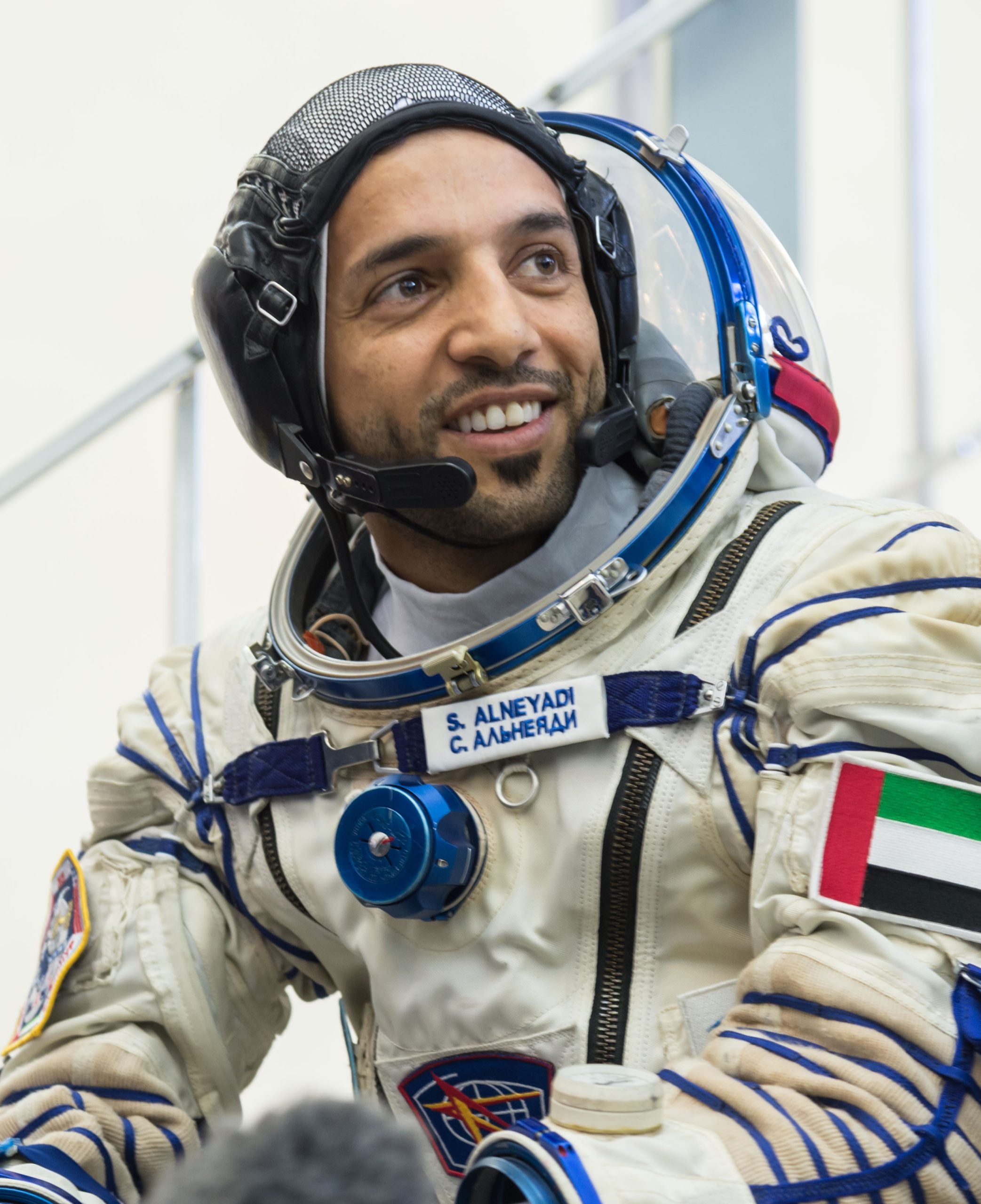
In the time that Emirati scientists were building the Hope probe, the UAE sent its indigenously developed KhalifaSat to space in 2018. In 2019, the country sent Hazza Al Mansoori to the International Space Station, making him the first Emirati in space, and the first Arab astronaut on the ISS.
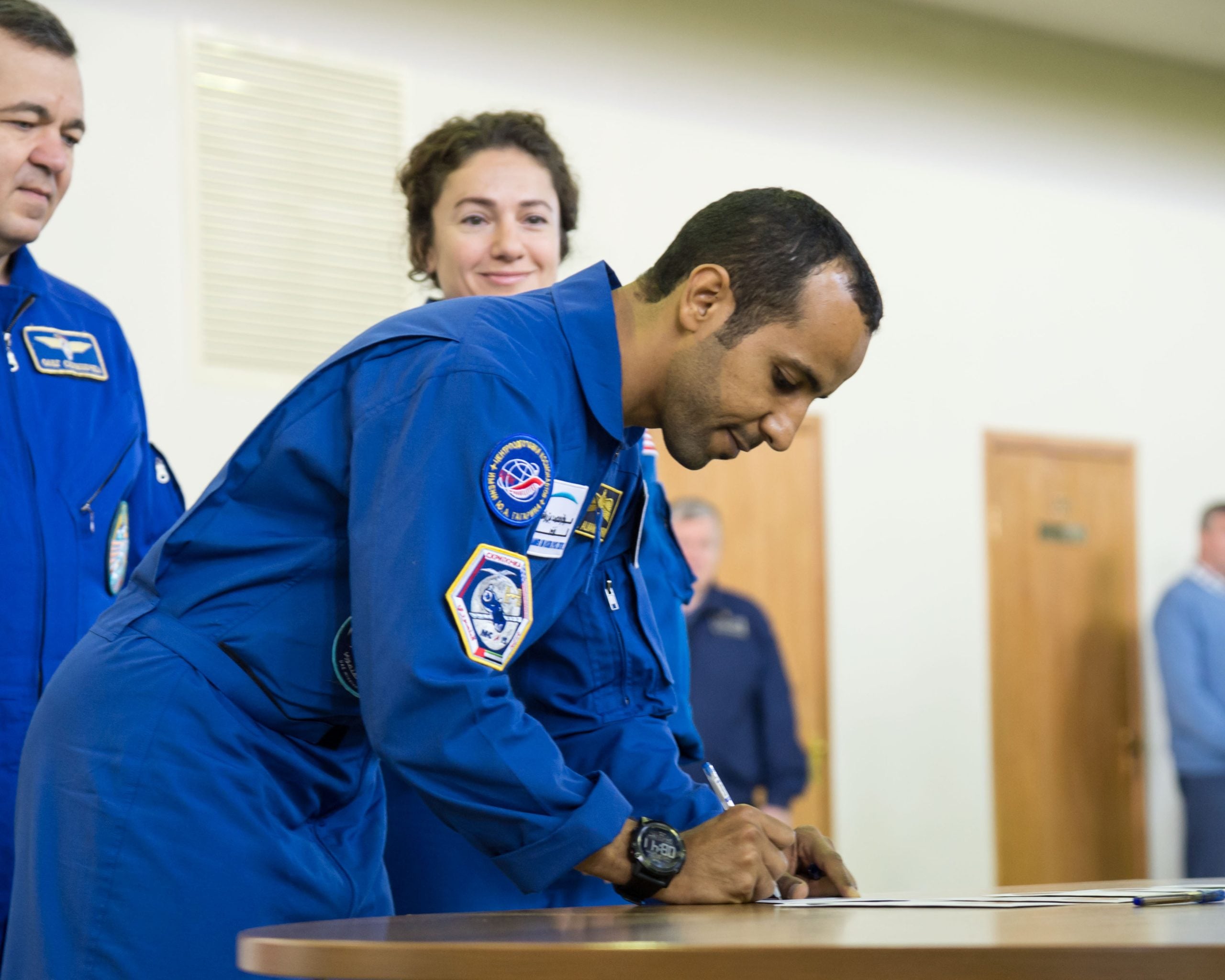
Almansoori was sent on the Zayed Ambition 1 Mission, the UAE Astronaut programme managed by MBRSC, aboard a Russian Soyuz spacecraft, with two other Russian astronauts. Almansoori, UAE’s youngest F-16 fighter pilot, also finished his astronaut training in Russia before lifting off from the Baikonur launchpad in Kazakhstan.
By July 2020, Amal was ready to be launched. Aptly named, the EMM provided hope to the Emiratis to begin their entry into serious planetary exploration and to build the UAE as a ‘knowledge economy’. In an interview with Nature Journal before the launch, Omran Sharaf, the project manager of the Mars mission, said that their motivation for the mission was not just scientific, but also economic.
“Like major port and road ventures before it, the Mars mission is a mega-project designed to cause ‘a big shift in the mindset’,” said Sharaf in the interview. “The state hopes the project can accelerate its transformation into a knowledge economy.”
In 2016, the UAE National Space Policy explicitly outlined how developing the space sector was a major economic step. By betting on space, UAE is also expanding to other sectors such as research and development, high-tech manufacturing and STEM education as part of this new ‘knowledge’ economy. This will enable a recession-resilient, non-oil industrial base, and build high-skilled Emirati engineering talent.
Despite being a young space country, with an agency that is barely 12 years old, the UAE plans to be one of the world’s largest space economies by 2031. This, in part, is driven by its strategy of economic diversification and moving away from being an oil-dependent country.
The UAE’s ambitions are echoed by its neighbouring states, although they’re all following different paths towards space exploration.
Saudi Arabia’s Space Foray
Saudi Arabia’s current space programmes too have emerged from a need of economic diversification, but the country’s first voyage into space began much earlier.
In 1985, Saudi Prince Sultan bin Salman Al Saud became the first Arab, the first Muslim, and the first member of royalty to travel to space aboard the American STS-51-G Space Shuttle Mission.
The country’s space ambitions are tied to the Saudi Vision 2030, a document detailing the societal, economic and national transformations in the next five years. Under this, space is a major aspect and mirrors the UAE’s economic diversification motive. While the UAE has focused on big-ticket missions like Mars and the Asteroid belt, Saudi Arabia has focused on building the King Abdulaziz City for Science & Technology (KACST), developing satellites such as SaudiSat, and expanding Saudi presence in space.
In April 2026, Saudi Arabia took another step by launching SHMS, a satellite developed by Saudi expertise and carried aboard NASA’s Artemis II mission, to study space weather, including solar activity, radiation and Earth’s magnetic field.
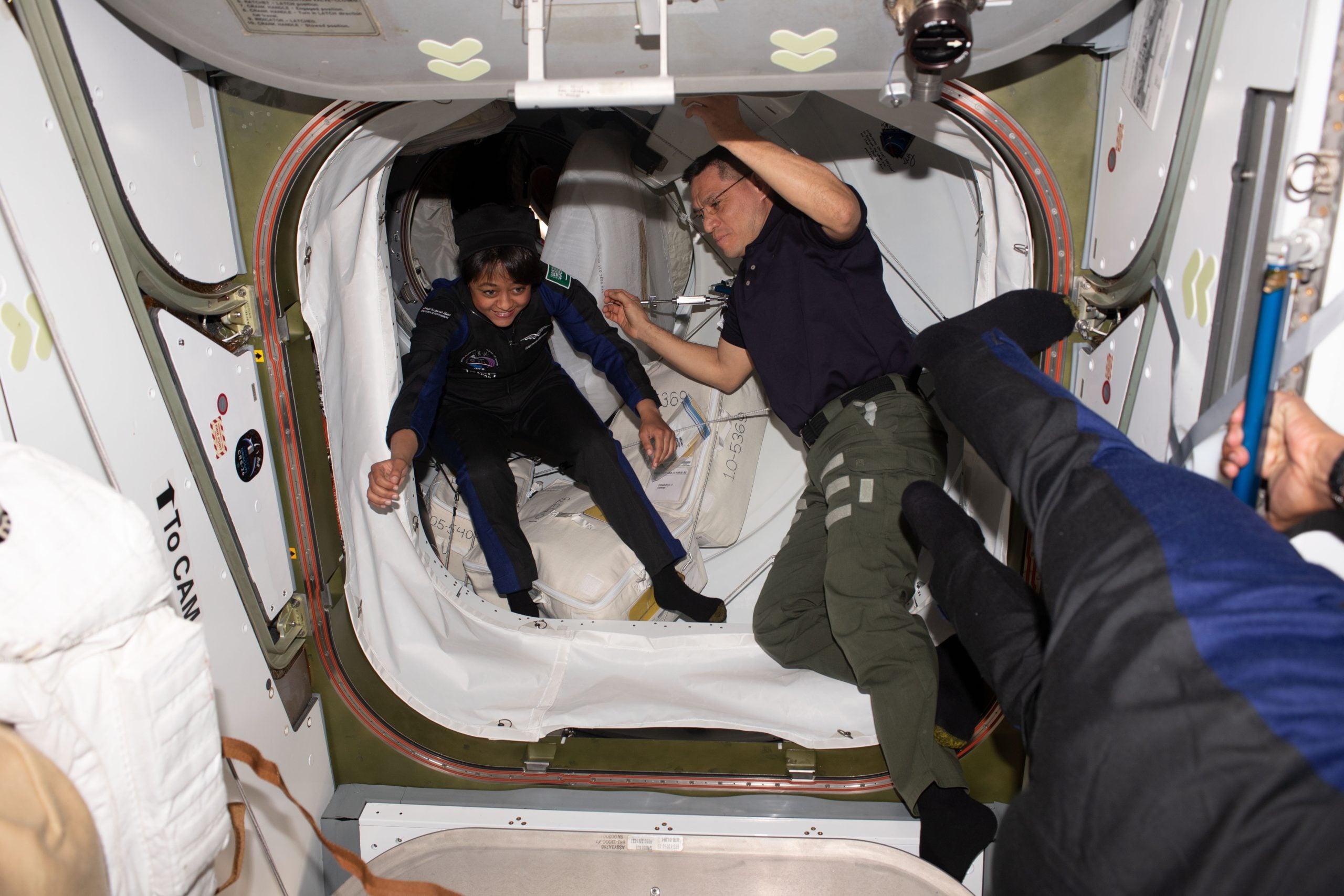
Earlier in 2023, Saudi Arabia sent two astronauts — Rayyanah Barnawi & Ali AlQarni — to the ISS aboard the Axiom-2 mission. Not only did this mark the country’s return to space after 1985, but Rayyanah Barnawi also became the first Arab woman in space.
Both Saudi Arabia and the UAE, with their respective space programmes, have tried to showcase women’s participation in science. In the UAE, women made up 34% of the Emirates Mars Mission team and 80% of its operations team, while Sarah Al Amiri, a prominent Emirati scientist, led the mission.
Other West Asian missions
Beyond UAE and Saudi Arabia, countries like Turkiye, Qatar and Oman are focusing on developing indigenous satellite and engineering capabilities to make West Asia a self-sustaining space economy.
Oman, specifically, has taken up the responsibility of building the Eltaq spaceport by the end of 2027, positioning itself as a commercial gateway and space logistics hub. Currently, Israel and Iran – regional adversaries – are the only two countries with independent launching facilities.
Despite diverse capabilities and space programmes, West Asian countries lack critical independent launching infrastructure, leading them to rely on other ports in the US, China, Japan, and even India. Oman’s spaceport therefore provides a regional launchpad for UAE, Saudi Arabia, Turkiye, Bahrain and Qatar, each developing their own space programmes.
“There is a lot of difference between owning satellites and having the industrial capacity to produce them,” said Prasad, talking about maturing space industries in West Asia. “UAE has made progress in building domestic spacecraft manufacturing and supply chains, but it still depends on foreign partners for some sophisticated tech and testing facilities.”
All of UAE’s launch facilities and vehicles are borrowed from the US, Russia or Japan, and it even uses NASA’s Deep Space Network (DSN) to track and communicate with its interplanetary spacecraft.
Turkiye has built its capabilities over several decades, and in 2023 launched its first domestically developed high-resolution imaging satellite, iMECE via SpaceX. A year later, the country launched its first mission where an astronaut was sent to the ISS aboard Axiom-3 to conduct scientific experiments. Turkiye also has plans for a lunar mission targeted for 2027.
Bahrain and Qatar, meanwhile, have dedicated their focus on certain elements of space manufacturing, such as communication satellites, propulsion systems, and earth observation satellites. In 2025, Bahrain launched Al-Munther, its first domestically designed and built satellite, which monitors environmental conditions like desertification, coastal changes, and urban expansion.
Like most new space countries, they too rely on international partnerships with established space powers to launch their satellites, gain technical expertise, and train their astronauts.
The US-China balancing act
The launch of West Asian space programmes has also left US and China vying to build international partnerships with Gulf countries. From China and Russia’s International Lunar Research Station to NASA’s Artemis Accords, the two global adversaries offer lucrative opportunities for collaboration, technological prowess, and access to technical resources for West Asia.
Led by the US alongside dozens of signatories including the UAE, Saudi Arabia, and Bahrain, the Artemis Accords were launched in 2020, with the overarching aim of safe and sustainable space exploration.
Conversely, China and Russia announced the International Lunar Research Station (ILRS) in 2021, and have rallied a rival coalition of nations across the Global South and Eurasia, including some West Asian countries like Egypt, and others like Pakistan, South Africa, and Kazakhstan. Designed as a direct counterweight, its goal is to establish a long-term, robotic and crew-capable research complex on the lunar surface.
However, as a 2026 article in Texas National Security Review (TNSR) explained, this West Asian diplomacy is not one-sided.
“Countries in the region are not passive participants in great-power competition,” it said. “Instead, they are strategic actors who balance their ties with the US while leveraging opportunities for technological cooperation with China.”
The UAE, for example, is one of the original signatories to the Artemis Accords, an international non-binding treaty by the United States for collaboration on lunar exploration, technological support, emergency assistance, and, importantly, public sharing of data on both ends. Simultaneously, China acts as a commercial satellite launch provider for UAE, while carefully navigating the US’ sanctions and technology transfer restrictions.
Saudi Arabia, on the other hand, has a more US-leaning policy, collaborating both with NASA and US industry partners like SpaceX and Axiom Space. However, Saudi too has signed agreements with the China Manned Space Agency to conduct scientific research on China’s Tiangong space station, and has even launched payloads on Chinese lunar missions such as Chang’e-4 in 2018.
“By engaging both powers, Riyadh can access different technological ecosystems, build domestic expertise and strengthen its international partnerships without treating space cooperation as a zero-sum choice,” said Prasad.
For China, the West Asia and North Africa region pose an important strategic partner, with its investments in telecommunications, gas, energy and transport. According to the TNSR article, China is also the largest trading partner for most countries in the region.
“Beijing’s strategic approach toward the region tends to focus on preserving China’s energy security, avoiding entanglement in regional conflicts, and countering US influence,” said the article.
And given that China is globally the second most advanced spacefaring nation, after the US, space affairs tend to seep into its diplomacy in West Asia.
Bahrain and Egypt have both collaborated directly with the China National Space Administration, utilizing Chinese commercial satellites to test AI algorithms in orbit. Turkiye, meanwhile, applied to be part of China and Russia’s International Lunar Research Station, a diplomatic counter to US’ Artemis Accords, and also routinely works with Chinese firms like China Satcom.
The future of West Asia in space
A space-faring nation is defined as a country with the capability to independently build and launch satellites and other space-based technologies. For most of history, around seven nations had this capability — US, Russia, China, India, Europe, Japan, and South Korea.
However, a 2021 report by the European Space Policy Institute (ESPI) said that a number of countries can now be described as ‘emerging spacefaring nations’, with West Asia taking the lead.
The interest in space programmes in West Asia can roughly be categorised into three phases: 1976-85, 2000-2010, and 2014 to 2020s. The first phase in the 1970s concentrated on early telecommunications and connectivity, and also hinted at regional space cooperation through the formation of the Arab Satellite Communications Organization in 1976.
In the early 2000s, countries in West Asia began building their own domestic satellites and other infrastructure, with organizations like the MBRSC coming up in UAE. However, space was not yet a main focus for most of West Asia until the turning point in 2014.
After UAE announced their Mars mission, there was a decisive shift in focus towards planetary science and exploration, with Saudi Arabia and Turkiye establishing their own space agencies soon after, and beginning their human spaceflight programmes. According to the Carnegie Middle East Centre, the Hope probe to Mars was “coloured with a pan-Arab sentiment”, ushering in a regional space race.
Given the geopolitical dynamics in West Asia, the region is also propped up for a European Space Agency-type institution in the future, combining regional capabilities.
“There is considerable potential for an integrated ‘Arab’ space agency, and some of these foundations already are there,” said Prasad. “Arabsat demonstrated many decades ago that Arab countries can jointly invest in and operate satellite infra.”
The Arab Satellite Communications Organization (Arabsat) is an intergovernmental satellite operator founded in 1976 by 21 Arab League countries, and it was one of the first examples of space cooperation in the Arab world. It works to this day for TV and broadcasting, and even disaster recovery, rural telecom, and defense infrastructure.
However, Prasad added that being comparable to ESA will require sustained political commitment, financing and a much more integrated industrial base which does not exist yet. The differing priorities and different levels of tech capabilities across these countries may make long-term political commitments challenging.
(Edited by Aakriti Handa)