


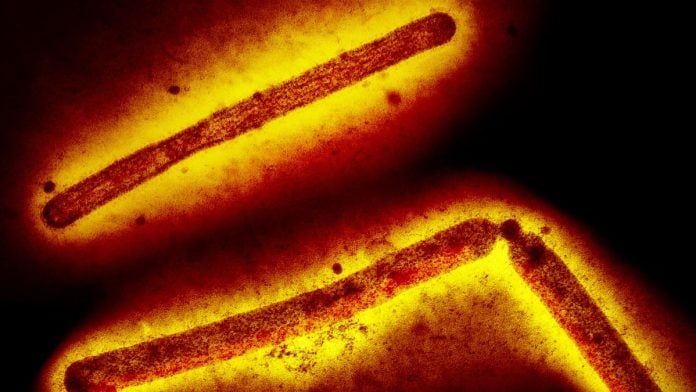
New Delhi: Scientists at the University of Miami have identified a previously unknown group of viruses that could help explain how some of the earliest biological structures evolved, challenging the long-standing theory that certain compartments within cells originated exclusively from viruses.
The study, which was published in Nature Communications on 14 October, found that small viruses share structural similarities with cellular compartments called encapsulins, which are found in bacteria and archaea. The researchers proposed that viruses and encapsulins may have evolved from one another repeatedly, rather than following a single evolutionary pathway.
Their findings could offer new insights into the origins of biological systems and reveal previously overlooked functions of viral structures in the formation of biological life.
How viruses and cellular compartments are connected
The researchers focused their efforts on a protein structure called the HK97-fold, which forms protective shells in both viruses and encapsulins. In viruses, these shells, known as capsids, protect genetic material. Encapsulins, meanwhile, contain enzymes and provide enclosed spaces where biochemical reactions can occur.
Abelardo Aguilar, the study’s first author and a doctoral researcher at the University of Miami, explained in a university press release that these protein structures serve two important biological functions: “What makes the HK97-fold proteins so interesting is that they can form shells that enclose biochemical reactions in cellular lineages, archaea, and bacteria. But they also serve genetic purposes in viruses, storing and protecting their viral genome,” he said.
Previously, researchers believed that encapsulins evolved from viral capsids. However, this explanation presented difficulties because viral capsids are generally larger and more structurally complex.
To investigate the relationship, the scientists searched genetic databases containing billions of DNA sequences collected from soil, seawater, wastewater, the human gut and other environments. Then, using computational biology and artificial intelligence tools, including AlphaFold, they identified 523 small viral genomes containing HK97-fold proteins. Among these, 93 encoded proteins displaying similarities to encapsulins.
Evidence of evolution in both directions
Further genetic and structural analysis suggested at least three evolutionary transitions between viruses and encapsulins, supporting the possibility that these structures evolved in both directions.
The researchers proposed that procapsids, immature viral shells formed before a virus becomes fully assembled, could provide an evolutionary link between the two. Aguilar said the findings raised the possibility that “viral capsids could also facilitate biochemical reactions”, suggesting functions beyond protecting viral genomes.
Antoni Luque, the study’s senior author, said advances in genetic sequencing had made it possible to investigate viruses that scientists could not previously study.
“The majority of viruses cannot be grown in the lab,” he explained while highlighting the importance of computational methods. “There are multiple questions in relation to evolution and how viruses have adapted to the world that it’s now possible to explore bioinformatically.”
The researchers suggested that their approach could eventually contribute to biotechnology and the investigation of emerging viruses.
However, because the newly identified viral genomes were characterised using computational analysis rather than laboratory cultivation, their proposals remain hypothetical and require confirmation through real-world experiments.
(Edited by Aakriti Handa)