





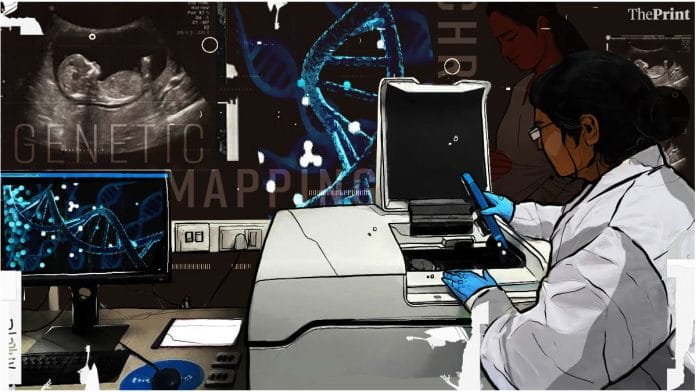


New Delhi: Nearly 34,000 people in Pakistan are “human knockouts,” that is, people who have lost the function of at least one gene, according to a study published in Nature on 17 June.
These findings are part of one of the largest South Asian genomic studies, which analysed 173,303 genomes from the country, changing how scientists view human genetics and drug development.
“South Asians have been severely underrepresented in genome studies—comprising just 2 per cent of global genomic databases despite representing 25 per cent of the world’s population. But the distinctive characteristics of South Asian genomes, shaped by population history and cultural practices, can power global medical breakthroughs that benefit patients everywhere,” Danish Saleheen, professor of medical sciences and director of global genomics at Columbia University Vagelos College of Physicians and Surgeons, said in a press release.
Similar research in India, ‘the Genome India Project’, analysed the complete DNA of 9,768 healthy people from 83 groups from across India, and found nearly 44 million genetic variants that were missing from global databases.
Blind spots in genetic research
It has been two decades since Saleheen began to build the Pakistan Genome Resource at the Center for Non-Communicable Diseases in Karachi. What he had realised then was something that studies on American Amish populations have been hinting at since the 1960s—communities that have a high rate of marriage among first cousins or relatives allow researchers a unique advantage when it comes to genetic studies. In Pakistan, marriage between first cousins has been a common practice for hundreds of years.
Children of closely related parents inherit similar genetic mutations, including ones where certain genes are deactivated. Such “knock out” cases allow scientists the opportunity to see how a human being functions without a particular gene, and whether there are certain genes that can be “switched off” to treat diseases.
Researchers found that one in nearly every five people in the Pakistan Genome Resource is missing at least one gene. Over the course of the study, they identified almost 6,500 genes which had switched off.
“What’s unique about our Pakistan study is we can go back to participants and conduct comprehensive medical exams to see what kind of effects the gene deletion may have on the individual,” Saleheen said.
Also Read: Severe pregnancy vomiting has genetic roots—6 new genes discovered in major study
Why ‘knockouts’ matter
Gene-related discoveries are often made when scientists delete specific genes in mice to study how that impacts their health. But research is beginning to show that genes often function differently in humans than in mice. Because of this, many drugs that work on mice fail on humans, leading to a waste of millions of dollars, time and energy.
“What we would prefer to do is identify people who are born without working copies of genes and see if that has an effect on their health,” Saleheen explained. The recent study did exactly that.
The RXFP1 gene, which had earlier seemed important for heart function in mice, did not cause health problems in people who lacked it. Even the PRDM9 gene, which is essential for mouse fertility, did not impact human fertility.
Such findings offer major clues for drug discovery. The study found that people without the CIDEB gene are protected from liver diseases, suggesting that CIDEB inhibitors could potentially be a treatment for fatty liver disease.
In other cases, missing genes can also caution clinicians. Experimental Parkinson’s drugs often target the LRRK2 gene, but the study revealed that people lacking the gene often developed kidney problems. Now, scientists know that they must monitor kidney function in people on Parkinson’s drugs.
“The pharmaceutical industry has been facing the issue of side effects for several decades. Our database could prevent companies from spending millions of dollars on drug candidates doomed to fail or give them confidence to move ahead,” said Saleheen.
(Edited by Insha Jalil Waziri)