



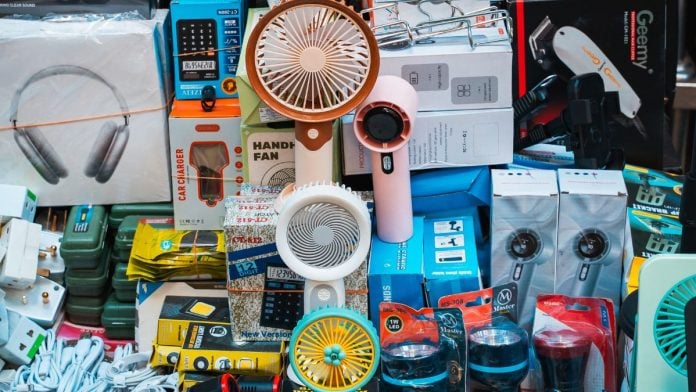
New Delhi: As annual shopping seasons draw closer, the Waste Electrical and Electronic Equipment Forum has highlighted the rise of “fast tech” — USB adapters, mini fans, LED lights, electronic toys, and other small, cheap gadgets.
A WEEE study has found that nearly 90 per cent of European consumers from 12 countries own at least one such “fast tech” device and nearly 78 per cent of them had bought one in the past year. However, when such devices break down or are no longer in use, they find their way into cluttered cupboards or rubbish piles instead of being recycled.
“Fast tech is the blind spot of the e-waste world. Black Friday and Christmas will bring another enormous wave of electronic toys, decorative lights, mini gadgets, chargers and other inexpensive electronics into our homes. Their low price doesn’t mean they have no environmental cost. We need them to be collected and recycled when they’re no longer in use,” Pascal Leroy, Director General of the WEEE Forum, said in a statement.
Such “fast tech” is being compared to the rise of cheap fashion which is also used for short durations and then easily discarded. The recent survey commissioned by the WEEE surveyed 10,245 adults and found that fast tech is “routine consumer purchase”.
Nearly 58 per cent of buyers remembered a fast tech product that they had used for less than six months, and 39 per cent recalled one they had discarded after using just once or within a month. Even consumers who value durable products are drawn to fast tech because of its convenience and low price.
“Consumers understand perfectly well that an inexpensive electronic product may not last forever. Much less visible is what happens when those millions of individual purchasing decisions become millions of discarded cables, earbuds, lights, toys and gadgets,” Dimitri Naczaj, co-founder of Bellegarde Scientific Consulting, the firm that conducted the survey, said in a statement.
Also read: Making polluters pay isn’t enough. Climate policies must help households too, says study
Where does the fast tech go?
According to the study, there was no recorded route for discarded fast tech and most of these devices would just be forgotten. Only 27 per cent of people took the products to recycling centres, and 19 per cent returned them to in-store collection points. Sometimes these devices would be added to household waste, plastic waste, or even in street bins.
“The principle should be straightforward: if you make money selling electrical and electronic products into a country, you should contribute to the cost of collecting and recycling those products when consumers are finished with them. Responsible producers already pay into these systems. Online marketplaces should not provide a back door through which electronics can enter a market without anyone taking financial responsibility for what happens to them afterwards,” Leroy said.
The study suggests that although 83 per cent of the consumers know these fast tech products contain electronic components, they are hardly disposed of in the right manner. Ideally, their plastics, metals, and other materials can be reused, but instead they are left unrecycled, and the growing number of lithium-ion batteries turn such waste more dangerous.
Battery powered devices can be accidentally crushed or punctured leading to fires that endanger waste collectors.
“A tiny battery-powered gadget tossed into a household bin may seem inconsequential. Multiply that by millions of products and it becomes a serious problem, both in lost resources and in fire risks for the people and facilities handling our waste,” Magdalena Charytanowicz, communications director of the WEEE Forum, said in a statement.