



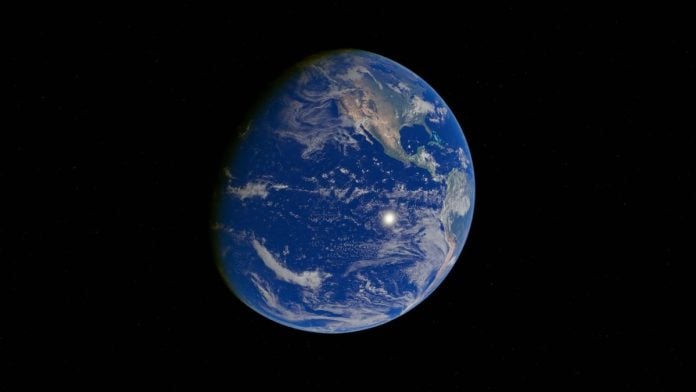
New Delhi: Earth is the only known planet to support life, but it may not be the ideal place for life to thrive. Scientists are exploring whether some planets beyond our solar system could offer conditions even more favourable to life than those found on Earth.
These hypothetical worlds, known as “superhabitable” planets, could be slightly larger and more massive than Earth, with liquid water, thicker atmospheres and climates that remain stable over long periods. The concept was proposed by astronomers René Heller and John Armstrong in a 2014 paper, which questioned whether Earth should be the “benchmark” in the search for life beyond our planet.
A superhabitable planet could be roughly 20-30% wider and twice as massive as Earth. Its stronger gravity could mean a thicker atmosphere, while a larger iron core could generate a stronger magnetic field to protect life from harmful cosmic radiation.
Shallower seas and longer island chains could create a variety of habitats, similar to the rich ecosystems found around tropical islands and shallow waters on Earth. Researchers have said that such environments could support more biological diversity than on earth.
The stars that these planets orbit might be equally important. K-dwarfs, orange stars cooler than the Sun, burn their fuel more slowly and can remain stable for tens of billions of years. This could give life more time to evolve and diversify. In comparison, scientists estimate that the rising temperatures as the Sun grows brighter could make the Earth unsuitable for life in roughly 500 million years.
Also read: Half the world’s countries not on track to achieve biodiversity targets, finds report
Photosynthesis in outer space
Experiments have also begun investigating whether photosynthesis could function under the light emitted by these stars. In a 2024 study published in the International Journal of Astrobiology, astrobiologist Iva Vilović and colleagues found that garden cress grew quite well under simulated K-dwarf and solar illumination. Cyanobacteria also survived efficiently under the radiation of a K-dwarf. The findings suggest that organisms dependent on photosynthesis could survive well under such conditions.
The next challenge is to identify suitable planets and examine their atmospheres for chemical signatures, or biosignatures, that could indicate biological activity.
The European Space Agency’s PLATO mission, scheduled for launch in 2027, aims to discover and study planets orbiting other stars. Other observations using telescopes such as the James Webb Space Telescope and the Extremely Large Telescope, under construction in Chile, could also help researchers investigate the atmospheres of such habitable worlds. NASA’s proposed Habitable Worlds Observatory could also allow more detailed observations in the 2040s.
For now, superhabitable planets remain a hypothesis, but the idea challenges a key assumption in the search for extraterrestrial life — Another habitable planet might not look much like the earth at all.