


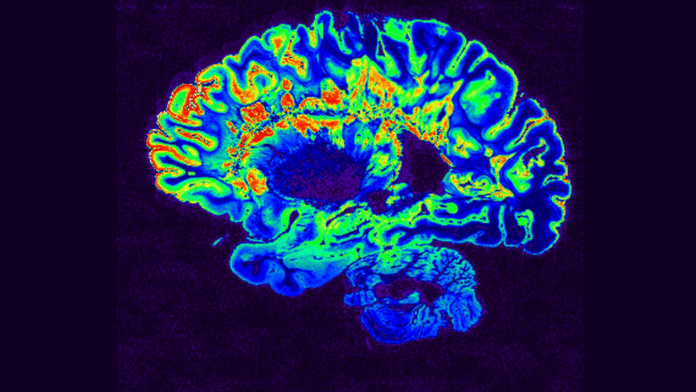
New Delhi: Scientists identified three distinct patterns of brain activity among children with attention-deficit/hyperactivity disorder (ADHD) and anxiety, which suggests that the two conditions may share underlying biological characteristics that are not adequately captured by conventional diagnoses.
Published in Nature Mental Health on 16 October by researchers from Stanford Medicine and the University of Iowa, the study used artificial intelligence to examine brain scans and behavioural assessments from 3,508 American children aged nine to eleven who had ADHD, anxiety or both at the same time.
It was found that the children’s brain activity could be divided into three biological profiles, or biotypes, each associated with different combinations of behavioural and emotional symptoms.
“The high overlap between ADHD and anxiety actually hinders our understanding of the neurobiology underlying traditional, symptom-based diagnoses,” Yu Zhang, an assistant professor of psychiatry at Stanford Medicine and co-senior author of the study, said in a university press release.
Three distinct patterns of brain activity
ADHD is commonly associated with difficulties in attention, impulsivity and hyperactivity, while anxiety disorders involve persistent worry, fear and related emotional difficulties. However, children frequently experience symptoms associated with both conditions, complicating diagnosis and treatment.
To investigate these similarities, researchers developed a deep-learning model that examined functional connectivity, or how different regions of the brain communicate. They trained it on data from the Adolescent Brain Cognitive Development (ABCD) study.
The model identified two broad dimensions of brain dysfunction, involving cognitive and behavioural control on one hand and emotional regulation and attention on the other. Different combinations of these dimensions are what produced the three biotypes the scientists identified.
Children in the first biotype, the externalizing-disinhibited group, showed greater impulsivity, hostility, defiance and rule-breaking behaviour. Meanwhile, those in the second biotype, the internalizing-distressed group, displayed more guilt, tension, perfectionism and anxiety-related symptoms. The third group, a mixed one, showed greater attention difficulties, irritability and self-injurious behaviour.
Although each child was assigned to one biotype only, all three patterns of brain activity appeared across the traditional diagnostic categories. Certain profiles were more common among children diagnosed with ADHD, while others appeared more frequently among those with anxiety.
Could brain scans improve diagnosis?
The researchers also examined scans from 693 children who had no diagnosis when they entered the study but subsequently developed ADHD, anxiety or both. The biological patterns were already detectable in their earlier scans, suggesting they might eventually help identify children at risk.
The findings were additionally validated using brain scans from 224 children enrolled in a separate study. The scientists believe these patterns could eventually complement symptom-based diagnoses and help doctors choose treatments more effectively.
“We may be able to use the biotypes as an early indicator of these conditions,” Zhang said. “It could help us provide more timely intervention for these conditions and slow down or, we hope, even reverse their progression.”
However, the research was observational, and the proposed biotypes have not yet been established as clinical diagnostic tools. The researchers will also have to test whether matching treatments to these brain patterns will improve future outcomes.
(Edited by Aakriti Handa)