








New Delhi: Two men in their twenties boarded Indian Airlines Flight 410 at Lucknow with a toy gun, cricket ball and pro-Indira Gandhi pamphlets on 20 December 1978. With this arsenal, they hijacked the plane, brandishing the toy gun as a pistol and cricket ball as a grenade as they held 126 passengers hostage for 13 hours. They had just one demand—Indira be released from prison, and all cases against her son Sanjay Gandhi be dropped.
A day before this hijack that really wasn’t, Indira Gandhi had been expelled from the Lok Sabha for breach of privilege and contempt of the House and sent to jail.
The hijacker duo of Bholanath Pandey and Devendra Pandey managed to divert the flight to Varanasi instead of Delhi with their ruse. Over the intercom in the flight, they had introduced themselves as members of the Indian Youth Congress (IYC).
The Indian Youth Congress, youth wing of the Indian National Congress, was founded on 9 August 1960. During the Emergency, it transformed into an all-powerful outfit notorious for flexing its muscle and intimidating citizens, all to ostensibly implement Sanjay Gandhi’s five-point programme. The IYC workers were often called ‘stormtroopers’ in a parallel with Hitler’s shock troops that became instrumental in his rise to power. Even Indira acknowledged its strength, declaring in 1976 that Youth Congress had “stolen our thunder”.
The outfit has also served as a feeder cadre for the parent party, having nurtured several prominent Congress leaders, including Priya Ranjan Dasmunsi, N.D. Tiwari, Manish Tewari, Ambika Soni, Anand Sharma, Mukul Wasnik, Randeep Surjewala, Ghulam Nabi Azad, and Kamal Nath. But the outfit, which boasts of about “50 million members”, seems to have lost its sheen. Analysts attribute it to a plethora of reasons ranging from Rahul’s ‘leadership failure’ to the more all-pervasive bane of political defections.
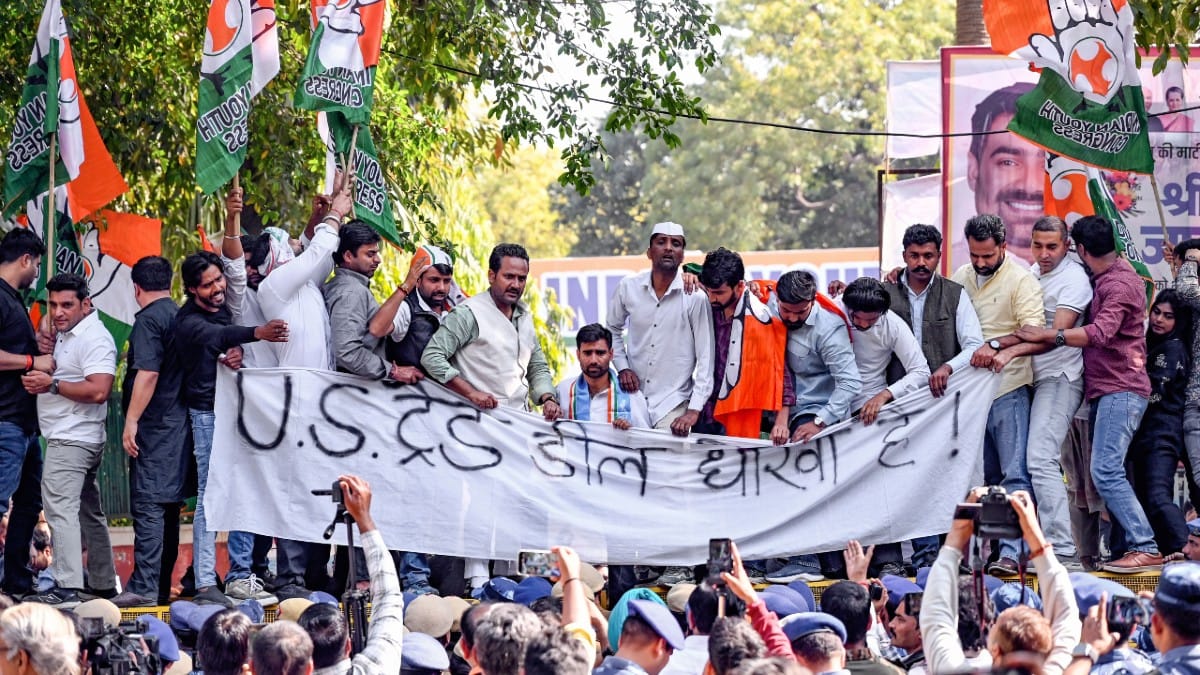
More than 47 years after the hijacking incident, there was another hijack by Youth Congress workers—that of the India AI Impact Summit 2026. Ten shirtless men holding white T-shirts printed with Prime Minister Narendra Modi’s image stormed Hall 5 at Bharat Mandapam last month to protest against the India-US interim trade deal.

Defending the move, IYC posted on X, “That is why the fearless workers of the Indian Youth Congress arrived at Bharat Mandapam.. So that the voice against the ‘compromised PM’ can be raised and the Modi government is forced to answer for the compromises being made on the country’s integrity!”
The Youth Congress workers were arrested and booked under stringent provisions related to promoting enmity, hatred, or disharmony between different groups based on religion, race, language, or caste, and for furthering imputations and assertions prejudicial to national integration.
While the protest may seem like a clawback to the Emergency era, experts argue that the Youth Congress of the current times is significantly different from the Youth Congress of the 1970s and 1980s.
“Sanjay’s time was quite different from the time that you and I live in. It was the Congress system which was cracking down (at that time). Today, you have the BJP which is the hegemon. So that hegemony has been replaced,” said political analyst Chandrachur Singh.
“Therefore, I don’t see the recent protest in the same spirit as it happened during the Emergency or during Sanjay Gandhi’s time. I don’t know how many people would even know who is the president of the Youth Congress, and what kind of a stature that person has in the party forums,” he told ThePrint.
Also Read: Youth Congress, your foolish protest helped the Modi govt climb out of the AI summit hole
The peak: Sanjay years
Post-Independence, the youth wing of the Congress party was mostly functional as a department of the Congress party. However, the destiny of the organisation changed once Indira Gandhi took over as the party president in 1959.
Praveen Rai, political analyst at the Centre for the Study of Developing Societies told ThePrint that the IYC evolved as a frontal organization during the prime ministership of Indira Gandhi with focus on mass mobilisation of youth and social work.
The organisation got a major boost when Priya Ranjan Dasmunsi, a prominent Youth Congress leader, defeated veteran Communist leader and freedom fighter Ganesh Ghosh in the 1971 Indian general election at the age of 26, recalled veteran journalist Shubhabrata Bhattacharya, who has a Youth Congress background. Dasmunsi was also elected as president of the organisation in the same year.
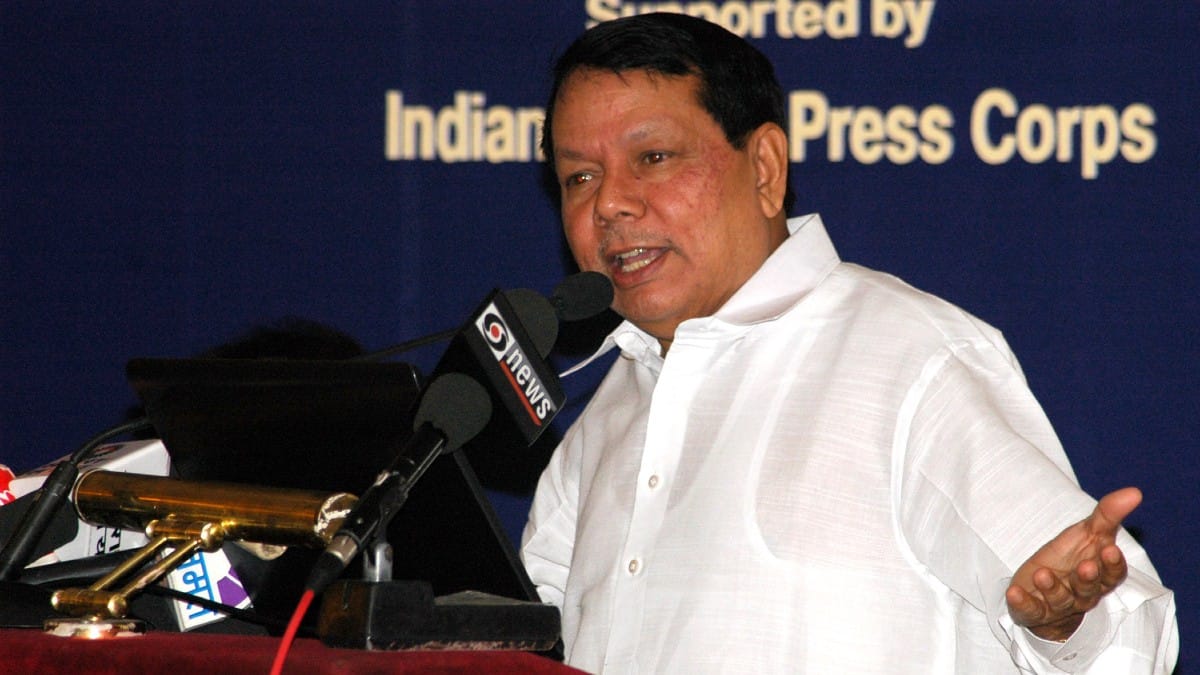
By September 1975, however, Sanjay Gandhi was eyeing the Youth Congress, and his first order of business was the removal of Dasmunsi, who was close to Siddhartha Shankar Ray. According to Coomi Kapoor’s book, The Emergency: A Personal History, “Sanjay was deeply suspicious” of Ray’s “leftist leanings”.
Dasmunsi’s fault, Kapoor notes, was that the Youth Congress was not supporting the twenty-point and five-point programmes “adequately”. Sanjay’s five-point programme was: family planning, tree planting, dowry abolition, eradication of illiteracy and slum clearance.
In Dasmunsi’s place, Ambika Soni, then general secretary of the organisation, was made president.
Bhattacharya said that, in December 1975, the National Council of the Youth Congress then invited Sanjay Gandhi to join the organisation. While Sanjay never held any post in the Youth Congress, he was an extremely prominent member, shaping its politics, he added.
Praveen Rai from the Centre for the Study of Developing Societies (CSDS) recalled that the Youth Congress was at its peak during the leadership of Sanjay Gandhi in the 1970s with multifarious campaigns for tree plantation, family planning and minimising domestic violence against women and dowry deaths. “It matched the immense political capital and ideological dominance of the Congress and reached its organisational peak during the 1970s and 1980s,” he told ThePrint.
The ‘stormtroopers’
Once Sanjay took over the Youth Congress, the first agenda on his mind was increasing the numerical strength of the organisation. A meagre seven lakh people to lead wouldn’t cut it. Not for him.
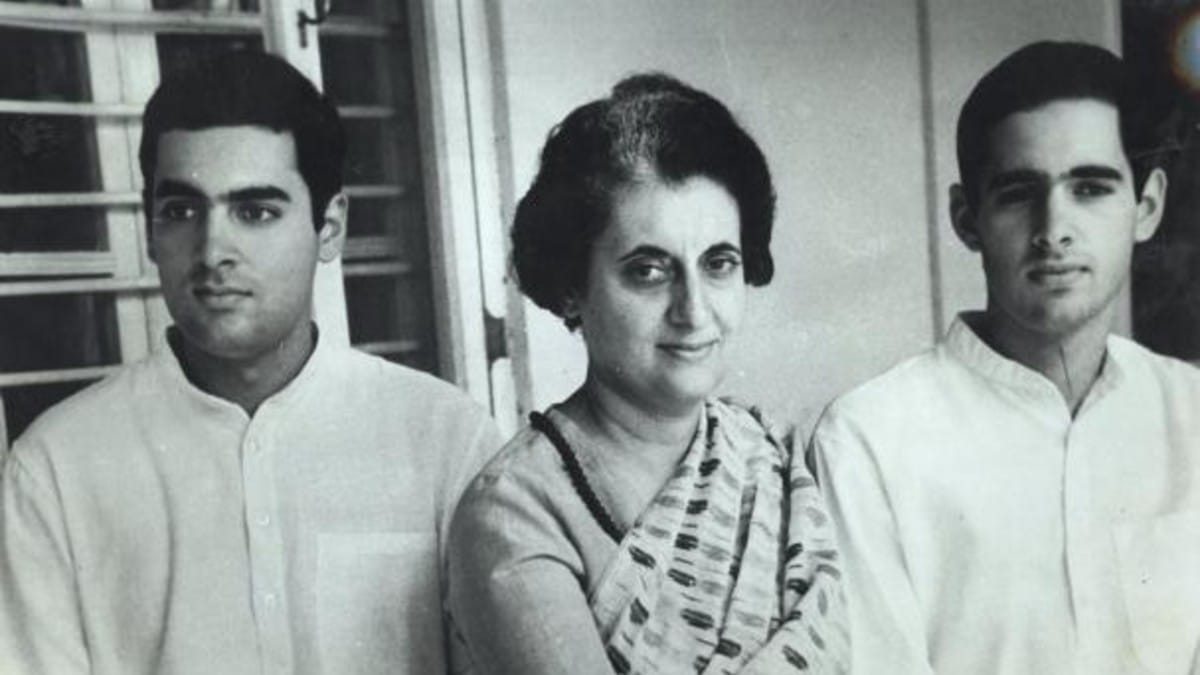
In less than two years, by February 1977, the membership had increased from seven lakhs to sixty lakhs. The Sanjay Story by journalist Vinod Mehta quotes Soni as admitting that the Youth Congress had been “infiltrated by hoodlums and gangsters…If anybody says no excesses were committed by the so-called Youth Congress members he would be a liar.”
Mehta recalls that Youth Congress workers in Delhi are often remembered for “hounding and subverting almost the entire commercial life in the city”. He wrote that the members would often press shopkeepers for “donations”—for causes ranging from adult literacy centres and family planning centres, to simply “donations”.
In the book For Reasons of State: Delhi Under Emergency, journalists John Dayal and Ajay Bose document several such instances of the power that Youth Congress leaders as well as workers wielded on the ground. For instance, they recall an incident when a reporter was arrested under the dreaded Maintenance of Internal Security Act (MISA) after an altercation with Ambika Soni. The reporter had picked up a pamphlet being distributed by protesters raising slogans against the Emergency and refused to hand it over to Soni when she asked for it. “You better give it, or you will be in trouble,” Soni said, as per the book.
The organisation was also very active in the sterlisation programme, organising family planning melas. They were quite active in other parts of the country too. For instance, the Shah Commission report notes that the Youth Congress in Andhra Pradesh sought to be actively associated with the sterlisation campaign. According to the report, the state’s director of Medical and Health Services had requested Youth Congress leaders to organise mass vasectomy camps of 500 to 1,000 sterilisation cases in each panchayat samiti and had offered government assistance for organising such camps.
The then Chief Minister of Andhra Pradesh also wrote to district collectors in August 1976 asking them to take full advantage of the cooperation of the Youth Congress in “creating the proper atmosphere for persuading” eligible couples for the operations, the report says.
‘Safety valve’ against dissent
The appeal of the organisation lay in its ability to act as a “safety valve” against growing popular dissent. Chandrachur Singh asserted that during the dark days of the Emergency, Indira Gandhi was under the “influence of leaders who were young and perhaps gave her the impression that they control the pulse of the people”.
“My understanding is that the Youth Congress, in those days, was a safety valve. And the safety valve was created in order to somehow channelise or create a space which could allow the younger people to vent off their disillusionment with the way developmental politics in India had been going,” he said. He harked back to the time when there was an understanding of relative deprivation in the country, with people hoping that once India gets independence, everything is going to fall in order, and there will be development.
During the Emergency, Singh recalled that it was the younger people who were mobilising everybody. He referred to the Navnirman Andolan as an example, when students and middle-class people in Gujarat mobilised against the economic crisis and corruption.
The Youth Congress, according to Singh, was playing that role in creating a safety valve, bringing people who were unhappy with the government into their fold, “to diffuse the disenchantment that had come in”.
“I don’t think it succeeded in doing so, but Mrs Gandhi was helpless. She was completely under the grip and control of some leaders who claim themselves to be in the name of the youth. They thought that they would control the party,” he asserted.
After the Emergency, Sanjay demanded 200 seats for the Youth Congress to rejuvenate the party in the 1977 general elections. He, however, ended up with less than 10 nominations— one of which went to Sanjay himself who suffered a major defeat in his 1977 debut.
Also Read: Youth Cong activists paste posters against Ker minister at bus depot, clash with police
Youth Congress as ‘leadership factory’
Several Youth Congress leaders have endured the test of time to emerge as leading political figures in the country. Author and political analyst Rasheed Kidwai credited Sanjay Gandhi for emerging as a “leadership factory”.
“There are a lot of people who came and joined hands with Sanjay. They were young, and were pan Indian. They served as a backbone of the Congress, not only in the 1970s but in 1980s and 90s and till the UPA era,” he told ThePrint.
“For me, this was a very illustrious time for the Indian Youth Congress. After that, they (Youth Congress) survived, but it has not produced the kind of leaders who would make an impact on the party, the government and country and politics,” Kidwai added.
Chandrachur Singh blamed the Congress being out of power for a very long time for “bright young people with potential not joining the party”. He pointed out that such organisations produce leaders when the parent organisation is in power.
“That’s the lure which attracts younger people towards joining the organization, because they know that they will have a future. Younger people with prospects, or with potential, will try to choose a party or a forum which they think will serve their purposes in the near future, as well as in the longer term,” he explained.
However, senior Congress leader Randeep Surjewala, who served as president of the Indian Youth Congress from March 2000 to February 2005, said the Youth Congress has always been an organisation that builds tomorrow’s leaders today.
“That paradigm has not changed. It is the feeder cadre to the principal party, which trains the leaders into organisational acumen, ground level politics and issue-based agitations as a mode of transformation,” he told ThePrint.
Passing the baton
The Youth Congress weakened and its ranks dwindled once Congress lost power in 1977. Chandrachur Singh asserted that over a period of time, particularly after Indira Gandhi came back to power, there has been a very strong centralising tendency in the Congress.
“This means that the Congress as a party is the only forum and all other platforms and organisations within Congress are just bodies or organisations, which are there. They exist in name. I don’t think they even have strength or organisation on the ground,” he said, adding that he does not see the Youth Congress having any organisational presence in spaces where the Congress is not in power.
After Sanjay Gandhi’s death, Rajiv Gandhi brought in a band of non-Youth Congress youth leaders, like Amitabh Bachchan and Arun Nehru. “But all his people abandoned him, whereas Indira Gandhi’s people endured,” Bhattacharya said, referring to leaders including Ghulam Nabi Azad, Ambika Soni and Kamal Nath.
However, Bhattacharya said that a comparison between the Youth Congress of the time with today’s Youth Congress is “unfair because the entire political discourse of those days was at a much higher plane than what it is today”.
Rahul Gandhi’s entry into Indian politics was characterised by his attempts at a cultural transformation in his party. And one of his projects was the Youth Congress.
One of the first changes Rahul introduced in the Youth Congress was to introduce organisational polls to elect IYC office-bearers. He engaged the Foundation for Advanced Management of Elections (FAME), led by former election commissioners J.M. Lyngdoh and K.J. Rao, to conduct these polls.
He replaced a nomination-driven selection with elections at various levels. Rahul, along with other Congress leaders like Sachin Pilot and Sandeep Dikshit, also interviewed candidates for leadership positions. Among other things, they were judged on the basis of their responses to “thought-provoking questions” on national issues.
The IYC website boasts that with Gandhi’s reforms in 2007-08, membership of the organisation surged from 200,000 to over 2.5 million.
A family affair
Despite purported attempts at democratisation of the Youth Congress, chinks began showing early on, with several the elections often transforming into a family affair.
Reports from the time show that in 2011, the first Youth Congress elections had heirs of political families as frontrunners. This included the sons of forest minister Maharashtra Patangrao Kadam, nephew of the state’s revenue minister Balasaheb Thorat, and son of the state’s employment guarantee minister Nitin Raut.
Several of the first elections in the state units also saw children, relatives or proteges of political leaders taking over posts. For instance, then Haryana Finance Minister Ajay Singh Yadav’s son Chiranjeev Rao was elected as the state Youth Congress head. In Tamil Nadu, M. Yuvaraj, said to be a protégé of former Union Minister G.K. Vasan, was elected as president of the state Youth Congress unit.
In 2013, the Himachal Pradesh Youth Congress had Vikramaditya Singh, son of then chief minister Virbhadra Singh, as its chief. In 2018 in Maharashtra, Satyajeet Tambe, the son of legislator Sudhir Tambe and nephew of former state revenue minister Balasaheb Thorat, was elected as the state Youth Congress president.
The concerns continued over the years, with several senior party leaders demanding scrapping of the Youth Congress elections, alleging that they are “expensive, corrupt and only damage the party”.
For Kidwai, Sanjay Gandhi’s Youth Congress is eons apart from Rahul Gandhi’s Youth Congress. “Rahul Gandhi’s Youth Congress is an assortment of members of the civil society—people who are well read and educated and have a liberal worldview, and they are from various modern and global universities. They’re highly educated, and have joined Rahul for a cause. But they don’t have that kind of political training, or political organisational skills.”
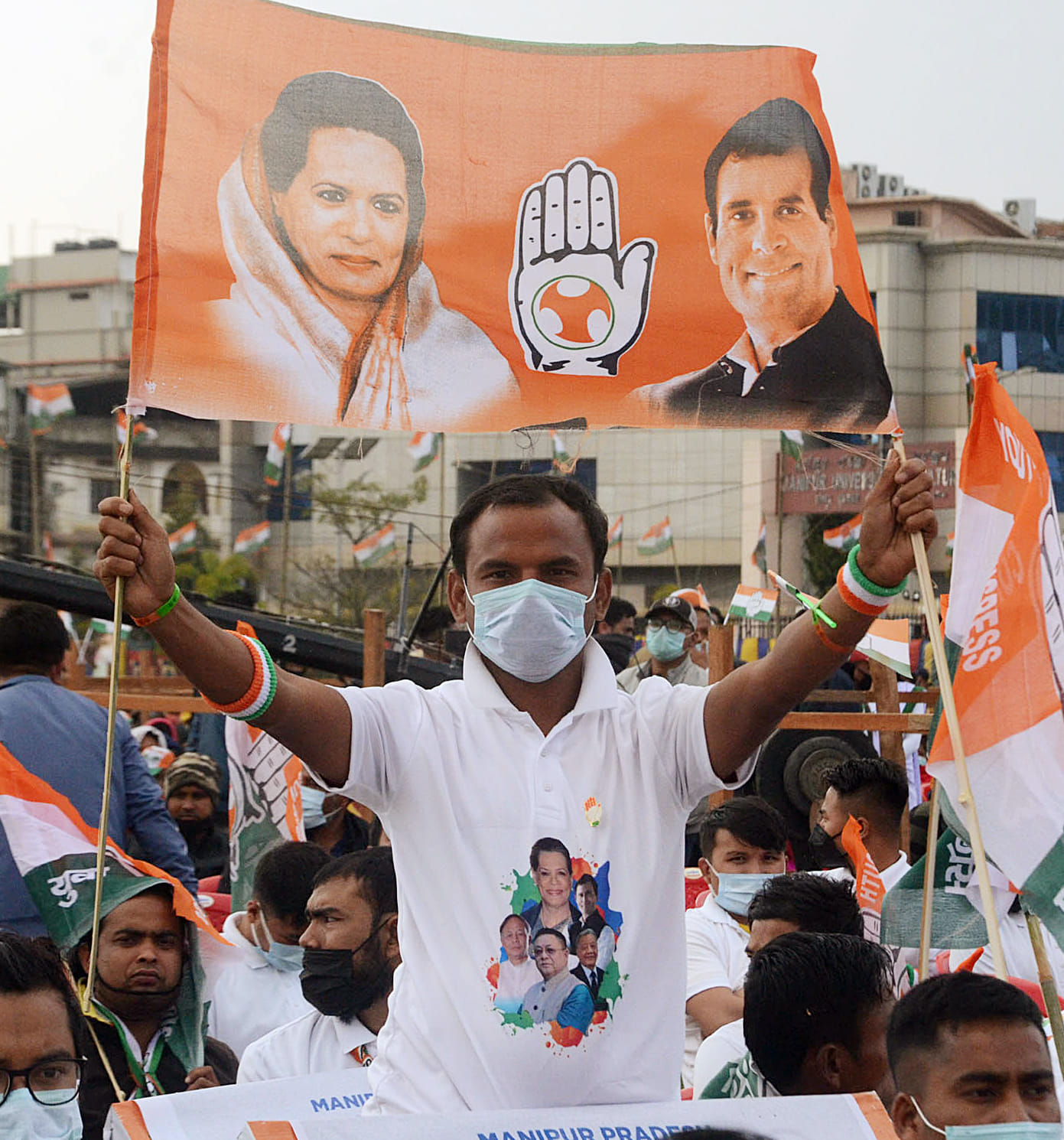
According to Kidwai, Rahul has “hopelessly failed” in his reinvention of the Youth Congress.
“Rahul, many times, would ask contenders, ‘what is your view about North Korea’s nuclear plant’, or ‘what is your view about post-Saddam Hussein Iraq’, so he could gauge the intellectual prowess of the people,” Kidwai said.
He contrasted this approach with Sanjay Gandhi’s approach. “Sanjay gave a lot of power, uninterrupted power, to his people. He said, if people don’t work, just slap them…Sanjay also gave a lot of empowerment within the organisation. So when the Congress lost that 1977 election, and of course, in 1980 when it won—both times, he gave a lot of impetus to the Youth Congress people getting tickets,” Kidwai recalled.
Also Read: ‘This is India, not North Korea’: Rahul slams PM over action against Youth Congress members
‘Traitor’ chapter of Youth Congress
Early this February, a video of Rahul Gandhi protesting along with MPs near the Makar Dwar of the Parliament went viral. Gandhi was seen referring to Union Minister Ravneet Singh Bittu as a ‘traitor’, leading to a war of words between the two.
Bittu had joined the BJP in 2024, after resigning from the Congress, leaving behind a family legacy. And it was a meeting with Gandhi in 2007 that had got Bittu into politics.
“Rahul Gandhi had then become general secretary of the Indian Youth Congress and I had gone to congratulate him. He told me not to let my grandfather’s legacy and sacrifice go to waste,” Bittu was quoted as saying in an interview. Bittu’s grandfather was Beant Singh, the Punjab chief minister assassinated by Sikh militants in August 1995.
After his spat with Gandhi in February, Bittu blamed the party becoming a “family affair” for people leaving the Congress. “If it had remained the real Congress, people would have stayed,” he told the media.
Bittu isn’t an isolated example. Several Youth Congress leaders from this time have since found refuge in other parties.
Jitin Prasada, who was once considered a close aide of Rahul Gandhi, began his political career in 2001 as a general secretary of the Youth Congress. While he was a Union minister in the previous Congress-led government, winning Lok Sabha elections in 2004 and 2009, he became a part of the 23 senior Congress leaders who wrote to Sonia Gandhi in 2020, calling for major internal reforms in the party. A year later, in 2021, he joined the BJP.
Priyanka Chaturvedi, now a prominent Shiv Sena (UBT) leader, also began her political journey with the Youth Congress in 2010, and quickly rose through ranks to become the general secretary for North-West Mumbai in 2012. However, she left the Congress in 2019 citing reinstatement of leaders who had allegedly misbehaved with her.
Ashok Tanwar, a former national president of the Youth Congress from 2005 to 2010, went through his own journey of quitting the Congress and rejoining it. He quit the party in 2019, joined the Trinamool Congress, Aam Aadmi Party and the BJP briefly over the next five years, before rejoning the Congress in 2024.
‘Chalk and cheese’
It was ‘blind loyalty’ among Youth Congress leaders that stood out in the 1970s and 1980s. “The loyalty then was not transactional,” Kidwai said.
Does that loyalty reflect in the Youth Congress leaders of today? Kidwai asserted that Sanjay’s leadership and Rahul’s leadership is “chalk and cheese”.
“Sanjay was able to spot talent…Many people from that era, they actually gave back a lot to the party in terms of their administrative skill or organisational skill…As for Rahul, many of his friends and contemporaries have left (the party). The maximum people who have left were close to Rahul,” he says.
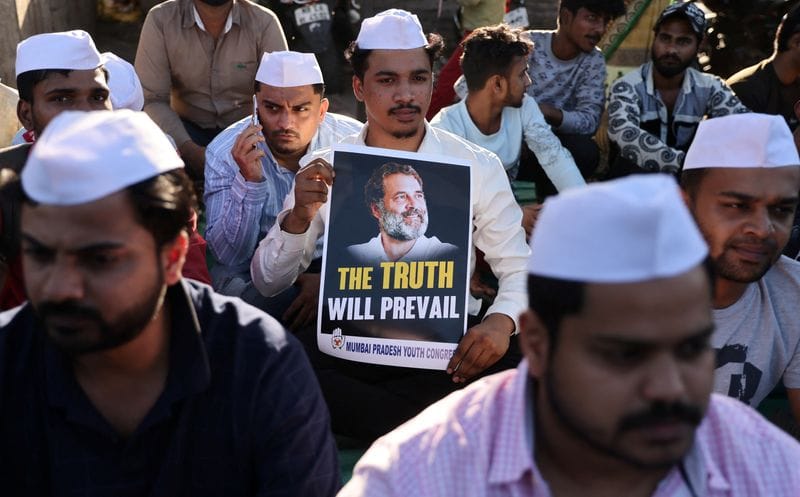
For instance, TMC leader Mahua Moitra famously left her high paying job at JP Morgan Chase in New York after being inspired by Rahul Gandhi’s ‘Aam Admi Ka Sipahi’ initiative. She joined the Youth Congress in 2009, only to switch allegiance to TMC days before the 2010 Kolkata Municipal Corporation elections.
“I remember Mahua Moitra being Rahul Gandhi’s find, and she is an asset for TMC now,” Kidwai says, pointing to a problem of retention in the organisation.
Highlighting the contrast between Sanjay’s Youth Congress and Rahul’s Youth Congress, Rai from CSDS told ThePrint, “The IYC under Sanjay Gandhi pro-actively interacted with citizens and highlighted their concerns and seeked help. Despite Rahul Gandhi’s special focus on reviving its utility, there seems to be a wide gap between digital and actual footprints, mainly due to lack of moral boosting synergies with Congress leadership and failure to align with the aspirations of generation Z.”
The role of agitation
And who shapes the ideology of the Youth Congress? Surjewala asserted that the IYC is shaped by its president in many ways.
“You have to give the IYC president the operational efficacy, and freedom to ideate and evolve. I always tell successive Youth Congress presidents that considering democracy per se is under attack, institutions are falling by the wayside, and the Constitution’s essential ethos and edifice is being crumbled by an autocratic regime, the role of agitation becomes even more central to the core of the Youth Congress,” he told ThePrint.
Taking his own example, Surejwala said that in his time, the organisation had “near complete autonomy of functioning”.
“The last two presidents, B.V. Srinivas and the current one Uday Bhanu Chib, I have been actively in touch with them, and I have never found them hindered by the principal party in any manner,” he told ThePrint.
Currently, the Youth Congress is headed by Uday Bhanu Chib, who hails from Jammu and Kashmir. Bhattacharya said he believes Chib draws inspiration from former Jammu and Kashmir Youth Congress president and former vice president of Youth Congress, Bhim Singh, who went on to found his own Jammu and Kashmir National Panthers Party.
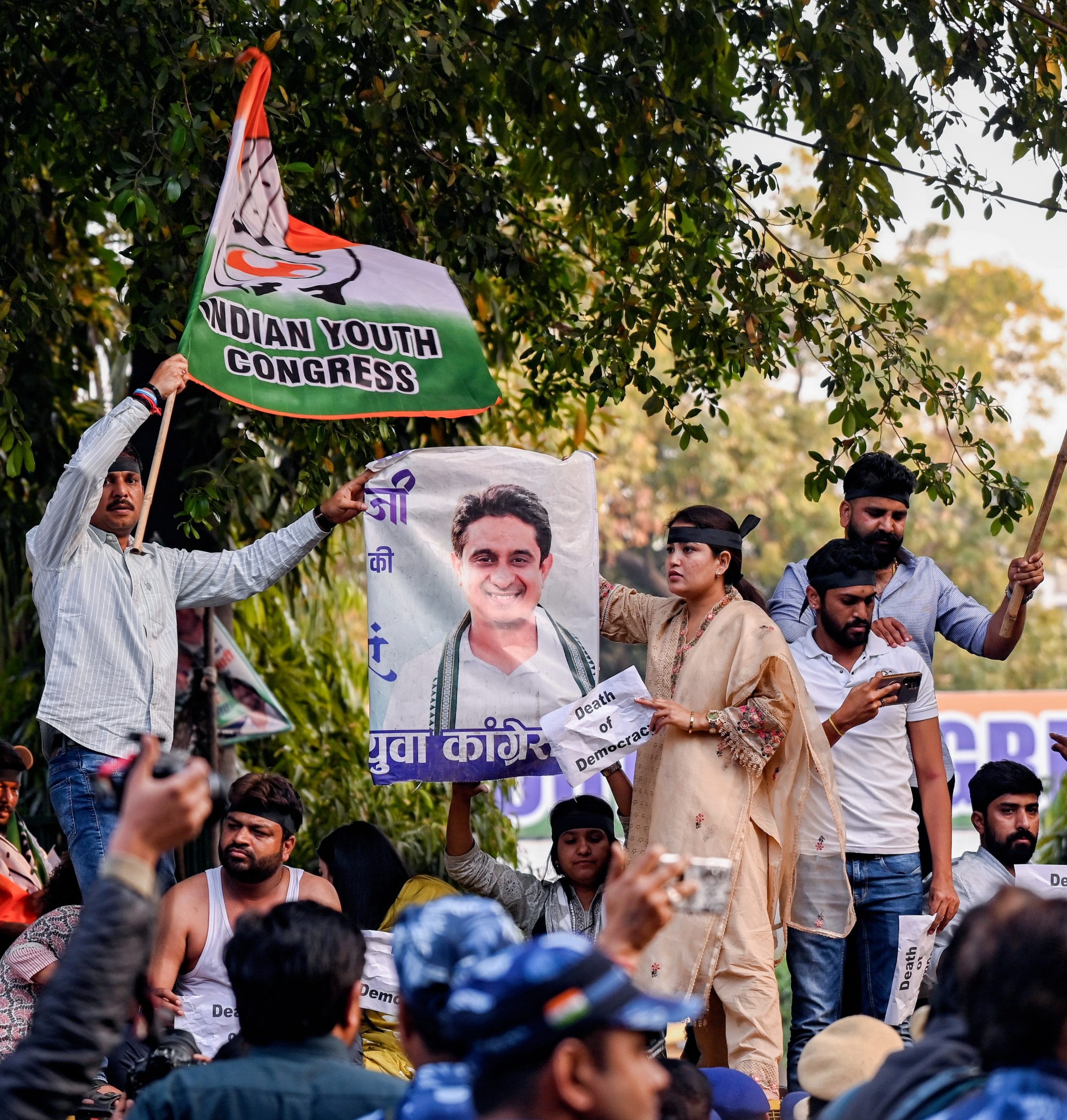
Surjewala asserts that in each decade and a half, natural changes have occurred depending on the political circumstances. “For example, I was the Youth Congress national president between 2000 and 2005. So Youth Congress is always the most effective when we are out of power. Of course, Mr Sanjay Gandhi and then Rajiv ji once used the agency of Youth Congress for social reconstruction. So it performs different roles at different times, under different circumstances, for the Congress party,” he says.
Surjewala pointed out that during Covid-19, the Youth Congress was “at the forefront of Covid assistance to citizens”. He asserted that the Youth Congress has played an important educational role, as well as the organisational role of building new young leaders.
“Youth Congress has been doing the best within the means to highlight issues, and the latest instance where Mr Uday Bhanu Chib has been unjustifiably and illegally arrested, along with other leaders of the Youth Congress, reflects as to how democracy is under attack by those at the helm of power. When dissent dies, democracy and constitutional norms also start dying,” he said.
University of Life
So what went wrong with Sanjay’s ‘stormtroopers’? According to Chandrachur Singh, the problem lies in a “disconnect with the grassroots”.
“When somebody says that Congress should go back to the grassroots, what does that mean? It primarily means that it should resurrect all these organizations,” he asserted. Strengthening the Congress, Singh said, means strengthening organisations like the Youth Congress, particularly in the states where the Congress is in power.
As for the ray of hope that Rahul’s attempts may have offered, Singh asserted that the American system of recruitment, with primaries and the secondaries, “doesn’t work here”.
Kidwai also called it a “leadership failure on the part of Rahul, not so much of the people who he is hiring or people who are leaving him”.
“Sanjay would think and dream about politics. He was very hands-on. I think Rahul lacks that street smartness, and therefore, people around him are also not street smart…People around Sanjay were all first class graduates from the University of life. Rahul has not produced a single graduate from the University of Life,” he told ThePrint.
Rai from CSDS acknowledged that while IYC served as a stepping stone into the leadership pantheon of Congress, it “does not work so efficiently now”.
However, he blamed it as a phenomena across parties. “The transition from youth platforms and cadres to key leadership posts in most parties have taken a hit due to rampancy of political defections and lure of office, and IYC is no exception to this rampant phenomenon,” he said.
He asserted that the electoral decline of Congress in recent years had an “electoral disconnect and demoralising impact” on IYC, asserting that the organisation needs to “reconnect with the public and campaign for their pressing issues to revive their political relevance and improve the electoral fortunes of the Congress”.
“The revival plans of the Congress seemed to have a galvanising effect, but electoral success is the only panacea that can help them in regaining its lost glory,” Rai said.
(Edited by Nardeep Singh Dahiya)
Also Read: ‘Mediocre loner’ to Emergency bad boy, Sanjay Gandhi is the big ‘what if’ in Indian politics