





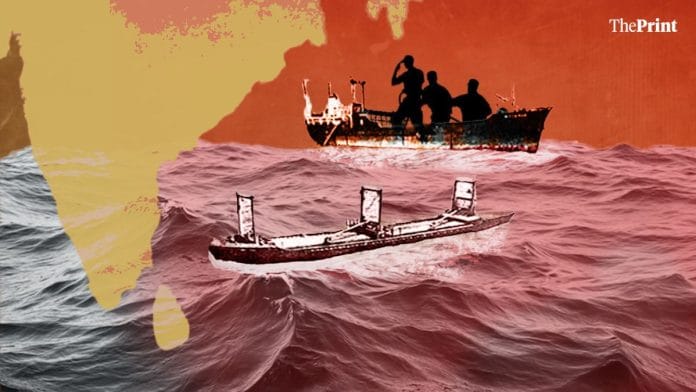

Moisture-laden south-easterly trade winds had already made their way across the equator, sweeping over the Bay of Bengal.
With monsoon firmly in place, at any time, without fair warning, the calmness could pave the way for turbulent seas.
It was 20 June 1985. The serenity betrayed what was about to unfold.
That afternoon, on the opposite coast of the Indian Peninsula, a radio message crackled in Mumbai, in the office of Maini Shipping Private Limited Company, owned by Captain Harcharan Singh Maini.
The company had not a sliver of a hint that the message was the first sign of the crisis—two Indian ships were about to disappear. It would rock Parliament and test Indian diplomacy and domestic maritime policy.
Tales of missing sailors and ships in danger are not just a relic of history.
Three Indian seafarers, aboard MT Settebello in the Gulf of Oman, were confirmed dead after a US military strike on 10 June 2026. The tragedy unfolded amid the escalating tensions in West Asia—after the United States had imposed a naval blockade in the Strait of Hormuz.
The radio transmission in 1985 came from the ship M. V. Nitya Nanak.
The message was clear and short.
It stated, fresh holes had developed in No. 1 hold—the foremost cargo compartment at the ship’s bow—and water was coming in.
Carrying 3440 tonnes of salt from Gujarat’s Kandla Port, Nitya Nanak was voyaging toward Kolkata. Twenty-three crew members were on board.
Before embarking toward its final destination, Nitya Nanak rounded the tip of southern India through the confluence of the Arabian Sea, the Indian Ocean and the Bay of Bengal, and made a short repair stop at Colombo.
The message from 20 June was not a lone call. It was, in fact, the second message in a series of three transmissions that the master of the ship, Captain Krishna Dev Puri, had made to its owner back in Mumbai.
The first one was sent out almost a week earlier, on 12 June 1985. The message reported two leaks below the water level, not affirmatively suggesting that the vessel was in immediate peril. The gravity of the call remained unclear. Soon, a third message would follow.
In the early hours of 21 June, around 8:30 in the morning, a final message was sent by the master. With fresh ingress of water into one of the holds, Nitya Nanak decided to head to Chennai instead. At this point, the ship was about 90 nautical miles off the coast of Trincomalee in Sri Lanka.
Then everything went silent. No radio chatter. No warnings. No sightings. The ship never made it.
The ship, along with its crew of twenty-three, just vanished.
Nitya Nanak was not the only one. Accompanying it into the clouds of mystery was another sister vessel belonging to the same company, M. V. Nitya Ram.
Under the command of Captain LK Sharma and a crew of 21 persons, Nitya Ram set sail from Kolkata on 17 June 1985. It was bound for Thoothukudi, carrying 5,182 tons of coal.
The next day, Nitya Ram complained of flooding in one of its cargo holds. The next message was received from Nitya Ram on 21 June at around 9:20 in the morning, within an hour of the last message sent by Nitya Nanak.
But unlike Nitya Nanak’s distressed radio message, the transmission from Nitya Ram on 21 June seemed less tense and more reassuring.
The captain informed the headquarters in Mumbai that the problem had been taken care of and the ship would proceed as scheduled to Thoothukudi. Nitya Ram was expected to be ashore by 25 June.
Two days later, on 27 June, Nitya Ram, too, never showed up.
The irony was striking. Two ships belonging to the same company, traversing the same waters just days apart, had both vanished without a trace.
Murder or accident?
As the realisation set in that ships might have been, indeed, lost, there were more doubts than answers.
There was no contact whatsoever. No distress signal. No trace, not a single piece of wreckage or even a “chappal” as Director-General of Shipping, Niti Bhushan Chakraborti, remarked during the investigations.
An article in India Today, from 15 August 1985, said that many veteran sailors in the navy and coast-guard pointed out “that ships have tremendous resilience and do not disappear like snowflakes in fair weather.” Another article in The Patriot even entertained the possibility of a new “Bermuda Triangle” hiding in the Bay.
At stake were the lives of forty-four seafarers.
Their families sat glued to their telephones. The wait was endless, with no clarity that the phone would ring at all. Even if it did, they dreaded the message it might carry.
As the days passed, doubts deepened and rumours multiplied. The events of 1985 were alarming enough to whip up a storm.
The entire nation was engulfed with anger, helplessness and grief.
It was only on 12 August, more than a month after the two ships had disappeared, that the Parliament finally took up the matter. The debate could hardly conceal the dismay and the rage that gripped the house.
“This is a clear case of murder….It is a calculated and premeditated attempt, which is something which we should not overlook,” said the Speaker, Dr Bal Ram Jakhar.
A calling attention motion was invoked, and Ramswaroop Ram, a Congress MP, took the charge.
“What is the power working in Maini Shipping Company that is drowning the men and sinking the property of the country, and no action is being taken against it?” asked Ram.
Questions of humanity were raised, and calls for the immediate arrest of the company owners echoed in unison in the house. The sharpest criticism, however, did not come from the Opposition circles, but from members of the ruling Indian National Congress itself.
“I would like to say that such people should be tied to a rope around their waist and paraded on the roads of Bombay. If you do not take such action against these traitors and put them behind bars, I shall term it Government’s impotency,” remarked Ram.
Then, Ziaur Rahman Ansari, Minister of State, Ministry of Shipping and Transport, had the floor. A moment of eerie silence emerged, and the restless MPs were all ears.
Ansari said that the owners only intimated the authorities of the missing ships days after the disappearances—five days in the case of Nitya Nanak and six for Nitya Ram.
The search and rescue operations, therefore, could only begin on 27 June, nearly a week later.
A wide array of resources was mobilised, Ansari argued. The Indian Navy, the Indian Coast Guard and naval aircraft were deployed. Even Indian missions in Bangladesh, Maldives, Sri Lanka and Singapore were requested to approach local authorities for any information on the two vessels.
Further radio exchanges from the owners revealed a troubling picture, said Ansari. Despite being aware that the repair work could not be undertaken owing to the absence of spare parts and the ship’s main transmitter being defective, the owners instructed Nitya Nanak to continue as scheduled to Kolkata.
The mounting evidence pointed in one direction—sheer callousness and negligence on the part of the owners. The vessels were steering straight toward a tragic end.
Ansari made the government’s assessment clear—the owners failed to exercise “due care in the matter.”
The remaining flotilla of Maini Shipping, which included three ships and three inland barges, informed Ansari, was brought under investigation to check its seaworthiness.
With that, all hell broke loose in the Parliament. Accusations, anger and confusion rose like smoke from all corners.
Questions of negligence echoed the loudest.
Was it the negligence of the crew or the officers in charge of issuing fitness certification? Were the ships equipped with lifeboats? Fingers were pointed in every direction.
All merchant ships are ordinarily required to send a daily “noon message” detailing their latitude, speed, course and estimated time of arrival. Yet, subsequent reports suggested that owners themselves were unclear of the vessels’ last known positions.
The obvious questions arose—were the daily calls not being tracked, or were they simply being ignored?
All roads, thus, increasingly revealed that the owners were to be blamed.
And since all radio messages are sent through state agencies, the government itself came under glaring radar. Soon, the effectiveness of the government’s inspection, certification and enforcement mechanisms became the subject of fierce debate.
“Blaming the owner is only one part of it. It is important that we focus…on what the government should have done, what is the due care and the due safety measures they should have been taken,” said Congress’ Kamal Nath.
A “theory of collusion” soon took deep roots. Both Nath and CPI(M)’s Saifuddin Choudhury championed it aggressively.
“To me, it appears that this is not only negligence on the part of owners. There appears to be some collusion, because when for five days no radio contact is there, DG of Shipping keeps quiet…Is this not collusion?” asked Kamal Nath.
The theory was rebuked by Ansari. On the issue of the certificate of seaworthiness, Ansari explained that certificates are issued by classification societies, which are international bodies.
“Classification societies have made lapses; they have issued wrong certificates,” remarked Ansari.
Ansari added that Maini Shipping had reportedly not dry-docked its vessels, a scheduled maintenance procedure, for over three years. This is despite regulations mandating docking every two years.
Ansari argued that without prior permission, the classification society had just extended the period for dry-docking.
“If, after the inquiry, it is found that they have taken a wrong decision, we shall certainly take all necessary steps which can be taken against the classification society,” argued Ansari.
In the government’s defence, Ansari argued that radio messages are of three types—ordinary, 3X and SOS. It is only the latter two that require mandatory forwarding to the concerned departments. However, all three radio transmissions in Nitya Nanak’s case were ordinary messages.
“If the lapse can be anywhere, it is on the part of master of the ship who ought to have marked on the message 3X or SOS…,” said Ansari. Irrespective of the category of the messages, it was the owners’ obligation to inform the Mercantile Marine Department that the vessels were in distress.
“This is an issue which just indicates the criminal behaviour of the owner of the ship and this is why we have lodged the FIR with the Central Bureau of Investigation (CBI),” said Ansari.
Conspiracy theories take shape
No amount of discussions could clear the mist of confusion that had taken over. What emerged instead were mounting conjectures and a host of conspiracy theories.
Some posited whether it was bad weather that took the ships down. Many whispered that a foreign hand might be involved.
“I think the high pirates have taken the ship,” shouted George Gilbert Swell, an Independent MP from Shillong.
Some argued that ships might have been secretly sold.
“There have been cases where ships have been taken and sold as junks in Singapore and Taiwan. They have a flourishing business in this,” said Congress’ V Kishore Chandra Deo in the Parliament.
Some even suspected scuttling, the intentional flooding and sinking of a ship to claim insurance. The theory did not lack precedent.
Just a few years earlier, such a conspiracy was uncovered.
Commodore Ranjit B Rai, who as the Director of Naval Operations in 1980 assisted the CBI, in the alleged sinking of MV Averilla and SS Oh Dai, found a fabricated conspiracy. The two ships had been deliberately scuttled to claim insurance, supported by forged paper trail and cargo records. All the crew survived, and the insurance claims were eventually rejected by the courts.
The rumours of scuttling were widespread, yet not quite probable in this case, said Captain Yashoverman Sharma, Director of True North Competence Management, a consultancy firm specializing in training, and capacity building for the global transportation and maritime sector.
“Scuttling was fairly easy to do,” said Sharma. “Once you open the sea valves and let the engine room flood, the ship would go down quite effortlessly.”
Such operations, Sharma added, involve rescuing the crew beforehand and swearing them to secrecy, none of which happened in this case—as no crew was ever found.
Another theory gaining traction, as Saifuddin Chaudhary observed, was that the ships were hijacked by the Tamil Tigers.
“The two ships were reportedly close to Jaffna when lost, LTTE involvement remains one possibility, but nobody knows for sure,” said Rai.
Rai, who served as Director of Naval Intelligence in 1986, called the LTTE a ruthless and powerful organisation.
“Money was never much of a problem. What they did need were arms and ammunition. They often sponsored shipping companies, hijacked vessels, organised killings, and renamed the ships before operating them themselves,” he said.
Rebuking the hijacking theory, Ansari said, the hijackers, of a plane or ship, tend to boast about it because they want to create a sense of terror.
The argument, however, did not sit well with Deo.
He argued that the hijackers will not boast to the world “when the motive itself is for monetary gains.”
CBI investigations
It was a difficult period for the country. Just two days after Nitya Nanak disappeared, on 23 June 1985, the Air India flight 182 bombing claimed all 329 lives onboard. For the families of the two missing vessels, there was no such certainty.
Congress’ Jayanti Patnaik questioned in Parliament whether there were any similar cases of ships just vanishing without leaving a single trace of life or fragments of wreckage.
With the ministry in the spotlight, Ansari said over the past five years, almost eighteen such cases were reported worldwide.
In fourteen of these cases, no trace of any crew members was ever found.
Patnaik and Deo further raised a fresh set of arguments. The two ships disappeared in one of the busiest sea lanes, at a time when conditions in the Bay of Bengal were quite suitable for navigation, with the waves not higher than 6 to 7 feet.
“There was no chance of collision,” argued Deo.
The restlessness grew with every passing minute. To the Parliamentarians, there was more to the story than what met the eye. Yet, one aspect commanded a unanimous consensus—the owners had to be prosecuted without delay.
Closing the debate, Ansari acknowledged the anxieties and concerns of the house. However, he argued, with investigation still underway, he was in no position to either believe or dismiss any of the claims made so far.
“The CBI is the proper agency to inquiry (sic) into all these facts and also to inquire into the conduct of this owner…At this stage, nobody knows what the reality is, what actually has happened,” said Ansari.
Answers emerge
Gradually, things began to make more sense.
Negligence and neglect came to the fore, and it became increasingly clear that the two vessels were far from seaworthy.
“These vessels were probably second-hand vessels, which were not very well maintained or in great shape,” said Captain Naveen S Singhal, JAG Consultants Pte Ltd, a Marine & Shipping Consultancy firm, drawing from his own experience and conversations with someone involved with the case.
Many smaller shipping companies at the time struggled to preserve high standards of maintenance.
“These ships weren’t in the best shape,” said Captain Sharma. “And as a seaman, I know that in rough weather, flooding can sink even the best of ships. Whatever transpired must have unravelled so quickly that the crew had no chance to initiate a rescue or transmit a Mayday.”
What is also equally important is the weather. By the end of May, it starts to deteriorate in the Bay.
“By late June, the monsoon would have been in full swing. That’s anything but fair weather,” said Singhal. “Waves go as high as fifteen feet; anyone onboard would be tossing all over.”
Singhal explained that any breach in the holds would allow water to rush in. Given the poor state of these vessels and with salt in these holds rapidly absorbing water, the vessel loses buoyancy, causing it to sink.
On the question of debris, Singhal said, it could have floated ashore along the Sri Lankan coast. “But communication was relatively limited forty years back; probably, its presence never got reported. And given the advanced monsoon conditions, local fishermen, who were most likely to spot it, rarely venture out to sea in this weather,” he said.
The questions raised in Parliament in 1985 did not entirely fade.
Almost a year later, on 31 July 1986, the issue found its way back, BJP’s C Janga Reddy and Dr AK Patel raised the questions this time. Once again, the seaworthiness of the vessels remained the focus.
Congress’ Rajesh Pilot, then Minister of State, finally laid the findings before the house.
“The Chief Metropolitan Magistrate at Bombay, has come to a conclusion that the vessel was not maintained properly by owners which caused water to enter the holds and which probably caused her to sink,” replied Pilot. “There is a prima facie case of gross negligence on the part of the owners.”
CBI concluded its investigations in 1989. It revealed that the owners had carried out a large number of temporary repairs and had failed to even inform the authorities about them. Nitya Nanak, it was found, was far from seaworthy when she departed Colombo.
A death compensation of Rs 42,65,233 was deposited by the owner with the commissioner for Workmen’s Compensation, Mumbai.
Also read: Andhra is the intellectual home of Naxalism. How fire was lit in schools, farms & songs
Perils at sea
For Captain Yashoverman Sharma, the loss was personal.
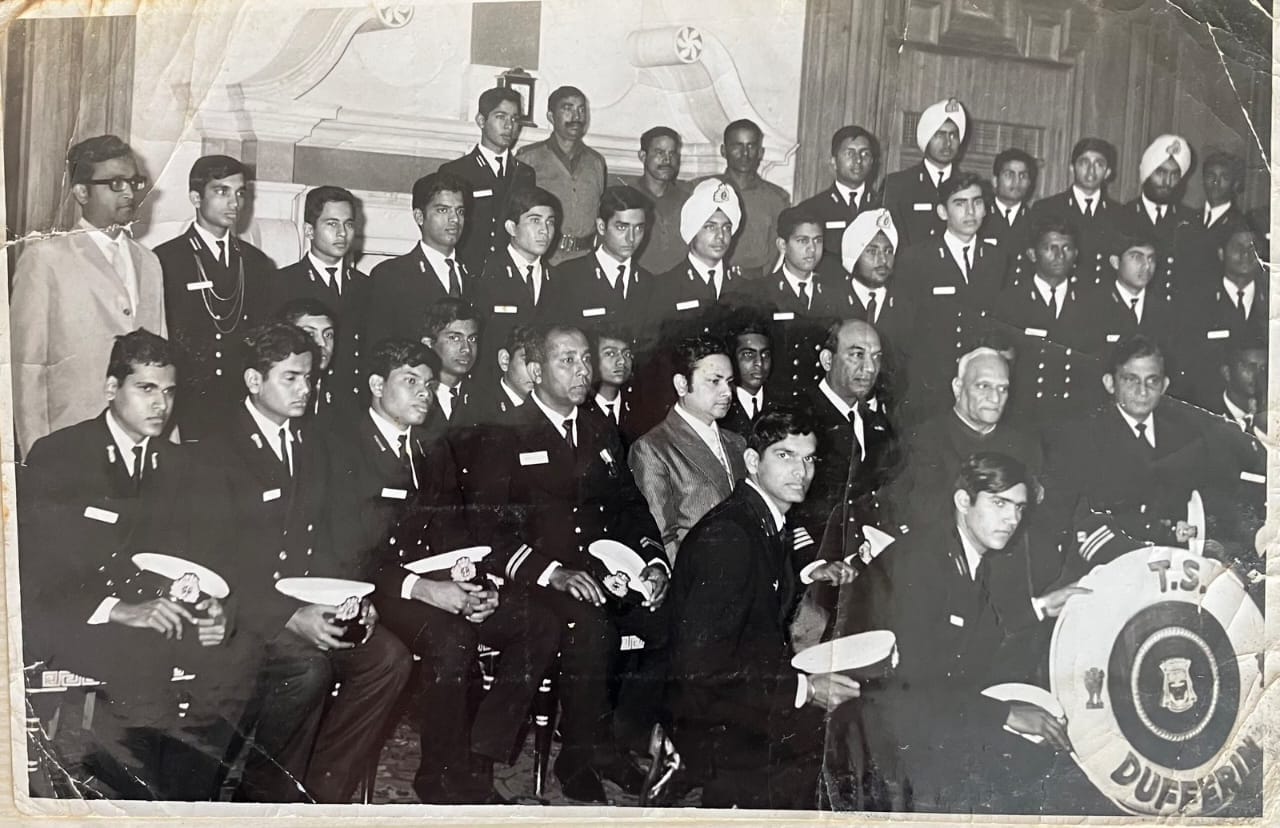
“We lost a captain [KD Puri] who was one of my trainers on the Dufferin, first dedicated maritime training vessel in India,” said Sharma. “Captain Puri was exceptionally sharp and unorthodox. For him, results mattered more than rigid procedures. He was quite strict, yet deeply loved by everybody.”
Around the globe, ships continued to disappear and the list of casualties multiplied.
Two years later, in 1987, the capsizing of the ferry Herald of Free Enterprise in Zeebrugge killed about 193 passengers and crew. It caught global attention.
And in 1993, the International Maritime Organisation (IMO) finally introduced the International Safety Management (ISM) Code, laying down guidelines for the safe management and operation of ships. All shipping companies, from then on, required a “Safety Management Certificate” as well as “Document of Compliance.”
India soon followed the lead. In 1998, it implemented the ISM code on Indian-flagged ships in a phased manner. The incidents of 1985 had already pushed India toward a tighter regulatory control on Classification Societies. In 1987, India withdrew its recognition of the French Classification society, Bureau Veritas, for a year; Bureau Veritas was then responsible for certifying ships as seaworthy.
The events of 1985, however, left a permanent scar on India’s maritime history.
Many questions have been answered, and the conspiracy theories have mostly faded. Yet, forty years later, the perils to life at sea continue to haunt the present.
Most recently, with mounting tensions around the Strait of Hormuz, such concerns have once again swamped the headlines. “Collateral at sea: Indian sailors caught in the expanding West Asia war”, wrote The New Indian Express.
The Hindu, on 29 June 2026, asked “Can neutral ships be lawfully attacked?” after the three merchant vessels carrying Indian seafarers—Settebello, Marivex and Jalveer—were attacked by US Navy strikes.
“Make it clear: Indian sailors are not collateral damage,” read an editorial in The Indian Express.
Such continued tragedies are a grim reminder of how life at sea continues to voyage through waters of uncertainty. What it leaves behind are lost lives, broken families and unanswered questions.
(Edited by Theres Sudeep)