









For much of its 80-year-long history, the United Nations has presided over a divided world. It has secured neither peace nor prosperity. Even in Europe, whose wars had preoccupied the world for the first half of the 20th century and led to the establishment of the organisation, the European Union did more for peace and prosperity than the vaunted UN did.
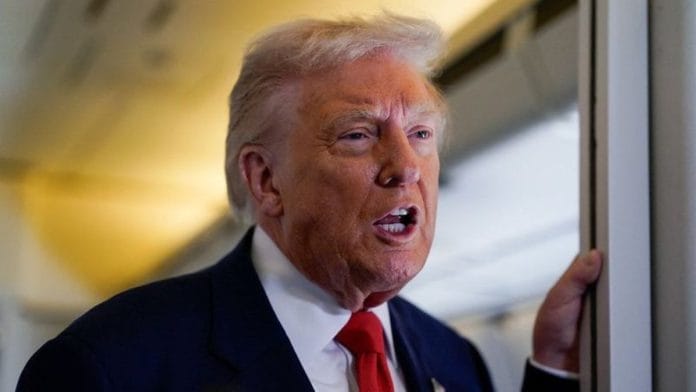
The fact is that the UN, the highest institution and leading symbol for a rules-based order, has always been a veneer for the realpolitik of powerful nations. Now, by abducting the sitting President of Venezuela and withdrawing the US from 66 international organisations, Trump is stripping away the veneer and exposing the world for what it is—a might-is-right, my-way-or-the-highway, almost Darwinian kind of place.
In the years between 1945 and 1991, there were two superpowers, the US and USSR, which intervened at will in different corners of the world. Sometimes, in a proxy conflict. Often, on their own. Because there were two superpowers, it may have given the world the sense of a check and balance, but that was hardly institutional and lasted until the USSR collapsed.
The unipolar world that arrived in the 1990s seemed a more cooperative place, of the end-of-history kind, where one political ideology, democracy, and one economic imperative, free markets, would define nations. Indeed, the latter is a substantive reason that a unipolar world didn’t seem Darwinian. Economic globalisation and its chief instrument, the free market, were first given a push by the then US President Ronald Reagan and the then UK Prime Minister Margaret Thatcher in the 1980s. By 1991, the erstwhile Second World, namely the Communist bloc of Europe, was transitioning to a market economy. Even the “Third World” of developing countries embraced the promise of markets led by the two most populous countries, China and India.
International institutions did play a role in facilitating the age of globalisation. Not so much the UN, but the Bretton Woods twins, the International Monetary Fund (IMF) and World Bank. Both nudged and financed structural market reform and fiscal rectitude in much of the developing world, from Latin America to Africa to Asia. The World Trade Organization (WTO) replaced its predecessor, the General Agreement on Tariffs and Trade (GATT), to ensure the free flow of goods across borders.
Of course, the Bretton Woods institutions were dominated by the US and its allies in Europe — the US had, and still has, an effective veto on the board decisions of the two organisations. The intellectual direction of these institutions was influenced by the ideas adopted by Reagan and Thatcher. The WTO, though based on the principle of one country, one vote, was also a US-led initiative.
Also read: Trump is not merely controlling the backyard. He is disrupting networks that lie beneath
Era of globalisation
Essentially, the era of globalisation was a US-led ordering of the world. While the benefits were uneven, much of the world fell in line. Some of the largest and most consequential countries did make the most of it. China and India lifted hundreds of millions out of poverty, something that UN development outreach or aid efforts would never have achieved.
Overall, Asia did better than Africa and Latin America. And while the era of globalisation did not require the US to threaten countries with its military might or coerce them into military alliances, it was very much a unipolar, US-dominated time. There were wars in Afghanistan, Iraq, Palestine, Rwanda, Burundi, and Congo in which the US either intervened or did not. No other country influenced any outcomes or conflicts beyond their backyard.
In the end, free-market economics imploded in its home with the global financial crisis of 2008. The bailout of “fat cat” bankers and financiers while ordinary workers lost jobs because of free trade (or technological change) was bound to create a backlash. Trump was the manifestation of it. That China had risen to become a real threat to the US added to the anxieties that have fuelled Trump.
Trump’s response, in his second coming, has been to tear down the order that America underwrote from 1945, but particularly from 1991, when there was no longer a second superpower that needed active countering.
Trade was the first target because it made a material difference to the average American voter in the former manufacturing belt. Same for the relatively easy movement of labour. The institutions of the global order naturally followed. The UN is fair game, given how ineffective it has been throughout its history. Surprisingly, Trump has withdrawn from select organisations/agencies rather than the whole.
For all the murmurs of multipolarity, Trump knows it’s still a unipolar world and is exercising muscle without veneer. From trade to wars, might is right. Especially if a country doesn’t fall in line with a bullying US. At some point, China will become an equal power. The world will change again. Until then, a divided world (everyone for themselves) and the sole superpower will have to rethink the rules of engagement on the go.
The author is Chief Economist, Vedanta. He tweets @nayyardhiraj. Views are personal.
(Edited by Saptak Datta)