






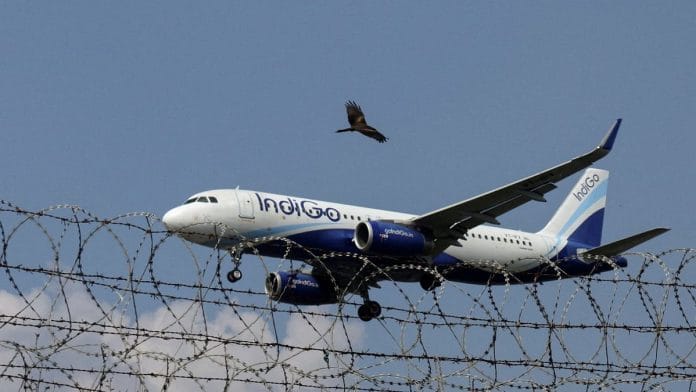



There is chaos at India’s airports and madness in the skies. The primary agent of chaos is Indigo, India’s largest airline. It has cancelled over 500 flights. Many, if not most, of these cancellations have been last-minute affairs. Passengers go to the airport, suffer through serial delays and then several hours later are forced to go home as their flight is cancelled.
It gets worse. Often, the situation is too chaotic for checked-in bags to be retrieved, and thousands of suitcases are piling up at airports.
Not only do the delays inconvenience passengers, but they also infuriate them because there are not enough Indigo ground staff to provide information. And when a lucky passenger does manage to speak to a staff member, it usually transpires that the employee is as clueless as the passenger.
As the delays and cancellations have mounted, the inconvenience to passengers has crossed all reasonable levels. People have missed their own weddings. Events that were scheduled a long time ago have had to be cancelled because no flights are available. Worse still, things have been so disorganised and chaotic at Indigo that nobody can offer any assurances about whether flights will operate the next day. Or even after that.
Chaos at airports is something that most passengers have had to confront at some stage. But it is nearly always a consequence of events that nobody has any control over: a cyclone, for instance, or a catastrophic accident or technical failures (software, radar, etc). This time, however, the explanation is as simple as it is worrying: management failure.
How, you may wonder, did Indigo, long regarded as a triumph of Indian ingenuity and super management, get it so wrong? And, people are beginning to wonder how Air India, the nation’s favourite whipping boy, managed to get it so right when faced with the same sets of circumstances?
There are three components to the crisis, so let’s take them one by one.
Also read: Sanchar Saathi app U-turn is a rare victory for middle-class Indians against Modi govt
Pilots, Indigo & government
The first is the pilots. For decades, the pilots have been regarded as the Bad Boys of Indian aviation. Perhaps because they were paid more than anyone else, they also behaved worse than anyone else. They would deliberately report sick at the last moment to throw schedules out of gear. They were forever demanding better pay or easier conditions with no thought about passengers and their interests. The final straw for me came in the 1990s when India was burning in the aftermath of the demolition of the Babri masjid. It was at this point that the pilots chose to go on strike.
But all of that has changed. Though the image problems of the old days persist, this generation of pilots is far more responsible, and many would argue that they are actually the victims in the new dispensation. One instance: when the Tatas created the new Air India by merging the old entity (which was still divided into Indian Airlines and Air India factions) with Vistara and Air India Express, the pilots were expected to raise merry hell about the rationalisation. In fact, they were reasonable and accommodating.
This week’s chaos is being blamed on the pilots—but they are not at fault. The Directorate General of Civil Aviation (DGCA), in consultation with airlines, changed flight duty hours, giving pilots longer rest stops between flights. If you work your pilots to the bone as Indigo does, these longer rest hours can create shortages, leaving fewer pilots available at any given time.
Airlines were given several months to make arrangements for the new duty hours, and some, like Air India, made the necessary adjustments, which is why its flights have been relatively unaffected.
That takes us to the second component of this crisis: the airlines. Indigo has apologised and said that it failed to account for the changed pilot environment.
But did it? Many people in the airline industry suspect that Indigo may not be entirely unhappy about the chaos. In the old days, pilots would threaten to go on strike just before the festive season. The airline management and the government (in the days of nationalised airlines, the two were the same) would panic and give in to their demands.
Something similar has happened here. As the chaos has mounted, a panicky government has agreed to withdraw (for an unspecified period of time) the new pilot hours and so Indigo has got what it wanted. It is back to business as usual.
Which leaves the third component in this equation: the government. Has it been played for a fool? Did it not know that Indigo had not hired enough pilots to be able to function under the new rules? Does it not have any monitoring role through the DGCA and other bodies?
And in any case, the Ministry of Civil Aviation’s job is to look out for the Indian passenger, not the Indian airline owner. People have suffered terribly during this man-made crisis. Should the airlines not be made to pay them substantial compensation? Should the airline itself be fined for its reckless disregard of the number of pilots needed to fly the passengers whose money it had already taken?
It’s early days, and it will take a little longer for the chaos to subside, but once that happens, the Civil Aviation Minister Ram Mohan Naidu owes it to the Indian people to demonstrate that he is up to doing the job he has been appointed to do.
Vir Sanghvi is a print and television journalist and talk show host. He tweets @virsanghvi. Views are personal.
(Edited by Ratan Priya)