




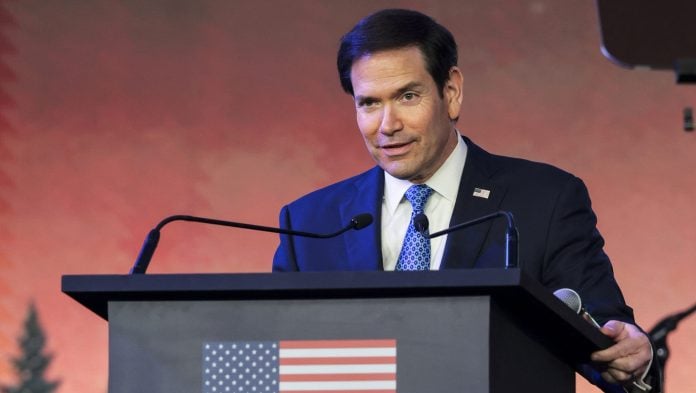

US Secretary of State Marco Rubio arrived in Mumbai on 20 October and met External Affairs Minister S Jaishankar amid an American debate over President Donald Trump’s Russia policy.
“I think the president wants to take the 60-day period of time to sort of analyze what imposing both sanctions and tariffs will mean to the global economy and even to the US economy,” Rubio said before departing for Uzbekistan and India on 17 October.
With the 3 November midterm elections approaching, Trump’s diesel deal and sanctions waiver bring presidential discretion, congressional authority, and Republican priorities into focus.
On 9 October, the US president announced that Russia would supply more than 3,00,000 metric tonnes of diesel to American and global markets, with further deliveries, as Washington temporarily relaxed restrictions on Russian fuel. Easing costs may be politically appealing, although sustained relief remains uncertain. Higher diesel prices raise farming, freight, and household costs, with possible electoral consequences. Trump has invoked existing congressional authority rather than requesting fresh permission. The 16 October executive order cites Section 115 of the Lindsey O. Graham Sanctioning Russia and Iran Act, permitting waivers subject to written certification to Congress and an explanatory report.
The current dispute is about whether presidential waiver authority serves or undermines legislative intent. Who decides the balance between immediate economic relief and the longer-term costs of accommodating an adversary?
Executive action and Congressional authority
Sanctions bring legislative resolve into tension with executive flexibility. Congress imposes penalties and demands accountability. Presidents implement them amid negotiations, market disruptions, and competing security priorities. Waivers allow policy adjustments but can weaken the pressure Congress intended.
One reading of Trump’s position is that US foreign policy must account for its costs to Americans. Rubio linked energy pressures to the US-Israel War on Iran, Houthi attacks on Saudi Arabia, and the Russia-Ukraine War.
“These conflicts around the world are starting to crash into each other,” he said.
Pressure in one theatre can raise costs elsewhere. Rubio’s defence, that Russian diesel would reach the market anyway, addresses the availability of Russian oil. However, Washington must still explain what Moscow should deliver, how sanctions relief advances diplomacy, and when pressure would resume, lest domestic politics weaken the purpose of sanctions. Opposition has crossed party lines. Republican Senators Rick Scott and Thom Tillis have criticised the waiver, and Democrats have demanded its reversal. The Congress recess until after Election Day, though, limits prospects for an immediate legislative response.
Rubio’s proposed assessment could extend beyond the midterms if it takes 60 days, potentially deferring a difficult choice. This does not establish an electoral motive. Nor does the executive order provide a corresponding automatic expiry: economic review is not a legally fixed deadline for restoring restrictions. Whether it produces clear criteria or another postponement matters alongside its duration. The assessment period alone cannot tell businesses or partners when restrictions might return or what findings would justify restoration. Uncertainty may strengthen presidential bargaining, but it complicates planning. Businesses need clarity on permissible transactions, partners on relief’s durability, and Congress on whether review means reassessment or postponement. The value of discretion rests partly on explaining its exercise.
Also read: Why China is gunning for gold—‘Whoever controls the gold can set the rules’
The price of electoral politics on strategy
The issue tests whether Republican agreement on American strength translates into agreement on its instruments. Pressure on Russia, consumer relief, and presidential bargaining can each claim to advance national interests while pulling policy in competing directions.
Those favouring sustained pressure on Moscow see sanctions relief as weakening the credibility of future threats. Those prioritising affordability find sanctions harder to defend when voters bear visible costs.
Supporters of presidential discretion may emphasise negotiating freedom. These are possible arguments, rather than defined party camps. They need not always conflict, but concessions require weighing immediate benefits against uncertain diplomatic gains and longer-term strategic costs. Republican criticism of the diesel deal predates the broader waiver, suggesting disagreement over policy direction and legal implementation. Reporting describes growing resistance within Trump’s party before the midterms.
Dissent, however, need not amount to an organised break with Trump. Legislators can oppose concessions while backing his wider agenda. The harder test is whether they constrain his discretion despite potential costs to the party’s election message. Agreement on principles becomes harder when the president’s choices impose domestic costs. Trump can present the Russia agreement as evidence that personal diplomacy delivers benefits. Republicans may weigh foreign policy objections against accusations of obstructing economic relief. Democrats must explain how opposing accommodation with Russia would address Americans’ economic concerns. Neither party can easily separate strategic pressure from its domestic costs; each must explain how those costs relate to its preferred policy.
Announcing fuel supply does not ensure lasting affordability, either. Temporary relief could invite criticism that Washington benefited Moscow without delivering promised domestic gains. The bargain’s political appeal may precede evidence of economic and strategic returns. The midterms may influence legislators’ willingness and capacity to challenge the executive, institutional priorities, and presidential political space. Foreign governments will likely examine the results for clues about policy durability. Announcing and sustaining policy remain separate questions.
Also read: Disinvestment is back on the Modi govt’s agenda. PSU spending needs scrutiny too
America’s credibility and Rubio’s India visit
Allies and partners will assess how American adjustments are made and explained. Credibility for the nation rests on a clear relationship between objectives, concessions, and expected outcomes, rather than policy permanence. Reversals become harder to accommodate when their reasoning provides little guidance about the next decision.
Tactical relief may facilitate negotiations or avert wider economic damage. But how does Washington distinguish it from rewarding the conduct sanctions sought to discourage? How does the bargain serve a larger purpose? Power involves imposing costs and sustaining a credible strategy.
Rubio’s Mumbai meetings have brought these questions into engagement with an important partner while the domestic debate remains unresolved. His talks with Jaishankar covered energy and defence cooperation, and their trilateral meeting with UAE Foreign Minister Abdullah bin Zayed focused on regional energy security. These discussions test whether Washington can explain flexibility while recognising partners’ economic constraints. Rubio’s acknowledgement of India’s voluntary diversification and difficulties replacing Russian supplies recognises constraints involving availability, logistics, and affordability. But it raises the question of consistency: if Washington invokes economic constraints to accommodate Russian energy, how does it assess comparable constraints facing partners? Recognising the issue could make diplomatic expectations more workable, although temporary waivers may not resolve underlying disagreements. Rubio also advocated greater US energy trade to diversify Indian supplies. Commercial alternatives must therefore be assessed against the procurement constraints he has acknowledged.
At the Mumbai reception, Rubio presented the India-US partnership as an opportunity to shape the 21st century. Such ambition makes the terms of cooperation more consequential. Partners must judge how broad strategic assurances translate into predictable economic choices when domestic pressures change.
For India, sanctions relief invites questions about renewed pressure: which transactions remain permissible, what could trigger restrictions, and how would disagreements be managed? Discretionary waivers provide limited predictability. Immediate relief cannot settle strategic differences. New Delhi must assess its capacity to manage uncertainty as Washington’s domestic politics reshape energy engagement. Rubio’s assurances must consequently be assessed against an approach Congress and relevant constituencies may not sustain. Their durability depends partly on presidential authority, congressional powers, and political pressures. Flexibility alone cannot establish whether assurances retain political backing as circumstances change.
The political challenge is therefore not simply whether the administration can defend relief today, but whether it can clearly explain the reasoning that will govern future decisions. Partners must know how changing economic conditions, diplomatic progress, or congressional resistance could affect the bargain. Without that explanation, flexibility may leave them uncertain about the terms on which cooperation can be sustained. For legislators, the same issue concerns whether executive implementation remains accountable to the purposes for which Congress authorised sanctions in the first place.
Trump’s diesel bargain brings domestic pressures on American power into focus. Will Congress uphold legislative intent? How will Republicans balance loyalty to Trump with voters’ concerns over affordability and the need to maintain strategic resolve? Can Trump demonstrate that immediate relief advances a larger objective? Washington’s credibility rests partly on policy others can understand and reasonably expect to endure.
Monish Tourangbam is a Fellow at the Chintan Research Foundation (CRF), New Delhi. Views are personal.
(Edited by Prasanna Bachchhav)