






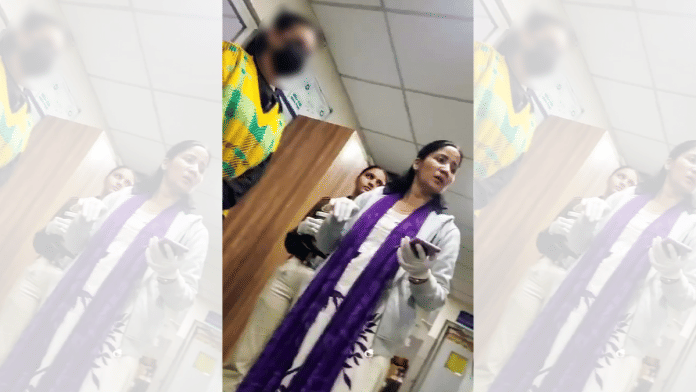



When it comes to fighting prejudice, there is some cause for relief, but also plenty for concern. Let’s start with the good news first. Three Arunachali women were subjected to hateful racial abuse, had sectarian slurs hurled at them, and were accused of possessing loose morals.
Tell anyone who comes from the Northeast that this happened in Delhi, and all you will get is a sad sigh of helplessness. There is so much prejudice against people from the region that its victims have gotten used to it.
But this time was different. Senior political figures got involved. The Chief Minister of Arunachal Pradesh, Pema Khandu, tweeted about it, and Jyotiraditya Scindia, the Union government’s Minister for Northeast affairs, made it an issue. The abusers were arrested and said, in their defence, that the insults were hurled in the heat of the moment. (It sounded like they thought that this made it okay.) Because of the massive political interest in this case, it will not go away. And perhaps the consequences faced by the abusers will serve as a warning to others.
Now, the concern. We could say that, a few years ago, such abuse came from ignorance. People in mainland India knew too little about the Northeast. That’s not true any longer. People in India’s metros are familiar with Khasis, Mizos, Nagas, and others. They know they are neither Nepali nor Chinese.
And yet, whenever there is an altercation of some description, they pull out all the old abuses: these people are ‘chinks’. The women have loose morals And so on.
That doesn’t seem to be going away any time soon and thousands of young people from the Northeast will continue to find themselves insulted in their own country.
How long for change?
Some people tell me to be patient. It always gets better with time, they say. Consider the fate of South Indians till the end of the 1960s. They were figures of fun in Hindi cinema, and their dark complexions earned them nicknames such as “Kalu”. Some of this may have been playful, but there was always an edge. For a start, it took North Indians a long time even to learn that all South Indians were not Madrasis.
This caused some baffling situations. In 1967, when the Shiv Sena was running around Bombay beating up Malayalis, it would tell its victims to leave. Go back to Madras. As most of the victims of the Shiv Sena’s anger had never been to Madras in their lives, they had no clue what to do next.
It’s nearly always like this. It starts with a jokey reference (‘hey Chinky’or ‘Oy Kalia’), and then, once the caricatures are set, they can easily be weaponised.
It is suggested that just as South Indians overcame North Indian prejudices and ignorance, so will the people of the Northeast. I hope that’s true. But I don’t intend to sit around and wait for this gradual change. We should keep locking racists up and arresting anyone who insults a person from the Northeast. Now that the process of punishment has begun, we should keep it going at full speed.
I wish I could end here and tell you how India will win the war against prejudice. But we both know that, as angry as we are about the attacks against people from the Northeast, the problem does not end there. Hindu society is built on a lack of respect for lower castes and contempt for Dalits. Apart from some lip service to the principles of equality, we do very little about it.
When the backward castes and the Dalits demand their rights, it often turns into a confrontation because the upper castes will not give them any respect without resistance. Fortunately, the ballot box has always been the battleground during these conflicts, so we have been spared some bloodshed.
But there is an elephant in the room. When two random people in Delhi abuse Northeast women, we get agitated, ministers issue statements, and no doubt, when the matter gets to the courts, more lectures will follow.
This is good and should be encouraged. But it obscures another, deeper problem.
Also read: Youth Congress, your foolish protest helped the Modi govt climb out of the AI summit hole
Baiting Muslims for votes
The largest number of victims of identity-based abuse in India are Muslims. And in their case, the abuse is increasing. More than at any point in the past two decades, they are made to feel like inferior beings—treated with suspicion and their Indianness and loyalty are constantly challenged.
In this case, the abuse comes from people at the top, and nobody is willing to do anything about it. For some politicians, baiting and insulting Muslims is a political stunt, a way of winning votes from communal Hindus.
Let’s take just one case. Himanta Biswa Sarma, Chief Minister of Assam—a poll-bound state, has lately said several things about Muslims that are clearly beyond the pale. He has encouraged Hindus to pay Muslims less, and one video shows him aiming a gun at Muslims. He has since disowned the video, but the other stuff still stands. The Election Commission has said nothing. And the Supreme Court has refused to deal with the matter, sending it to a lower court.
Where is the justice in all this?
So yes, I am delighted that the government is acting against the people who attacked people from the Northeast. All prejudice must be combated.
But can we really talk of fighting prejudice when 15 per cent of our population is vulnerable to abuse and discrimination and still has no means of redress?
Vir Sanghvi is a print and television journalist and talk show host. He tweets @virsanghvi. Views are personal.
(Edited by Ratan Priya)
Well, well Vir Sure,
You conveniently piggyback on Northeast outrage to platform Muslim victimhood, yet Owaisi’s ’15 minutes’ threat against Hindus barely registers in your universe. Stone pelting on Hindu festivals, attacks on processions, temple desecrations — systematically ignored by you. Hindu leaders responding to years of provocation is ‘beyond the pale’; Muslim aggression is contextualised and excused. Your selective outrage isn’t journalism at all — it’s advocacy with a byline. The real prejudice story you’re missing is the one you’re actively helping to bury.