





Two months ago, I saw a man walking the streets of Kolkata with his arms outstretched and head held high. His hair was matted, his clothes bedraggled. He was talking not to himself, but to someone the naked eye couldn’t see. The smile on the man’s lips was unmistakable. He was happy. Watching him, I felt envy, not pity. I remembered the countless times my bipolar disorder had taken a manic turn, giving me access to the heavens, making me a portal through which the dead can speak. The world and I are both more talkative when I am manic, and on the face of the homeless man, I could see the joy that results from conversations where you are both speaker and interlocutor. In that moment, I felt the only thing that separated us was privilege. I had a bed in which I could sleep. I had family and friends who hadn’t abandoned me. I had money with which I could buy therapy and medicines. All that the man seemed to have was elation and oblivion. I wanted what he had.
I ought to be careful about what I wish for. In early September, I found myself in Delhi, drinking copious amounts of coffee at three in the morning, ringing friends and waking them up at six, welcoming the insomnia that has always signalled the onset of psychosis. With my mind suddenly free of the straitjacketed numbness lithium and clozapine necessitate, I was crying and laughing again. I was threading together all of reality, joining dots that connected past, present, and future. The trauma of my childhood—I had been sexually abused from when I was eight until the age of 12—seeped into my conversations like a leaky pen blotting a shirt pocket. Yet again, I was unafraid of dying. Yet again, I felt I was becoming death.
Over the 19 years I have lived with my diagnosis of “bipolar disorder (type 1)”, my support system and I have seen the graph of my mania transform from an ascending curve to a steep vertical cliff. The expansiveness and joy that would accompany my initial hypomania have, of late, been replaced by the anger and aggression of full-fledged mania itself. I go from zero to 100 in hours. The results are often catastrophic: I call my bosses to yell at them, resigning from coveted jobs in a huff; I test the patience of my friends by accusing them of moral failure and deep neglect; I stand at my parents’ window on the 13th floor and fling down their clothes, passports and religious idols. My madness is a wrecking ball I haphazardly throw onto the world, destroying everything I otherwise cherish.
Madness is never an object I can inspect from within my mania. It becomes the lens through which I look at all that is inside and outside of me. As I begin ordering thought and emotion in the intricate patterns my manic mind invents, bipolarity somehow ceases to be a disorder. It is more a blessing. Since you cannot reason with someone who has swapped awareness for assurance, my parents and psychiatrist now have me institutionalised the minute they find me sleepless, animated, and irate. The loss of my freedoms is the price I pay for a decision they think of as protective, but one that I always internalise as punitive.
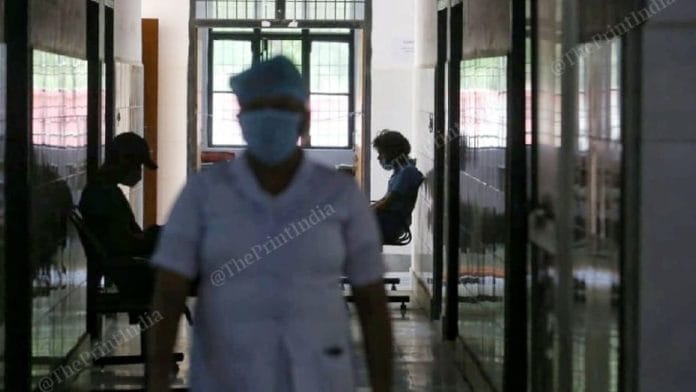
At the psychiatric facility in Kolkata where I have been admitted on four different occasions, I know the nurses and attendants by name. Here, I have played chess with a 10-year-old whose alleged outbursts had frightened his parents to the point of helplessness. I tried my best to distract him when patients in the male ward flew into a rage and could only be controlled by ropes and restraints. I befriended a man in his 60s who now lives at the facility indefinitely. “My sister doesn’t have the wherewithal to care for me, but that doesn’t mean I am alone,” he once said with a deadpan expression. I was scared I, too, would have a similar fate.
I recognise the orderlies the facility sends to pick me up. They are well-meaning but heavy-handed. Their first impulse is always to hold me by the wrists, sit me down and inject my arm with a sedative. The orderlies who came pouring out of an ambulance in Delhi, on the other hand, didn’t so much as touch me. They ushered me inside with looks that seemed to suggest my game was up. The four men allowed RD, my cousin, to sit next to me. They didn’t once pounce for my phone. As I made RD go through my list of contacts, calling friends and acquaintances I was hoping to meet during my stay in Delhi, the orderlies lounged in their seats, scrolling on their own phones, disinterested in how my mood was zooming from anger to despair to disappointment, and back to belligerence. They didn’t so much as flinch when I called my cousin “bitch” twice, meaning it for the first time.
In someone else’s care
According to the discharge summary the Gurugram facility, Aashray, handed me after two weeks, my appearance was “unkempt” at the time I was brought into the emergency room. My chief complaints were “increased psychomotor agitation, grandiose ideas, irrelevant talks, and decreased need for sleep since few days.” I was “not so cooperative”, and though our rapport was “established with ease”, my attitude toward my interviewer was “overfamiliar”. My mood was “anxious” and my judgement “impaired”. ‘Insight’ is a clinical term psychiatrists use when describing a patient’s capacity to recognise that their symptoms are indicative of a mental illness. The doctors at Aashray had given my insight a score: “1/5”. All this meant that I was “assessed and advised admission under Section 89 of the Mental Healthcare Act, 2017.”
Though the rights-based MHCA presumes that I have the capacity to make decisions about my mental health care and treatment, it provides for supported admission when an assessment finds I need “very high support” from my nominated representatives to understand relevant information, appreciate the foreseeable consequences of a decision, or communicate that decision. Such admission also requires a risk of harm to myself and others, or an inability to care for myself. But knowing the law did little to soothe my turmoil. When I woke up in one of Aashray’s rooms, 16 hours after a nurse had injected me with a dose of risperidone to control my mania, I felt my rights had been eroded for the umpteenth time.
Like the other six facilities where I had been institutionalised in the past, the bathroom doors at Aashray didn’t lock from the inside, but unlike them, I found lavender-scented shower gel and body lotions replacing ordinary soap. The rooms had air-conditioners instead of fans. I wore my own clothes here, not ill-fitting uniforms. My meals of roti-sabzi were punctuated with pasta. On my large-screen HD TV, I could watch YouTube and Netflix. Sunlight poured in from the large balcony. I finally understood the logic of why Norwegian prison cells resemble hotels more than penal colonies. Comfort was also compassion. The nurse on my floor would slip me an extra cigarette when no one was looking. Consoling me with stories of his Rajasthan village, he said the doctors at Aashray had never asked him to restrain a patient. “The most we do is inject them with medicine. They wake up the next day, feeling better.”
For the first week, I was distracted from my despair by a steady stream of daily visitors. Two psychiatrists came to my room during their rounds every morning. Their questions were innocuous but essential: “Did you sleep well? How are you feeling? Any complaints we should know of?” Then came a yoga teacher who led me through a series of breathing exercises at one in the afternoon. The physiotherapist only stretched my body. The counsellor asked me questions about my behaviour patterns she felt would recur: “What is your earliest warning sign? You say your mania is seductive, but isn’t it also dangerous? Doesn’t more energy cost you your sanity? Doesn’t greater spending also mean you can lose your savings? Which version of yourself would you most like to protect?” On occasion, she would leave me literature to scan. One printout read, “I am free. I am whole. I am powerful. I choose peace.”
Forgiveness became a theme with my clinical psychologist. Invariably, she would circle back to a line of enquiry I was soon tiring of. She wanted to know if I ever felt suspicious during my mania, if I felt people were speaking of me behind my back. Annoyed with the badgering, I said, “Of course, people talk about me behind my back. My friends in Delhi were worried after seeing me. They picked up the phone to tell my parents in Kolkata I need help. My parents called my psychiatrist, who in turn called his friend in Delhi, who then had me institutionalised here in Gurgaon. Isn’t that how it works?” The psychologist looked up from her iPad and asked, “But do you not think you needed to be in a safe space? Do you not think that your parents, doctors, that all of us here, have your best interests at heart?” I felt petulant. “This is what my parents do each time I start saying what’s true. All I want is for them to say none of this is my fault.” She paused. “None of it is, but you first need to stop thinking it is.”
The psychiatrist who had founded Aashray was oddly approachable. I once bumped into him in the corridor and asked if I could speak with him for a few minutes. He promised to find me later. Seemingly a man of his word, he came to my room at 10 at night. “Doesn’t your family mind you working so late?” I asked. He smiled. “They know the families of my patients are counting on me to make their loved ones better.” I wanted to know what he made of me and my prospects of getting better. “This is your third admission this year. Such regular episodes tantamount to what we psychiatrists call ‘rapid cycling’. This needs to stop.” When I tried to reason with him that my psychiatrist in Kolkata was the one who would inevitably write my prescriptions, he said, “You are in my care. I need to at least ensure you’re asymptomatic.”
Also read: What bypoll results say about ‘vote theft’ politics and Gen Z protests
The company of the confined
Pranab was unfailingly cheerful during the two weeks he stayed at Aashray. “It’s because I am still a little manic,” he told me. “I wouldn’t be able to utter a single word if I were depressed.” Pranab’s legend preceded him. Two days after he had been admitted, the small-framed sales representative squeezed through the railings of his balcony, managing to briefly escape a psychiatric facility he thought of as jail. Pranab made himself a cup of tea when he reached home. “I was on the run. I knew I shouldn’t stay in one place for too long, so I went to a friend’s house in Gurgaon, but in two hours, they somehow found me there too.” In Pranab’s version of events, the attendants and orderlies kicked and punched him while bringing him back to Aashray. A week later, I saw Pranab walking arm-in-arm with a nurse who he claimed had assaulted him. “They gave me violence, so I give them love,” he smiled. “Pranab da will say absolutely anything if he thinks it will entertain you,” said the attendant.
I had no reason to distrust Pranab. He had once interrupted our game of ludo to tell me he had threatened to shoot his sister and her husband in the foot after he learned that they had orchestrated his institutionalisation. Pranab invited me to his wedding in November. “The date is fixed, but the bride isn’t,” he laughed. When I asked him how he planned to find a suitable spouse in two months, he said, “I started from nothing, but today I earn more than a lakh each month. Krishna has given me everything I have. He will also give me a wife.” Sitting on the terrace one evening, surveying the sun setting on the Gurugram horizon, Pranab complained his mania wasn’t ebbing entirely: “I sometimes feel I am the Krishna I worship.”
Gurtej was greedy for open air. He would ensure the nurses allowed us every minute of the one hour (6-7 pm) Aashray permitted its patients to spend on the terrace. Standing behind the wire mesh that lined the rooftop, he and I counted all the stray dogs we could find. “I like doing this,” he said, “only because it reminds me that they are free and we are not.” Dogs, Gurtej added, could bark all they wanted, but he was admitted to an institution on the one occasion he lost his temper during a fight with his parents and punched the wall in a regrettable moment of high drama. The clinical team at Aashray rejected his earlier diagnosis of borderline personality disorder, instead concluding that Gurtej’s outburst had resulted from a sudden psychosis, whose symptoms, thankfully, didn’t fit specific categories such as schizophrenia and bipolar disorder. “I feel like I am inventing new mental illnesses here.”
We met as a group for art therapy. Gurtej and I always sat together. We would laugh at the seemingly infantilising instructions we were given. The trees we drew were equally artless. “Write down things that nourish you beside the roots you have drawn,” said the therapist. Gurtej laughed when he saw me write “cigarettes” alongside “music” and “literature”. I stole from him “stoicism” as one of the strengths to add to my trunk. We both drew branches of “anxiety” and listed “anger management” as a common fruit of our recovery. The sun was meant to be a stand-in for our most cherished goal. Gurtej wrote “discharge” next to his ball of yellow, while I pencilled “TO BE ASYMPTOMATIC” in large capital letters near mine.
These group sessions soon became an occasion for collective catharsis. Pranab described how he had once swallowed two strips of sleeping pills, only to wake up disoriented in a hospital the next morning. Manav, a dentist, detailed how his addiction to prescription drugs had debilitated both his life and career. Varsha and Sourav spoke of how they wanted to silence the voices in their heads that left them susceptible to misery and self-harm. Sitting in that circle, drawing backpacks, spirals and mountains, I was forced to acknowledge how madness is hardly ever abstract, how dysfunctionality is all too real and conspicuous. Those of us who are fenced in might yearn for freedom and community, but the truth is that neither society nor our families are often equipped with the know-how needed to nurse us back to health.
My fellow inmates at Aashray became the mirror I looked into to see how mental illness had left me shipwrecked on an island, writing messages in bottles only mental health practitioners had the tools to decipher. Though the psychiatrists, psychologists, and counsellors spoke in a language that was sometimes more confusing than comforting, I could see they were each trying to build an environment where patients like me would find themselves able to articulate their unspeakable suffering. There never really can be a “full recovery” for those afflicted with lifelong illnesses like bipolar disorder and schizophrenia, but places like Aashray give us temporary shelter from the storms of our breakdowns. They are safehouses that protect us from the harm we might inflict on ourselves and others, or the harm that is inflicted on us by a world that stigma makes unfeeling and impervious.
Also read: Gyanesh Kumar has united Opposition, student leaders & civil society. It’s a new coalition
The price of compassion
I was catatonic with depression by the time I was discharged from Aashray. The bill of Rs 2.5 lakh didn’t help. The MHCA, thankfully, gives all persons with mental illness the right to medical insurance that covers their mental health care and treatment. But poring over that bill, I protested the Rs 28,000 we had to pay for yoga and physiotherapy sessions that lasted no more than 15 minutes each. The care given at Aashray is undoubtedly responsible and ethical, but the cost of this treatment is in obvious loggerheads with the ‘mental health for all’ promise in its tagline.
Nevertheless, Aashray is a mental health care model in a country where institutions are otherwise run on principles of fear or indifference. In the two weeks I spent there, I was never once belittled or denied support. The care bordered on hospitality, and recovery has proved easier because I felt I was in a sanctuary, not in a penitentiary. Critics of involuntary admission argue that “impaired mental capacity” cannot be the grounds on which mentally ill persons are institutionalised by their caregivers or psychiatrists, often against their will. As someone who suffers both the pitfalls of madness and the perils of incarceration, I think facilities such as Aashray offer a middle path that satisfies my overlapping desires of safety and agency. Aashray was neither a place I could leave nor one whose administration trampled my freedom.
In India, where only a paltry 1 per cent of the health budget is spent on mental health, it is a pity that Aashray provides a kind of care that only the rich, the proverbial 1 per cent, can access. Over 15 crore Indians are estimated to live with mental health problems, and between 70-92 per cent of these persons are said to have no access to any form of mental health care and treatment. The mentally ill do not, of course, need shower gel and body lotions to feel better, but they do require the understanding and compassion Aashray offered in my time of need. For minds that are brittle, a caring environment is often an adhesive doctors prescribe. It took me a roundabout way to get here, but a month later, I can finally say, “I am free. I am whole. I am powerful. I choose peace.”
Note: Names of persons and institutions have been changed to protect the privacy of those concerned.
Shreevatsa Nevatia is a Kolkata-based journalist and the author of ‘How to Travel Light: My Memories of Madness and Melancholia’. His X handle is @shreevatsa_n. Views are personal.
(Edited by Prasanna Bachchhav)