




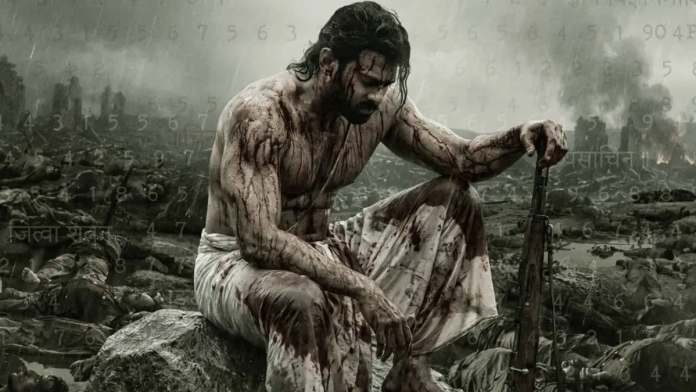

Chandra Kumar Bose, Netaji’s grandnephew, wants the teaser of Fauzi taken down because it mixes fiction with history.
The teaser opens with Subhas Chandra Bose’s very real 1942 meeting with Adolf Hitler in Berlin. Bose tells Hitler about an Indian spy who helped Japan capture Singapore and has been causing serious trouble for the British.
But Chandra Kumar has called this a distortion of history. He is completely entitled to hate it. But Subhas Chandra Bose’s memory does not belong to him alone or his family.
Bose is a national figure. A freedom fighter. Indians have spent decades arguing about what he stood for, the choices he made and how he should be remembered. His politics, his relationship with Gandhi, his alliances during the Second World War, his role in the freedom struggle and even what happened to him at the end of his life are all part of Indian public memory now.
Being his grandnephew gives Chandra Kumar Bose a personal relationship to that history. It does not give him ownership of it. It certainly does not give him a veto over what other people make of his grand-uncle in fiction or real life. If Chandra Kumar is allowed his version of Bose, so are the makers of the film.
And Fauzi has not exactly picked an “unimaginable” version of Bose to build its story around.
Who’s Bose is it anyway?
Bose believed armed struggle was necessary to get the British out of India. He went to Nazi Germany looking for support against the imperial rule and later moved to Japanese-occupied Southeast Asia, where he took charge of the Indian National Army.
The enemy of my enemy is my friend and all that.
So an “invented” anti-British spy who helped Japan against the British is not exactly out of place in a story about Bose.
Plus, there is so much unknown about his story. Bose leaves much to the imagination.
The Shah Nawaz Committee and Khosla Commission concluded that he died in the plane crash of 18 August 1945. The Justice Mukherjee Commission later said Bose was dead but had not died in that crash. The Union government rejected that finding and stuck to the plane-crash version.
Chandra Kumar himself has described what happened to Bose as a “mystery”. A fitting description for a man who was as hard to pin down as he was complicated. In 2019, Chandra Kumar objected to the Press Information Bureau marking 18 August as Bose’s death anniversary, saying the mystery around his disappearance was still unresolved.
So there is something strange about drawing a hard line around what can be imagined about Bose when the grandnephew himself has called it a “mystery”.
Did he die in the crash? Did he survive? Where did he go? The questions around Bose have produced books, films, conspiracy theories and official inquiries for decades.
But follow Chandra Kumar’s objection through, and it becomes much bigger than Fauzi.
Also Read: Prabhas’s ‘Fauzi’ teaser draws Subhas Chandra Bose’s relative’s ire over Hitler meeting scene
Creative liberties
What do we do with RRR (2022) then?
SS Rajamouli took Alluri Sitarama Raju and Komaram Bheem, two real anti-colonial revolutionaries who never met, and imagined that they did. In RRR, they become friends, fight the British together and change each other’s lives.
Quentin Tarantino went much further in Inglourious Basterds (2009). Hitler is killed in a Paris cinema and the Second World War gets a completely different ending.
Shakespeare was at it centuries earlier. His 1623 play Antony and Cleopatra takes real people and real events, compresses years, moves things around and invents conversations between people who actually lived.
Historical fiction does not work with only what can be proven. Once a real person becomes a character—a public figure or memory—someone has to imagine the bits we do not know. What they felt, what they said, how they reacted.
Fauzi is using a real historical figure and setting to tell an invented story.
Bose really met Hitler. Whether he ever told him about an alleged Indian operative such as the one Prabhas plays is something we will never know. And that gap is where fiction and films exist.
Views are personal.
(Edited by Insha Jalil Waziri)