








Somewhere between caste pride masquerading as “culture” and social media’s obsession with virality, Omprakash Valmiki’s Thakur ka Kuan stopped being a wound. A poem written out of generations of caste humiliation was stripped of its context. It is now celebratory background music for viral Reels for Thakur community influencers.
The history erased. The anger hollowed out. The violence buried.
For those who don’t know, it is a poem about dispossession and Thakur monopoly. About a society where everything– land, water, labour, food, movement, and dignity– is controlled by caste hierarchy.
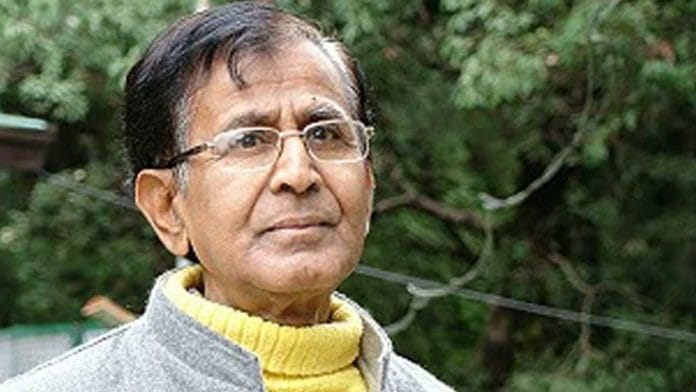
Valmiki, a Dalit poet and writer from Uttar Pradesh, was born into a marginalised sweeper community. His autobiography Joothan became a landmark text in Hindi writing, bringing lived experiences of untouchability and caste humiliation into mainstream literary and academic discourse.
The poem traces the life of a Dalit labourer whose existence is tied entirely to the dominance of the Thakur. The stove is made from mud taken from the Thakur’s pond. The bread comes from grain grown in the Thakur’s field. The oxen belong to the Thakur. The plough belongs to the Thakur. The labourer tills the land with his own hands, but the harvest still belongs to the Thakur.
Then the labourer comes to the most devastating part of the poem, where he asks what truly belongs to an oppressed person like him? Not the village. Not the city. Not even the country.
The repetition of the word “Thakur” here is suffocating. It reflects how caste power occupies every corner of life until the oppressed are left with nothing they can call their own.
Which is precisely why making Thakur caste-pride reels on this poem is disturbing. But none of this is surprising to me. Caste pride is the last refuge of those who inherit social power without ever interrogating it. These are the people with little sense of identity beyond the accident of birth. So they cling to caste as a borrowed source of superiority.
A woman with a bright red tika, admiring herself through the front camera. A man at the gym, flexing his muscles. Another man twisting his moustache with theatrical pride. A bride in full wedding wear, holding a wedding sword. One reel after another, all cut to dramatic music and a menacing version of Thakur Ka Kuan.
What is perhaps most telling is the scale of validation these reels receive. Many are posted by people with substantial followings, gathering thousands of likes and views. The captions on many of these reels make the distortion impossible to ignore.
“Some people chase power, some are just born Rajput.” “When your surname speaks.” “In case you guys don’t know my last name…” “The biggest flex — proud to be born in a Kshatriya kul.”
And what makes this dangerous appropriation and neutralisation even more unsettling for me is that many of these reels appear to use the audio from an old recording of Irrfan Khan reciting the poem at the Jaipur Literature Festival 2014. The video had gone viral in the aftermath of the 2020 Hathras gang rape and murder—the caste-based rape and murder of a Valmiki woman by Thakur men in Hathras.
Also read: The burden of being a successful Dalit
Share Valmiki whole
To truly engage with the poem would mean sitting with its discomfort. It would mean recognising the history it comes from, the hopelessness it carries, and the system it indicts.
And yet, what it so clearly means is lost on many. I do not understand the world some people seem to inhabit, or the one they are trying to normalise—a world that feels familiar because it exists, but one I refuse to accept.
I have lost friendships over moments where someone casually reduced an entire community to stereotypes or treated caste slurs as everyday language.
I have not lived through the full weight of the struggles my community has endured. Maybe that is why I have always felt slightly distant, never fully attaching my identity to caste.
But I have met Dalit writers, and read and heard their stories—accounts that are both raw and unflinching, where discrimination is at once overt and subtly embedded in the everyday.
Dalit writing in India is a testimony of resistance. Writers such as Omprakash Valmiki did not write to be consumed; they wrote to be heard.
Valmiki was born into a marginalised sweeper community. His autobiography Joothan became a landmark text in Hindi writing, bringing lived experiences of untouchability and caste humiliation into mainstream literary and academic discourse.
In Joothan, Valmiki documents the everyday architecture of caste—being made to sit apart in school, denied basic dignity—and the slow, political awakening that followed through Ambedkarite thought and Dalit movements.
As a journalist who has worked with marginalised voices, I would say: Share Valmiki whole, not hacked.
To distort a poem into something that contradicts its very foundation is not trendy, cool, or something to be proud of. It is a refusal to confront the realities it comes from, realities that still shape lives even when you choose not to see them.
During a Rajya Sabha debate on the Women’s Reservation Bill in 2023, Manoj Jha recited the same poem to speak about feudal power, caste domination, and dispossession. The repeated invocation of the word “Thakur” in the poem immediately triggered outrage. Politicians and caste leaders accused Jha of insulting the Thakur/Rajput community and demanded an apology. Clips of the speech went viral across social media, followed by a predictable outrage, threats, and declarations of wounded pride.
The RJD defended him and argued that the poem critiques a feudal mindset, not an entire caste. But the backlash itself revealed the point Valmiki was making decades ago—caste power is often most visible in how aggressively it reacts when named aloud.
Also read: Caste pride is everywhere in Tamil Nadu’s Tirunelveli. Schools are the new scene of crime
Owning my identity
My father and I barely talked. But I respected the man he was. One day, he was driving me from my hometown, Jind, to Delhi for college—a three-hour journey mostly filled with silence.
To make conversation, or perhaps to make things less awkward, I asked him something I had always wondered: “Why don’t we go to temples like other people do? Why are we not religious?”
“Because they never let us enter the temples,” he replied.
And at that moment, something shifted. Until then, I knew Dalits were and are still denied entry into temples. But realising it had happened in my own home, to my own father, felt like a revelation. I was twenty years old and still unfamiliar with how deeply caste shapes ordinary lives.
Looking back, the signs were always there. I dreaded those days in school when teachers would make students stand up and announce their castes. Even now, I do not know why that was considered normal. I only remember the anxiety of waiting for my turn.
When my turn came, I would whisper “SC” or sometimes “Harijan.” I did not know any better then. I was twelve years old, and somewhere along the way, people had already made me feel that belonging to a Scheduled Caste was something to be ashamed of.
It took me years to say the word openly: Chamar.
And I know for sure that no Thakur, Rajput, Jat, or anyone positioned higher in the social hierarchy has had to experience this kind of humiliation at that age, or any age.
And maybe that is what troubles me the most– how easily a poem like Thakur ka Kuan, written from the suffocation of caste oppression and exclusion, can be repackaged into spectacle by people who never had to live through it.
Views are personal.
(Edited by Theres Sudeep)
Very well written. Caste pride is a very strange thing. It distorts a person’s worldview. It seems so obvious that it’s bad. But it’s very subtle thing and very hard to shed off. Because it’s linked to one’s tribal instinct.
It’s not only oppressive towards “lower castes” but also causes damage to the upper caste person. Because they put their focus on wrong things (caste). Lots of rural upper caste youth is getting distracted by these things and destroying their career.