






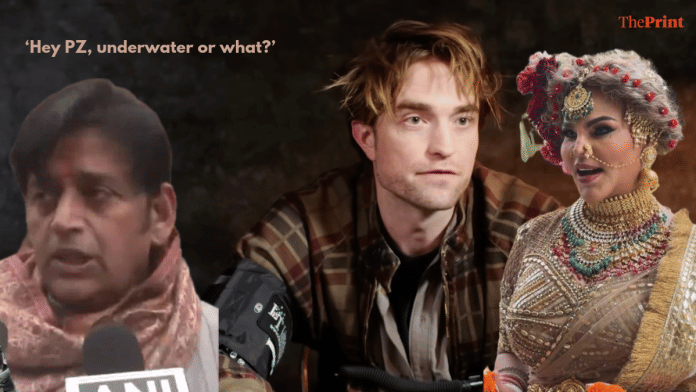

There was a time when generations were simple. Baby boomers were born after the war and could afford houses and a family of five in a one-income household. Millennials were the nostalgic but depressed generation that killed the diamond industry to grind and buy avocado toast. And Gen Z? Well, Gen Z was supposed to be a nihilistic antidote comprising everyone born between the late 1990s and early 2010s.
But somewhere between social media trends, impromptu political uprisings, and people referring to their emotional breakdowns as “character development”, Gen Z stopped being just an age group and transformed into a vibe—a state of mind.
When most people think of Gen Z, they imagine an army of chronically online, slang-spitting, therapy jargon-speaking individuals who can identify a micro-aggression faster than millennials can find something new to be nostalgic about. Truth be told, the stereotype isn’t exactly inaccurate.
But reducing Gen Z to simply being sensitive or terminally online misses the point. What makes Gen Z unique isn’t the vocabulary. It’s the ability to look straight into the abyss and reply with a meme.
It is a generation that has inherited climate anxiety, inflation, severe political instability, and just the general and constant threat of global catastrophe. Yet, they still somehow find a way to make all of it funny and bloggable. Yes, even a war and nation-changing protests.
Living the meme life
Lately, Gen Z’s particular brand of humour— dry, absurd, deadpan and hyper self-aware—is no longer confined to people born after 1997. It has transcended age. And which is why most Gen Z are not even Gen Z, eg, Saif Ali Khan.
Saif was Gen Z before Gen Z was even a thing. He truly is the “nawaab” of Gen Z vibe. Who can forget the legendary text message he reportedly sent fellow actor Preity Zinta when she was caught in the tsunami?
“Hey PZ, underwater or what?” Insensitive? Yes. Iconic? Also, yes. Meme-worthy? Definitely.
This is just one of the million absurd and funny things he has said over the years that make him the vibe he is. His wife, Kareena Kapoor Khan, on the other hand, practically designed the vibe check.
Some people need to tell jokes to be funny. Kareena just needs to be herself. Bebo’s interviews are filled with her honest takes, accidental one-liners, deadpan reactions, and facial expressions that are just subtitles to her thoughts.
And with that, we arrive at the phenomenon that is Rakhi Sawant. Rakhi arrived at our social media feeds less as an event and more like a cultural reset. Never in my life did I think that the woman who spent her years being dismissed as a mere reality TV oddity would become the funniest person on the internet. And yet, here we are.
People love her absurdness so much that she is now invited to comedy panels and even to review shows and movies. The secret: Rakhi and Gen Z instinctively understand that sincerity and absurdity can coexist.
One minute she’s saying something completely ridiculous. The next, she’s making a surprisingly insightful observation and then choosing chaos. It’s performance art. It’s internet culture. It’s Gen Z.
And then, there is the people’s champion. The patron saint of accidental comedy and everybody’s new obsession: Ravi Kishan. It may have begun with a meme, but Ravi Kishan arrived in our lives “jaldi the late (was early, got late)”.
From his interviews, dance moves, expressions, to social media presence; everything carries the energy of someone who is unintentionally producing premium meme content 24/7. The man also knows the importance of a good camera angle, a skill sacred to Gen Z.
And finally, representing the international delegation in this list would be Robert Pattinson, who has admitted that it doesn’t matter what year he was born; he is Gen Z. The Hollywood heartthrob is far from the moody, broody men he plays on screen. His interviews are a masterclass in chaos and unhinged-ness. Sometimes, the conversations feel like a fever dream, the human embodiment of “shitposting”, all tied beautifully with his “babygirl” energy.
Which brings me back to the main point: Gen Z is no longer a generation. It’s an energy. It’s the refusal to take yourself too seriously. It’s the ability to acknowledge that the world is on fire while still finding something to laugh about. It’s irony mixed with sincerity and cynicism with a shot of hope. And maybe we don’t give the generation enough credit for laughing in the face of adversity. For creating a culture where humour becomes a coping mechanism, and absurdity becomes a way of processing reality.
And if the icons I mentioned taught us anything, it’s this: You don’t have to be Gen Z to be Gen Z, as long as you pass the vibe check.
Views are personal.
(Edited by Insha Jalil Waziri)