




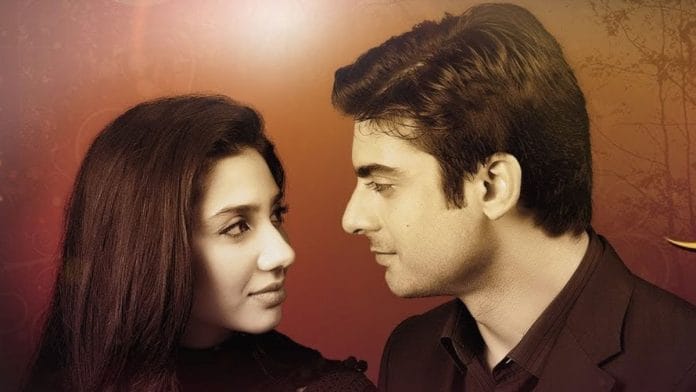

A silence used to fall over our drawing room on nights when the iconic Pakistani drama, Humsafar, aired. Nobody reached for the remote. Conversation slowed down. And when Khirad Ahsan cried, silently, alone in a room, the women in my house would watch her, not out of sadness, but recognition.
Humsafar (2011) gave Pakistan one of its most enduring female leads — Khirad, played by Mahira Khan. She’s married off to Ashar, played by Fawad Khan, a cousin who doesn’t want her. She is falsely accused of infidelity and is manipulated out of her own daughter’s custody by a jealous mother-in-law. Khirad spends most of the drama absorbing all of it.
Her one act of rebellion is leaving. When the truth finally surfaces and Ashar comes back begging forgiveness, she gives it.
That ending mattered because Humsafar was, at its heart, a love story. The question was not simply whether a wronged woman could rebuild her life, but whether romance and marriage can eventually be restored.
For the women in my house, that was a familiar language.
They had grown up with the idea that sabr (patience) was one of the highest virtues a woman could have. Don’t answer every insult. Endure with dignity. Let time reveal who was right.
Khirad wasn’t alone. Around the same time, many similar characters came into being. Sara in Meri Zaat Zarra e Benishan (2009) is arguably the prototype — a woman betrayed by nearly everyone she loves, she is accused of infidelity, suffers an abusive marriage, and processes her pain only through devotion rather than defiance. Her suffering is filmed almost like martyrdom.
Mazloom, but never bitter. Wronged, but never vengeful. These characters represented the idea of a “good” woman for the women in my house. They watched them and felt seen. Because there was comfort in a female lead who suffered exactly the way you’d been told suffering was supposed to look like.
A pragmatic woman
Then came Kashaf Murtaza.
Zindagi Gulzar Hai (2012) is remembered as one of the most beloved Pakistani dramas ever made, the one that turned Fawad Khan and Sanam Saeed into household names.
But when it first aired, Kashaf did not land the way Khirad had. She wasn’t soft or patient in the sanctioned way. She was the eldest daughter of a lower-middle-class family, abandoned by a father who’d taken a second wife. She’d hardened into someone pragmatic and guarded, and this was the part that unsettled people.
This was also the drama where the plot began leaning away from pure romance. Kashaf’s arc was really about class, education, and self-respect.
The women in my house didn’t immediately warm up to her. “She doesn’t trust anyone.” “Why is she so angry all the time? It’s off-putting.” For them, Kashaf lacked the tehzeeb, the grace, that made a struggling female lead sympathetic.
But something happened over the years of reruns that followed. Zindagi TV in India alone aired it multiple times.
The very people in my house who’d found her difficult started to see that Kashaf’s hardness wasn’t a flaw. Her ambition to finish her education, get a government job, and build a life that didn’t depend on any man’s mercy was framed as the moral centre of the show, not a character defect she needed to be cured of.
By the time she stood on her own feet, choosing Zaroon rather than just needing him, the same women who’d once called her “hard” had started calling her “practical”. The discomfort didn’t vanish overnight. Khirad was still the favorite, but the shift towards Kashaf did not go unnoticed.
Also read: Malayalam cinema never had it so good. Big box office hits, OTT global reach
Who is a ‘strong woman’?
By the late-2010s, something had shifted in what a “strong woman” drama was even trying to do.
Yaqeen Ka Safar (2017) gave us Zubia, played by Sajal Aly. She plays a woman whose mother is killed by her abusive father, who is then manipulated and nearly assaulted by a man she trusted, and who is thrown out of her own home by her brother and sister-in-law for the “shame” of what was done to her.
But the drama’s real innovation was refusing to let that be the end of her story. Zubia rebuilds herself, alone, into a doctor. She re-enters the narrative as someone with a career, autonomy, and eventually a love story she gets to choose on her own terms, well after she rebuilds herself.
This is the phase where I think the shift in my house really took hold. Because the drama still portrayed sympathy for the suffering, but the suffering was no longer the moral of the story.
Then came Cheekh’s (2019), Mannat, played by Saba Qamar, which saw a female lead do something Khirad never would have: fight publicly, loudly, and at enormous personal cost, for someone else’s justice rather than her own comfort. It played out as a crime thriller, almost entirely uninterested in romance as a driving force.
The drama’s most quoted scene has her standing in a courtroom, fighting her friend’s case against the antagonist, refusing to let his power write the ending.
This was the first time I saw the women in my house watching a crime thriller Pakistani drama, not questioning the absence of romance or silent sabr but actually invested in the story and rooting for Mannat and her fight for justice.
A new female lead
Which brings us to now, and to a set of unapologetically unconventional women. Most of these dramas, interestingly, are now built as social dramas, thrillers, character studies, rather than mere romance.
The latest example is Beena, played by Urwa Hocane in Aapki Izzat.
Beena has a 14-year marriage with Tabish, who becomes increasingly cruel as his social and political ambitions grow. He humiliates her, wants a second marriage, and invokes religion to justify that decision. Normally, the conventional female lead would have endured it all.
But 2026 Beena? With no other weapons to fight, she runs away, taking a fair share of Tabish’s money, with another man, not because she loved or needed him, but because she felt this was the only way to humiliate Tabish.
When Tabish invokes his “religious right” to remarry, Beena unflinchingly questions the selective way he is using religion, asking whether faith is a principle he genuinely lives by or a shield he uses conveniently, shaming him to the point that he cries. My mother was hooting at this point.
There’s no romance left to protect here. The marriage itself is the thing being examined.
Watching these dramas, there was no great ideological awakening in our drawing room. Nobody watched Zindagi Gulzar Hai and woke up the next morning with a new understanding of feminism.
There were just years of television, reruns, and conversations. One woman after another entered the screen and slowly widened the definition of strength and empowerment.
I know it worked because my mother and khala no longer have patience for characters who spend entire episodes forgiving and quietly accepting what is being done to her; one of them will eventually say, “Yaar, kuch toh karo.”
(Edited by Janaki Pande)