




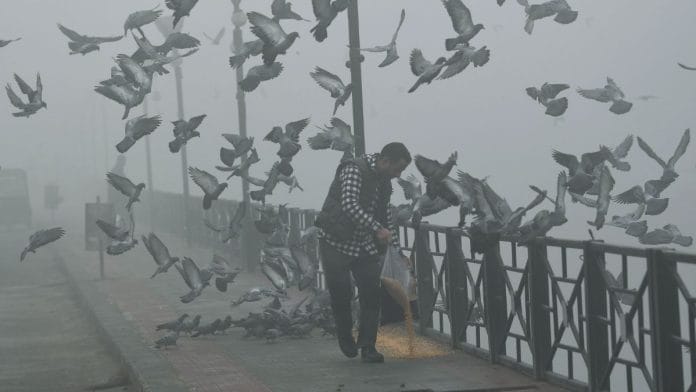

A recent video from Kashmir shows a tourist stepping out into the Valley’s misty morning and exclaiming that the air is “so polluted”. What followed was predictable: Online mockery. But behind the humour lies a quiet tragedy. For so many urban Indians, clean air has become such a rarity that we can no longer recognise it when we see it.
For those living in Delhi or other metro cities, haze almost always means harm. The skyline is a blur of concrete and chemicals; every breath feels rationed. The language of everyday life is AQI numbers, HEPA filters, and “poor” or “severe” alerts. We have become so accustomed to measuring air quality through data that our senses have forgotten the difference between natural mist and toxic smog. What that tourist mistook wasn’t just fog. It was a glimpse of what we’ve lost.
Fog is a natural phenomenon—water vapour condensed in cold air. Smog, on the other hand, is its chemical cousin, a cocktail of dust, vehicle emissions, and industrial waste. In densely populated cities the line between the two has blurred, both visually and psychologically. We’ve grown up seeing a yellowish-grey haze in the mornings, and our brains now associate that filtered light with pollution, not peace.
The irony is that cities like Delhi once had crisp winter mornings too. The early fog over India Gate, the faint smell of dew. These were sensory memories of a time when nature still set the rhythm of urban life.
Now, it’s the other way around. The air we breathe carries the signature of human excess. Children born in the last decade have grown up thinking that the grey veil over their cities is normal, that the sky isn’t supposed to be blue, and that visibility ending two blocks ahead is just “winter weather.”
Also read: ‘Delhi winters’ is a legend. Now it’s just air anxiety
A new normal
That’s why the Kashmir video struck a nerve. It captured a deeper alienation; between urban India and the natural world. To those who have only known air as something that needs to be purified, the sight of thick white mist feels suspicious. Strangely, the tourist’s confusion is completely understandable. Pollution has rewired our senses.
Environmental degradation doesn’t only damage our lungs; it alters our perception of what “normal” looks like. Sociologists call this phenomenon “shifting baseline syndrome”. Each generation accepts a slightly worse version of the environment as the new normal. When your childhood winters smell of smoke, fog seems foreign. When you grow up breathing PM2.5, clean air feels uncanny.
So yes, the video might be amusing but it’s also a mirror. It tells us how far urban India has drifted from nature’s rhythms. We no longer experience mist as beauty, or air as something refreshing. The tourist’s moment of confusion is, in a sense, our collective confusion—we no longer know what healthy air looks like.
As India debates its pollution levels and climate action, perhaps this viral moment should remind us that the crisis isn’t only about data or policies. It’s about memory and disconnection; about how the simple sight of fog can now seem strange, even dangerous.
For Kashmiris or people living in places with AQI below than 50, the misty mornings are routine. For the rest of us, they’ve become an optical illusion, a reminder that in chasing development, we’ve lost something elemental: The ability to recognise purity when it’s right before our eyes.
Views are personal.
(Edited by Theres Sudeep)