



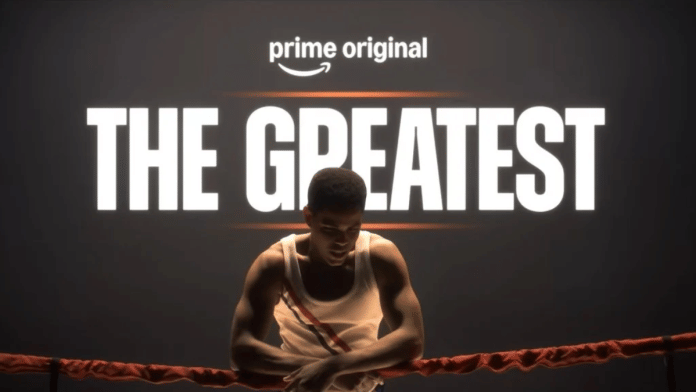
New Delhi: I have never watched Muhammad Ali fight in real time. I have never waited for the bell before one of his bouts, watched him dance around an opponent in a crowded arena or experienced the electricity of a crowd watching him do what he did best. My introduction to Ali has come through old fight footage, grainy interviews, photographs and the countless stories that have turned him into something larger than a boxer.
That is perhaps why The Greatest, Prime Video’s new series on Ali, felt like an opportunity to get to know someone I thought I already knew.
Released on 4 November, the eight-part series is the first authorised scripted biopic about the legendary heavyweight champion, humanitarian and global icon. Starring Jaalen Best as Ali, it has the backing of his estate, with his widow, Lonnie Ali, serving as an executive producer. But what interested me most was not another recreation of the fights that made Ali famous. It was the chance to look beyond the familiar images and understand the young man who became Muhammad Ali.
The series begins in 1960, when an 18-year-old Cassius Clay wins an Olympic gold medal in Rome, and ends in 1964, with his stunning victory over Sonny Liston to become the world heavyweight champion. It is a relatively short stretch of Ali’s life, but a defining one. Between those two milestones, we see a young boxer trying to find his place in the world, negotiating family expectations, relationships, race, faith and the enormous weight of his own ambition.
There have been several attempts to capture Ali on screen. Michael Mann’s 2001 film Ali, with Will Smith in the lead role, followed a later and more turbulent period, from his rise to heavyweight champion to the 1974 Rumble in the Jungle. Leon Gast’s Oscar-winning documentary When We Were Kings offered an unforgettable view of Ali in Zaire, where his charisma and confidence became part of the spectacle surrounding his fight with George Foreman. And Ken Burns’ expansive 2021 documentary drew on archival footage and testimony to trace Ali’s life across four decades.
Each has offered a different way of understanding him. The Greatest takes a more intimate route, returning to the years before the world had fully decided what to make of Cassius Clay.
Did the series change the way I see Ali as a fighter? Not exactly. I already knew what made him special inside the ring. Even through archival footage, his footwork, speed, reflexes and ability to make opponents play his game were impossible to miss. He could make a heavyweight contest look like a dance, then land a punch before his opponent had time to react.
But I had perhaps underestimated just how much thought went into that style. Ali was not simply a showman who talked his way into the spotlight. His confidence was backed by an unusual understanding of distance, timing and movement. His famous line, “Float like a butterfly, sting like a bee”, was more than a catchy boast. It captured the way he fought: difficult to pin down, quick to strike and always making his opponent work.
His 1964 victory over Sonny Liston is a good example. Clay went into the fight as a considerable underdog, having spent the build-up taunting the champion and predicting his own victory. When Liston failed to answer the bell for the seventh round, the young boxer had stunned the boxing world. The man who had loudly proclaimed “I am the greatest” had backed up his words.
The series made me appreciate the ambition behind that confidence. Ali wanted people to believe in him, but he also seemed determined to give them a reason to.
Does The Greatest do justice to his legacy? It does justice to an important chapter, but not the whole story. Its timeline ends in 1964, just as Ali is becoming world champion. It cannot fully account for the years that followed: his stand against the Vietnam War, his return to boxing, the Rumble in the Jungle, his later humanitarian work and the global figure he eventually became. Those chapters are central to understanding Ali, and deserve their own telling.
I still wish I could have watched him fight live. No series can recreate that experience. But The Greatest brought me closer to the person behind the familiar images. I went in knowing the boxer who could dance around opponents and talk his way into the headlines. I came away thinking more about the man who was willing to lose almost everything rather than surrender what he believed in. For someone who has spent years admiring Ali from a distance, that is no small thing.