






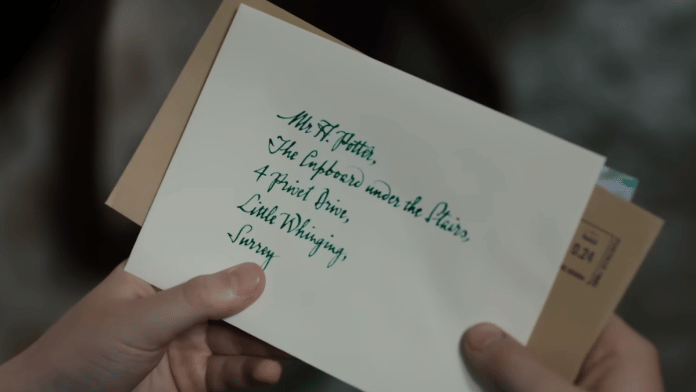


HBO has renewed its upcoming Harry Potter series for a second season before the first has even aired. For most shows, that would read as confidence. For Harry Potter, it reads more like a dare.
The renewal dares to challenge the existing memories and people’s perceptions. But the question remains: Will it bring the glory of other remakes like Disney+’s Percy Jackson and the Olympians or the horror of Amazon’s The Lord of the Rings: The Rings of Power?
There is no doubt regarding whether people want more Harry Potter. They do. They have wanted more for years and have taken almost everything the franchise has offered. Even the things they claim to hate, they know about in worrying detail.
This is a fandom that complains with receipts.
But the HBO series is not just another add-on. It is going back to the beginning. Privet Drive, Diagon Alley, the scar, the troll in the bathroom, Dementors, the graveyard, the war—the whole shebang, but with new faces.
Also Read: New Harry Potter series is a shameless cash grab for JK Rowling, HBO
Daring memory
Harry Potter was a children’s book series that catapulted into stardom overnight. One boy with a scar became the founder of the world’s largest entertainment universe.
Unlike Spider-Man, it did not need endless reboots to stay alive. The original films did that job. The Great Hall looks a certain way. Hogwarts sounds a certain way. Draco smirks a certain way. Snape pauses a certain way. The films were not perfect adaptations, but they became a shared memory.
That is what HBO is up against. Memory.
On paper, the argument for a series is strong. The films cut characters and subplots; a season per book means more room. A more faithful adaptation is a real promise, not just marketing.
But Potter fans are not starving in the usual way. They are not Percy Jackson fans, who spent years complaining. When Disney+ adapted Percy Jackson and the Olympians, it had a built-in redemption arc—the fans had disliked the films. And with Rick Riordan’s blessing, the show essentially said: This time, we will do it properly.
Harry Potter does not have that neat advantage. The films may have left things out, but they were loved. They gave the books a visual afterlife so strong that the reboot will have to fight it in every frame.
But Potter fans aren’t precious purists. This is a fandom that will call something a cash grab and then line up anyway. Fantastic Beasts was not exactly received as sacred text, but people watched. The Cursed Child has been mocked, rejected as canon, defended as theatre, and still sold out.
That is the Potter bargain. Fans know what they are being sold, critical or not, they will buy it. That is what HBO is banking on by renewing the series even before its release. It is not a clever marketing move, but an obvious decision. If you are going to make a series on the Potter-verse, you might as well take it the whole way.
Also Read: HBO’s Harry Potter reboot misses the point—magic isn’t meant to be remade
What can HBO do differently?
Harry Potter did not fade into the shadows of our childhoods, but remained ever-present. From countdowns at King’s Cross Station for the Hogwarts Express to rewatching the series at Christmas, it slowly became a yearly tradition.
This is where a renewal becomes interesting. HBO is not cautiously testing the waters. The plan is clearly long-term, maybe decades long, which makes sense for a streaming platform. A franchise like Harry Potter is not just a show, it gives a platform subscribers, headlines, merchandise, social media wars, casting debates and a reason to keep people coming back year after year.
But the emotional pitch to fans has to be better than “remember this”. Because they do remember. All too well (Daniel Radcliffe’s version).
Prior reboots and spin-offs have shown both ways this can go. The Percy Jackson series worked because it positioned itself as a correction.
Even Louisa May Alcott’s Little Women keeps returning every few decades for a different reason. Each version finds a new way to read Jo, Amy, marriage, ambition and domestic life for a new generation. Young Sheldon worked because it did not simply ask The Big Bang Theory viewers to remember to humanise Sheldon, but also opened the door for a whole host of characters and subplots, such as Georgie & Mandy’s First Marriage.
The weaker franchise revivals are the ones that mistake recognition for feeling. Star Wars has kept its door open for decades, but its sequel trilogy also showed how quickly nostalgia can turn into an argument when fans feel characters are being used only to pass the baton. The Rings of Power, the most expensive show ever made, still struggled to become the kind of sacred cultural event Amazon clearly hoped for.
That is the narrow path HBO has chosen. It cannot pretend Harry Potter is forgotten. It also cannot survive only by polishing what the films have already made iconic.
The show has to justify why these books need to be watched again now, by people who know every staircase, spell and betrayal already. The challenge is not getting them back to Hogwarts. They never left. The challenge is making them feel like they are not simply walking the same corridor again, this time with Netflix lighting and a bigger budget.
Tarini Unnikrishnan is an alum of ThePrint School of Journalism, currently interning at ThePrint. Views are personal.
(Edited by Insha Jalil Waziri)