






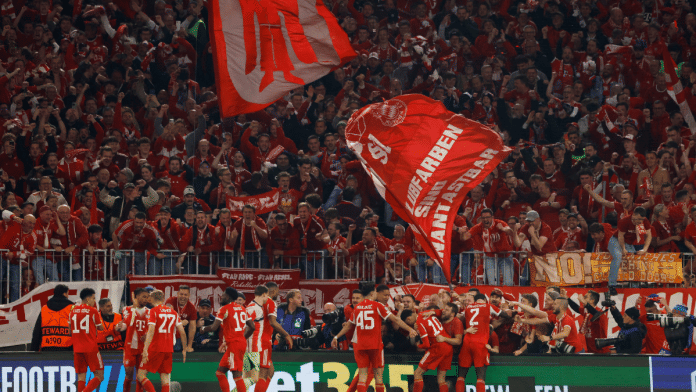


The high-tension UEFA Champions League quarter-final is over, and true football fans can sleep in peace because this year the midfield game is back in play. Apart from delivering intense drama, the Round of 8 this year marked a tactical shift in the gameplay — from the flanks to the midfield.
From Lionel Messi to Cristiano Ronaldo to Robert Lewandowski, the Champions League has long been a stage to display individual brilliance. But this year, the midfield, often dubbed the “engine room of a football field”, reclaimed its status as a game facilitator.
The teams that dominated the midfield over the two legs qualified for the semi-finals. The European competition has witnessed successive years of vertical high-speed flank domination. Transitional football — quick passes to wide players, high-speed overlaps, and direct attacking from the flanks — became the norm for most teams. And the engine room or the midfield was reduced to feeding the flanks or covering the defenders.
But this year, all coaches resorted to formations deploying at least three, and often four technical midfielders who could operate under intense pressure, breaking away from the usual monotony of the game.
From Bayern Munich versus Real Madrid’s electrifying high-scoring match of the “European giants” to the Arsenal versus Sporting Lisbon fixture, the team that controlled tempo, resisted pressure, and dictated central spaces in the midfield over the two legs booked a slot in the semi-finals.
And, yes, true football fans wanted exactly this. The same old vertical run in the flanks and a subsequent cross into the D-box took a much-needed back seat. Instead, teams, including the losing side, tried to dominate the midfield with precision passing and bridging the gap between defence and attack. Most teams scored in an open-play style, taking the ball from midfield and slotting it into the net, just look at how Barcelona’s attacking central midfielder Dani Olmo recieves a pass in the centre before piercing Atlético Madrid’s defence with a sublime pass to Ferran Torres, who slotted it into the top corner with his weaker left foot in the second-leg.
The results came from sustained control of the ball amid moments of chaos and not the usual high speed flank gameplay.
The midfield saga
If we take a closer look at the Bayern vs Real Madrid fixture, in which the former emerged victorious 6-4 over two legs, the actual contest between the teams unfolded in the middle-third for both teams. Madrid sublimely absorbed the typical German pressing with short, precise passes and intelligent positioning. This allowed the whites to dominate several phases of the game for the entirety of 180 minutes, even though they failed to command possession.
On the other hand, Bayern, with their lethal front-three attack, performed when their midfield pressed higher, dispossessing Madrid players in the opponent’s half. With striker Harry Kane coming down to support his midfield brigade, this position was further cemented. And whenever Bayern lost hold in the midfield, they lost the grip of the game.
Now, let’s look at the Arsenal vs Sporting fixture, which only witnessed one goal over the two legs. The midfielders for both teams dominated the central spaces differently — coming down for blocks, blocking lethal through balls and forcing the opponent to play wide. That’s exactly how it should be done when you are off the ball.
The lack of goals did not come from a poor attacking system. Instead, all credit goes to the midfielders — a credit for how effectively the middle half of the pitch was dominated and guarded.
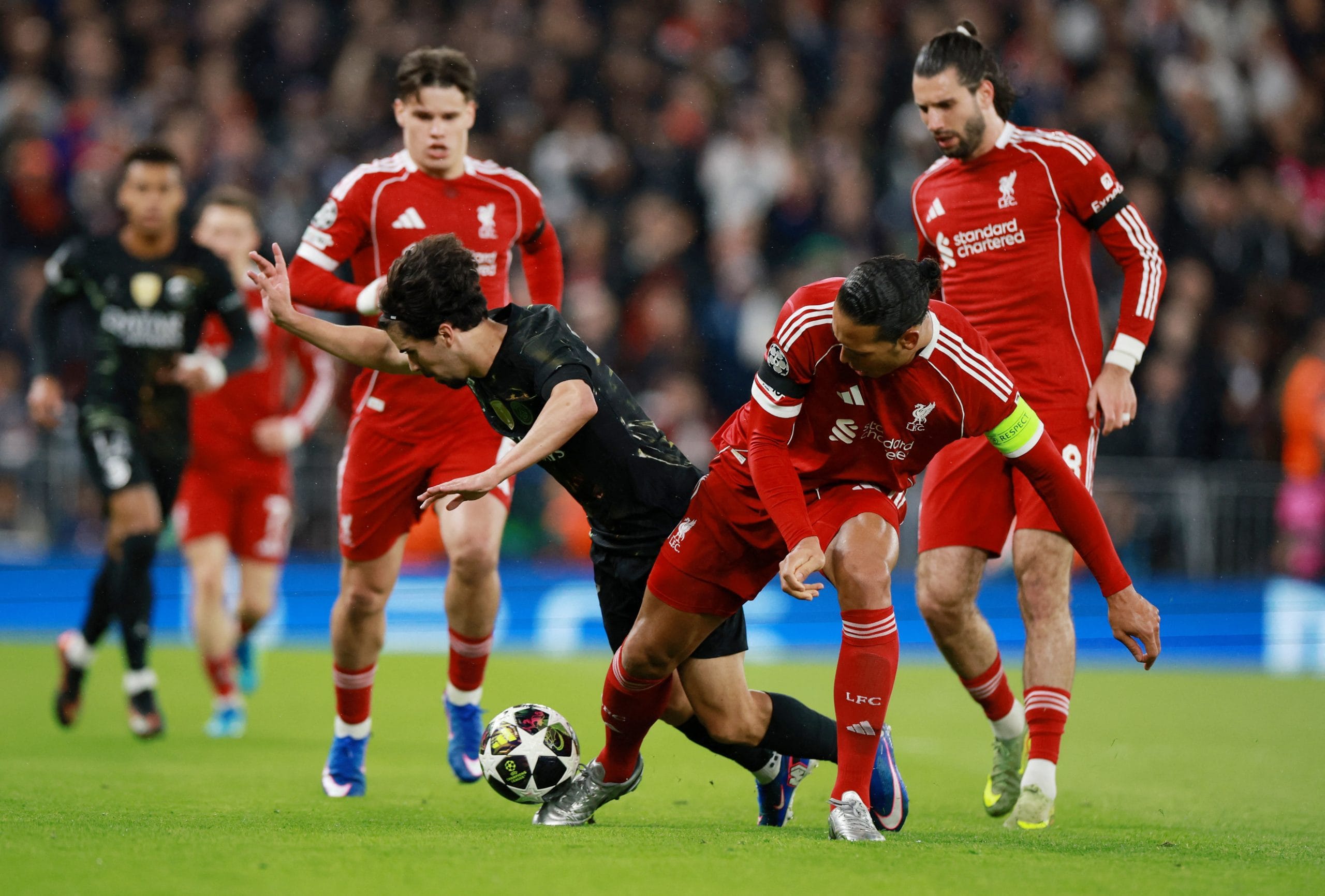
These styles of play were also followed in the other two fixtures: PSG vs Liverpool and Atletico Madrid vs Barcelona. All four teams tried to dictate the rhythm in the midfield.
This quarter-final is proof that control, temperament and domination often outrun speed at the highest level of football.
Also Read: Indian women’s football team’s Asian Cup exit doesn’t tell the story of their rise
Midfield-heavy formations
Many teams in this year’s quarter-finals used formations like 4-3-3 or 4-2-3-1 — all midfield-heavy shapes. Most teams relied on inverted full-backs, wingers tucked inside, and central and defensive midfielders rotating positions. The aim was clear: Put more players in the midfield and dominate the game.
Spanish midfield maestro Xavi Hernández once said, “In midfield, if you lose the ball, you are dead.”
Time will tell how the semi-final will unfold. For now, let us make peace with the fact that football is slowly shifting toward open-play styles, being carried from the midfield.
Views are personal.
(Edited by Insha Jalil Waziri)