




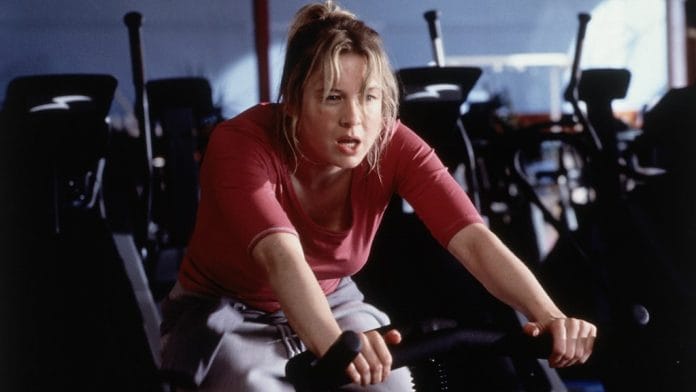

It was the best of times, it was the worst of times, it was the age of wisdom, it was the age of foolishness… it was, after all, the early 2000s, and Bridget Jones’s Diary had just made it to the big screen.
Now, as the film celebrates its 25th anniversary, Bridget remains almost as controversial, yet beloved, as Charles Dickens himself.
Almost all women in their late 20s and early 30s have been obsessed with Bridget or been in her shoes at least once. Helen Fielding’s seminal character in her 30s has been a contentious but much-loved figure for a quarter of a century.
The spectacularly dysfunctional love and professional life of the almost chubby Londoner may be thought of as the ramblings of a pissed thirty-something, but in reality, they reflect experiences we have all been through and thought about. After all, it is a truth universally acknowledged that Bridget Jones is an icon.
Yes, Bridget spends most of her time bemoaning her lack of a boyfriend (sorry, this was before Vogue said they were “uncool”) and the other half trying to simply exist as a woman on her own. Yes, Daniel Cleaver was a pervert, who would probably have ten #MeToos against him today. And yes, Mark Darcy was an uptight prick and the very symbol of the “English men don’t know how to talk about their feelings” stereotype. But beneath all that nonsense are three simple truths.
First, no matter how a woman looks, society will always make her feel bad about her appearance. Bridget Jones was not fat. I repeat, she was not fat. And even if she was, it’s none of your business.
Second, if a woman has an active love life, she’s shamed; if she doesn’t, then “tick-tock” (sic, Una Alconbury).
Third, adulthood was always messy and a shipwreck.
The appeal of Bridget Jones’s Diary, an outdated masterpiece
The movie and the ensuing franchise’s success may be credited to its star-studded cast, from Renée Zellweger and Hugh Grant to Mr Darcy from Pride and Prejudice (1995), Colin Firth. It even features Harry Potter’s Moaning Myrtle (Shirley Henderson) and Professor Horace Slughorn (Jim Broadbent). Sure, it took most of us years to realise that Zellweger, who plays the titular character of a very British millennial, was from Texas! And of course, no one could ever come close to embodying Bridget’s lovable chaos better than Zellweger, the Texan. All this may have contributed to the film’s success and, perhaps, its notoriety. What stayed behind was the enduring 30-something-year-old herself.
While most women don’t binge eat and drink on their own, the dancing in your panties and the overwhelming weight of adulthood, mixed with the ever-present desire for love and understanding, reveal what makes Bridget Jones so endearing. Bridget’s time and era do not define her, nor should they limit her. Looking beyond the outdated masterpiece for its simple nostalgia value reveals the story of any woman living alone, as societal pressure bears down.
The Bridget Jones statue becoming a permanent resident of London’s Leicester Square is proof of this. Londoners may have hated the iconic character when the books and films first came out; in fact, sales of Chardonnay, the signature “sad singleton” drink, suffered severely during the height of the Bridget Jones fever. But nestled among Harry Potter, Tinker Bell, and Mary Poppins, among others, Bridget, according to Kirsty Tullett-Jones, director of marketing and communications for Discover Leicester Square, makes “Londoners laugh, cry and feel seen.” You can even rub her belly for luck.
There is no denying that Bridget Jones exists in a culture of toxic masculinity or that she is inherently problematic. But that is precisely her appeal: her rise and fall are a result of the fact that she is a mess. Her insecurities and triumphs still resonate, as does the toxic culture in which she exists.
Bridget was spot on when she said, “The whole bloody world’s got a commitment problem. It’s the three-minute culture. It’s a global attention-span deficit.” So was her mother when she admitted, “To be honest, darling, having children isn’t all it’s cracked up to be. Given my chance again, I’m not sure I’d have any.”
Bridget Jones’s Diary did not fade into the shadows despite its dated metaphors, fatphobia, or problematic relationships because it’s familiar. Like Bridget, the film is a mixture of generational tension and social commentary on the “post-feminist” era, all wrapped up in a pretty “chick-flick” bow (Playboy bunny-style).
(Edited by Prashant Dixit)