



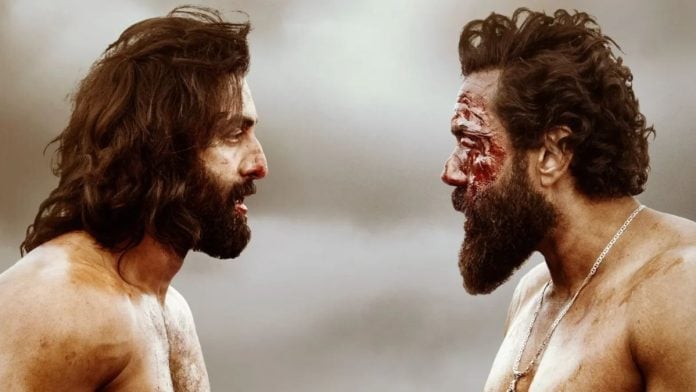
The Hindi film villain has undergone a makeover. Gone are the days when antagonists occupied giant thrones, wore elaborate costumes, operated out of secret lairs and laughed maniacally while plotting world domination. The likes of Mogambo, Shakaal and Gabbar Singh were unapologetically evil. They didn’t need tragic childhoods, family losses or personal betrayals to explain why they were bad. Today’s Bollywood villains seem to have traded their evil ways for tragic backstories, in a feeble attempt at exploring the grey beyond the binary.
Kulbhushan Kharbanda’s Shakaal in Shaan (1980) was the kind of villain who needed no tragic backstory to establish his wickedness — He has a bald head, elaborate hideout, an army of henchmen and even a shark and crocodile tank. Inspired by James Bond’s Ernst Stavro Blofeld, he was a ruthless mastermind who enjoyed displaying his power and intimidating those around him. His dialogue, “Ajeeb janwar hai, kitna bhi khaye bhookha hi rehta hai”, became one of the film’s memorable lines. He was not looking for sympathy or trying to justify his actions.
Somewhere along the way, Bollywood seems to have lost its appetite for pure evil.
John Abraham’s Jim in Pathaan (2023), a former RAW agent who turns against the country after the state refuses to negotiate for his kidnapped, pregnant wife, or Emraan Hashmi’s Aatish in Tiger 3 (2023), follow a similar trajectory — personal betrayal and family loss driving their revenge. In both cases, the films explain their motivation so thoroughly that we begin to sympathise with the villains.
The same happens in Animal (2023), where Ranvijay’s violence is rooted in childhood neglect and his strained relationship with his father. Even Bobby Deol’s mute antagonist, Abrar, is given a traumatic childhood to explain his rage.
Look at Singham Again’s Danger Lanka, Bhool Bhulaiyaa 3’s Debendranath or even the creature in Munjya (2024). Each comes with a backstory that explains the circumstances behind their evil. We are encouraged to understand their pain, their past and what made them the way they are. The villain is no longer simply someone who wants to destroy the hero. He has a story of his own, and the film wants us to hear it.
The villain explains his traumatic past, the film establishes why he became the person he is, and the hero eventually steps in to tell him that what he is doing is wrong. The conflict becomes less about stopping an evil man and more about confronting a damaged individual.
Also read: Avengers: Doomsday shows Marvel has run out of juice. It’s now turning to old heroes
A hero needs a villain
The problem with doing away with evil villains is that the hero loses someone truly formidable to fight against. Amitabh Bachchan and Dharmendra became action superstars by fighting an equally memorable adversary in Amjad Khan’s Gabbar Singh. Shakti Kapoor, Danny Denzongpa, Amrish Puri, Paresh Rawal, Anupam Kher and Raza Murad were not merely obstacles in the hero’s journey. Audiences came to watch the hero defeat them — the more ruthless the villain, the more satisfying the victory.
The new bollywood villains’ motivation is rooted in betrayal by the state, corporate greed or familial trauma. Their monstrosity is explained through familiar experiences, losing a family member, being betrayed by someone they loved or suffering an injustice. These are circumstances audiences can relate to. When filmmakers spend so much time establishing the villain’s pain, it becomes easier to identify with him than to despise him.
Who is the last truly memorable, unapologetically evil Bollywood villain audiences can recall from the past five years?
Add to this the economics of stardom and the Instagram Reel era. A-list actors are far more willing to play negative roles when the characters are cool, layered and have quotable dialogue. Social media algorithms reward brooding, morally grey swagger far more than earnest righteousness. A villain who can deliver a stylish monologue, command a fan edit or become a viral meme has a better chance of becoming a cultural talking point than one who is simply cruel.
There is nothing wrong with complex antagonists. Some of Hindi cinema’s finest films, from Deewaar (1975) to Maqbool (2003) and Gangs of Wasseypur (2012), have morally ambiguous characters. The problem is when every villain is a misunderstood victim and every hero is a traumatised anti-hero.
Explaining a villain’s pain can be good writing. Using it as a blanket excuse for his cruelty is just lazy empathy. Sometimes, a villain should simply be evil. He should be allowed to laugh maniacally, threaten the hero and enjoy being the worst person in the room. Not every monster needs a childhood trauma to explain why he became one.
(Edited by Janaki Pande)