









Ayatollah Ali Khamenei was not just a political leader. He was a tyrant, a theocratic ruler and a senior Twelver Shia jurist whose authority went far beyond the borders of Iran. For many Shia Muslims worldwide, he was also a spiritual reference point. That is why his death carries emotional weight for Shia communities everywhere, including in India, which has one of the largest Shia populations outside Iran and Iraq.
And so, a conflict unfolding thousands of kilometres away suddenly begins to touch lives much closer to home.
Geopolitics is rarely simple, no matter how much we try to reduce it to narratives. We can see the full spectrum of reactions. While people are celebrating Khamenei’s death, seeing it as the fall of a brutal authoritarian figure, others are condemning the US-Israel strikes as a violation of international law, calling them acts of war, and many Indian Muslims mourned his death, seeing him as a religious martyr. Everyone looks at the same event through their own lens — ideology, politics, history, lived experience.
For years, ordinary Iranians have lived under a repressive system, risking their lives for basic freedom, facing arrests, violence, and even death for speaking up. Now, once again, it is the same ordinary people who are likely to become victims of escalation. Foreign strikes, retaliation, and instability — all of it will land first on the lives of people. Whatever strategic calculations are being made in distant capitals, it will be Iranian families who wake up each morning with uncertainty, fear, and the constant question of what tomorrow might bring.
And that is the truth—those who lose the most are almost always civilians. Beyond every strategic angle and ideological debate, my thoughts go first to them, for simply as human beings caught in forces far bigger than themselves.
War not only takes lives; it takes futures.
Mourning period for Indian Muslims
Those of us who experience war only through headlines would be mistaken to think these conflicts belong to some distant land. That illusion of distance is comforting, but it is not real. Even if you live in India, the price of war eventually reaches you.
War reshapes economies, societies, and daily life in ways that linger for generations. And when a region as critical as the Middle East is pulled into conflict, it’s no mystery that global oil and gas prices are going to spike. And a significant share of India’s energy imports comes from the Middle East, along with a large portion of remittances.
The conflict between Israel, Iran and the US is also impacting India more visibly, especially among Indian Shia Muslims, along with these broader impacts. Many in the community have been in mourning since Khamenei’s death, for them, he was not only the political leader of Iran but also a religious authority. Khamenei is regarded as a Marja-e-Taqlid, or “Source of Emulation,” meaning many Shias look to such figures for spiritual and religious guidance. In India, especially in places like Srinagar, Lucknow and Hyderabad, where Shia communities are significant, his influence carried emotional as well as religious meaning. The ripples of it are now visible within Indian society.
Some clerics and religious institutions in these regions also maintain ties with seminaries in Iran, which shape how figures like Khamenei are viewed within sections of the community.
However, this moment of mourning has quickly turned into yet another loyalty test on social media, not just for Shia Muslims, but for all Indian Muslims.
I understand why many liberals question the morality of mourning a figure associated with dictatorship, brutality, and misogyny within Iran and share their views. Those criticisms are valid and deserve to be part of an honest conversation. Indian Muslims, whether Shia or Sunni, do need to ask themselves what kind of leaders and figures they choose to look up to. Some soul-searching within the community is necessary.
Yet at the same time, people also have the right to mourn peacefully, even when the figure being mourned is controversial. Grief does not always follow neat political logic.
Also read: Don’t frame Modi-Israel as ‘this hurts Indian Muslims.’ We don’t mix faith & foreign policy
Foreign conflicts, domestic fault lines
What is disturbing is how this moment is being used by some Right-wing voices to paint all Indian Muslims as traitors and inhumane. False claims are circulating that Muslims remained silent during terrorist attacks in India but are now mourning a foreign leader. Anyone interested in the truth can easily look up the many instances—all those events from Kashmir to Lucknow—where Indian Muslims were at the forefront, raising their voices against terror attacks.
Propaganda ignores these realities and deliberately feeds suspicion. It turns a complex and emotional moment into a simplistic story of betrayal — one that does nothing except add to mistrust and polarisation.
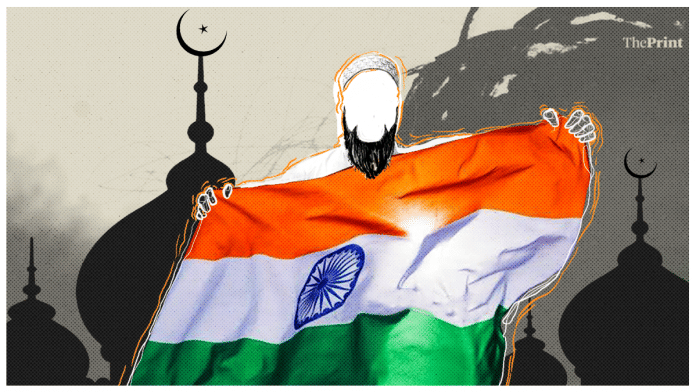
What worries me even more is how easily distant conflicts are imported into our own social divisions. A war thousands of kilometres away suddenly becomes another battlefield for domestic identity politics. People begin demanding that fellow citizens prove where their loyalties lie, as if grief, criticism, or silence must follow religious lines.
In such an environment, empathy disappears and suspicion takes its place. Instead of seeing each other as fellow Indians navigating a complicated world, we start seeing each other as representatives of global religious camps. That is a dangerous place for any society to reach.
What is happening in the Middle East today will shape many things — global politics, economies, alliances. But if we are not careful, it will also shape how we treat each other at home. Importing distant conflicts into our own social divisions only weakens us as a society.
India has always been strongest when it refused to reduce people to religious camps and when it understood that shared citizenship matters more than imported loyalties.
In a world increasingly consumed by war, perhaps the real challenge is this: to hold on to our humanity, to refuse the easy temptation of suspicion, and to remember that before any identity, we are all simply human beings who deserve peace.
Amana Begam Ansari is a columnist and writer. She runs a weekly YouTube show called ‘India This Week by Amana and Khalid’. She tweets @Amana_Ansari. Views are personal.
(Edited by Ratan Priya)
Bharat Mata ki jai.
Nara E Takbir, Allahu Akbar.
Vande mataram.
Death to India’s enemies.