






From darkness to light—or so I thought when I learned I would be moving from the shadowy world of coal mines, as Coal Secretary, to the seemingly promising field of school education, as Secretary, School Education and Literacy in 2016. However, I soon discovered a striking reversal. While mining in the coal sector took place underground, with mafias operating openly above ground, the ‘minefield’ of school education had its mafias hidden below the surface, all masked and masquerading as ‘noble giants.’
An enormous crisis loomed. Apart from human resource and budget constraints, these mafias were thriving, eating away at the very fabric of society like termites. Fortunately, as with mafias elsewhere, those in the education sector were not a majority, yet they wielded outsized influence in decision-making. Extremely well-connected and deeply entrenched, these mafias dominated various segments of the education sector. The most prominent among them included: Bachelor of Education (B.Ed) and Diploma in Elementary Education (D.El.Ed) colleges, examination centres, publishing of textbooks, and private schools.
The ‘cockroaches’ have highlighted one aspect of the malaise afflicting our education sector. And the government’s response has been to introduce legislation and set up a committee headed by the redoubtable Nandan Nilekani, the “Aadhaar” man.
I have my serious doubts about the legislation, not because of the nature of the legislation, but because laws have never been a problem with education. The real problem is with execution.
Look at what happened to the main accused in the 2024 NEET examination leak. The CBI said that there was no evidence against him.
You may bring in even more stringent laws, but if the enforcement agencies are preoccupied with settling political scores, they will not have time to bring the culprit to book.
Similarly, if a country cannot punish a police officer who slaps a woman in broad daylight when the incident is recorded, how will we punish those who operate in a more sophisticated environment?
So, what is the way forward?
Also read: Youth anger isn’t about paper leaks alone. Govt must create jobs
More laws isn’t the solution
At the outset, the government needs to be complimented for constituting a team of such erudite people (despite the alleged fondness of one of them for cow-urine therapy). The committee will benefit from Anita Karwal, who is a former School Education Secretary and a very fine officer who put in place a foolproof examination process in CBSE after the unfortunate paper leak in 2018.
I have absolutely no doubt that the committee will come up with a very relevant and useful set of recommendations. But will it help?
Based on past experience, once the dust settles, this report will gather dust. What happened to the recommendations of the Radhakrishnan Committee that was set up after the 2024 NEET leak? The Committee gave more than 100 recommendations. How many of these recommendations have been implemented?
Apart from other suggestions, the committee had strongly recommended decentralisation of NEET and other such examinations. Why does the Central Government want to do everything? Why doesn’t it trust the States? The Centre should focus on developing guidelines and act as a facilitator to the State governments.
UPSC is a clear example of this framework’s success. Imagine a scenario where UPSC were to recruit even the state-level officers. It would be chaotic. Yes, some state Public Service Commissions have not been up to the mark, but many others are doing a fabulous job.
In India, most of the prescriptions already exist. The problem is implementation.
Look at one of the most serious problems that confronts the country, but is seldom discussed: Unemployment. The NDA government had tasked the former Cabinet Secretary, Prabhat Kumar, with providing recommendations for medium and small-scale sectors (which has enormous potential for generating employment). What has happened to the report that was submitted many years ago? It is gathering dust.
We have often believed that laws will solve the problem. They haven’t so far. At best, they have led to an increase in litigation.
Unfortunately, when the British, who were in any case unjust to us, left this country, they took whatever justice we had. They left behind ‘in-laws, outlaws and above-laws’ who are tasked to legislate, execute and adjudicate the laws.
More and more legislators pass more and more laws without even evaluating their efficacy. Those in charge of executing these laws apply them selectively to benefit their political bosses, and those who adjudicate have all the time for high-profile cases but do not want to “waste” their time on issues that deserve attention and impact the masses.
Also read: We don’t need NEET or CUET. School-leaving exams should be enough
What now?
In the aforementioned context, what can Nilekani and his team do?
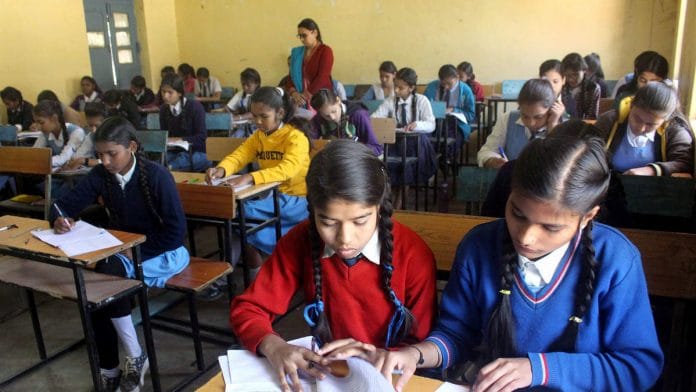
The Committee should not merely come up with recommendations, but draw out a clear action plan. They should outline what needs to be done to stem the rot in the examination system by taking a close look at the entire process, and examine structural issues such as over-centralisation.
They should highlight the fact that the heads of organisations such as the National Testing Agency have an important role to play. Hence, their credentials are important. Merit, and not suitable ideological bent, should be the primary criteria.
However, the most important aspect is that they should prescribe how their recommendations would be or can be implemented. A road map has to be provided. This road map should also indicate who or which agency would be responsible for implementing the recommendation and the time-frame within which it would be done.
There is no dearth of ideas in the country, but to make those ideas happen and sustain them, they have to be made politically acceptable, socially desirable, technologically feasible, financially viable, administratively doable, judicially tenable, emotionally relatable, and environmentally sustainable.
The author is a retired civil servant and former secretary in the government of India. Views are personal.
Disclosure: Nandan Nilekani is among the investors of ThePrint. Please click here for details on investors.
(Edited by Theres Sudeep)
Will it help . That is the million dollar question.
Open or unreserved category students are oppressed a lot. Can Print or CJP say something about the reservation system?