








In January 2019, at the 106th Indian Science Congress in Jalandhar, the vice-chancellor of Andhra University G Nageswara Rao explained to an audience that included schoolchildren that Gandhari’s 100 sons were the fruit of stem cell research and test-tube technology. He also claimed that Ravana kept two dozen types of aircraft and a network of airports in Lanka. When the criticism came, Rao did not retreat. The epics were history, not mythology, he said, and our failure to understand them today was no argument against their science.
That reply contains an entire disease, and it is worth being exact about what the disease is. It is not hostility to science. Rao is a professor of chemistry who was addressing a science congress in the vocabulary of science, and he meant every word of it as praise. There is a way of praising science that destroys it, and it has become the dominant way science is praised in the Indian subcontinent. Scripture and the laboratory are held up as two witnesses to one truth, the ancient book vindicated by the modern instrument, and the instrument dignified by its agreement with the book. See, they agree. Our ancestors knew it already. This looks like peace. But it is a mechanism that hollows out both parties, and it does its damage precisely because it wears the costume of their marriage while conducting their funeral.
Two arms of an unfalsifiable mechanism
The mechanism takes two symmetrical forms, and a person will often run both at once on the same scripture without registering the contradiction.
The first treats science as nascent, a discipline that has not yet grown into truths the scripture has held from the beginning. In 2018, Satya Pal Singh, Union minister of state for human resource development, told a gathering in Aurangabad that Charles Darwin was wrong and should be removed from the syllabus, since nobody had ever seen an ape turn into a man. From a platform in Mumbai, the Islamic Research Foundation’s Zakir Naik has, for three decades, told its audiences the same thing in a different accent: that evolution is an unproven conjecture that science will one day abandon. Notice the structure both share. The evidence has not failed; science has merely not yet matured into agreement, and one day it will.
The second runs the identical operation backwards, reading the present state of science into the text. Rao’s stem cells are one instance. So is the paper on Vedic aviation presented at the 2015 Science Congress in Mumbai, which found in an old Sanskrit text the design of aircraft that flew in antiquity. And so, exactly, is the enterprise Maurice Bucaille launched in 1976, one that the Islamic Research Foundation has retained in India ever since. It locates modern embryology in the Quranic verses on the drop, the clot, and the lump; finds the expanding universe in a verse on the heavens; and treats the endorsement of a Canadian anatomist as the seal on the case.
Neither tradition has a monopoly here; the grammar is identical. The two face in opposite directions, yet they are one operation, and what binds them is that both are unfalsifiable by design. Under the first, a finding that fits proves the doctrine, and a finding that fails to fit is science not yet finished. Under the second, a finding that fits was in the book all along, and a finding that fails to fit betrays a verse not yet correctly read. No possible result could count against the doctrine. Heads, the book wins. Tails, science has not finished its work. A coin that cannot land the other way is displayed as proof of the book’s astonishing luck.
Also read: Industrial revolution conquered nature. Technology is conquering what it means to be human
When the evidence arrives
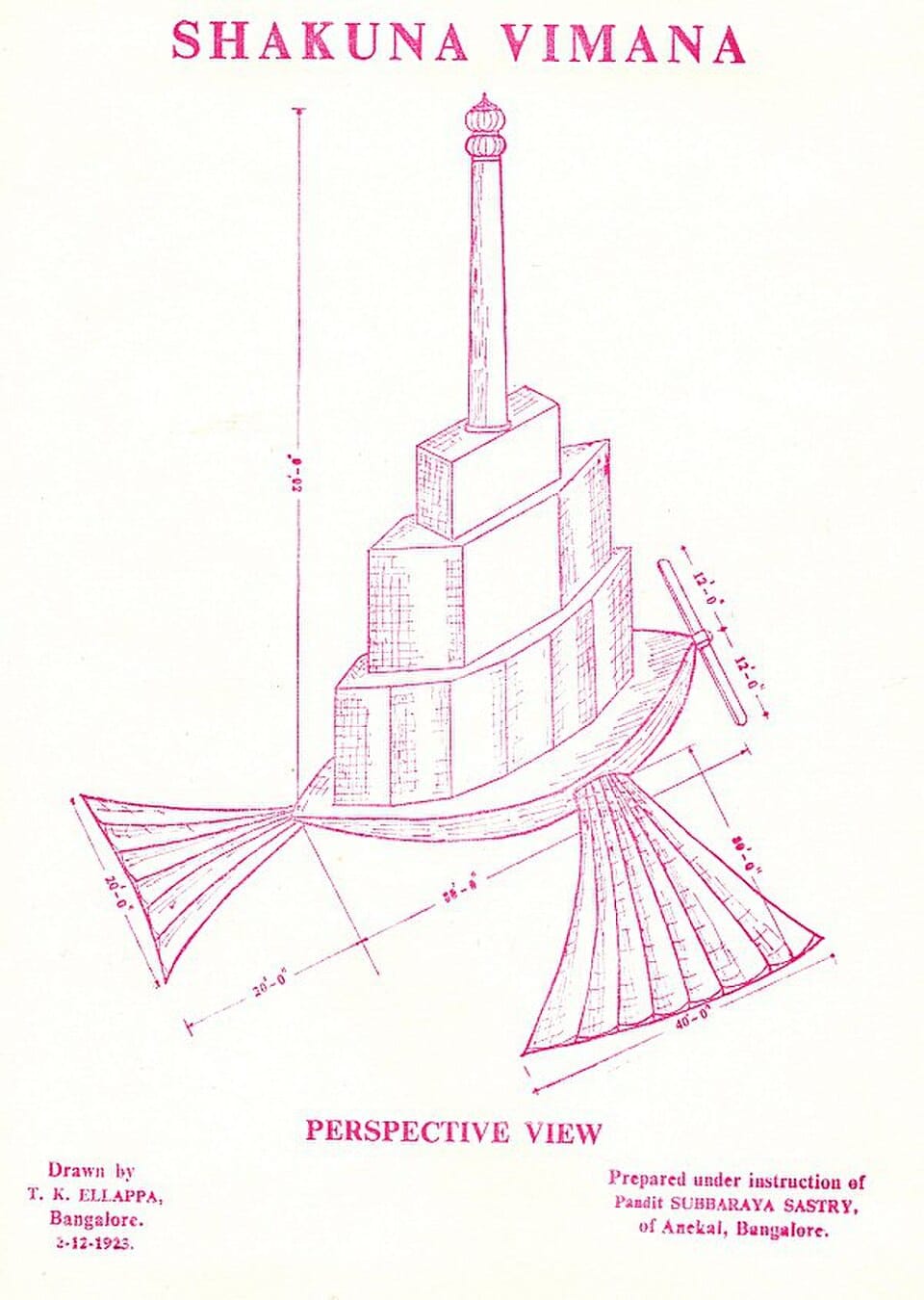
The clearest demonstration is what happens when the test is genuinely run. The Vedic aviation claim rests on a text called the Vaimanika Shastra, and in 1974, five engineers at the Indian Institute of Science in Bangalore published a study of it. They found that the text could not be dated earlier than the 12th century, that it had been dictated between about 1900 and 1922 by a Sanskrit interpreter named Subbaraya Shastry, and that the machines it described were unflyable, their propulsion arrangements resisting flight rather than assisting it. This was a falsification of textbook cleanliness, carried out by Indian scientists at an Indian institution. Forty-one years later, the claim was back on the podium of the Science Congress, and nobody on the dais felt obliged to mention the paper.
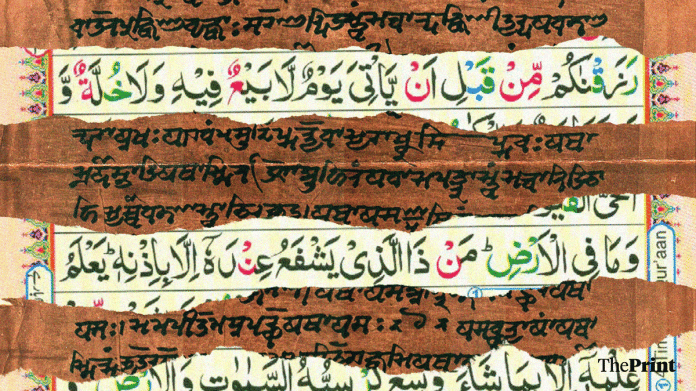
The embryological miracle has been answered just as squarely. Cambridge historian Basim Musallam showed in 1983 that the Quranic sequence corresponds closely to the four stages Greek doctor Galen had set out in the second century. Ibn Sina saw the overlap without alarm, reaching for the Quranic terms when he wanted to name the Galenic stages. The material was the standing physiology of the late antique Near East. That finding is over 40 years old, it comes from the discipline the concordist claims to revere, and it has changed nothing on the lecture circuit. The miracle argument rests entirely on unavailability: the sequence is supposed to be knowledge no one in seventh-century Arabia could have had to show that it was the ordinary medical property of the region, and there is nothing left to explain because a text that reproduces the physiology of its own century is doing what every text of that century did.
That is what ‘unfalsifiable’ means in practice. Not that no test can be devised, but that no test is allowed to matter.
One caveat is that falsifiability is not settled bedrock. As science philosopher Thomas Kuhn said, scientists do not abandon a framework the first time an experiment embarrasses it. And as mathematician-philosopher Imre Lakatos noted, every research programme protects a core it will not let the evidence touch. So the test is not whether a doctrine resists falsification, since all of them do, but whether it is alive or dead. Does it throw off new predictions, or does it only patch failures afterwards? The unfalsifiable book only ever patches and calls the patching wisdom.
What it does to faith
The first and least noticed victim is the thing the mechanism imagines it is defending. A god whose truth is ratified by whichever consensus happens to hold has stopped being an independent metaphysical claim standing outside history and become a hostage primarily to physics. His authority is then rented from the discipline he was supposed to tower over, talked up whenever the journals oblige, and passed over in silence whenever they shift.
Indian philosophy did not need Europe to teach it otherwise. The classical schools held shabda, the testimony of the revealed word, apart from perception and inference, as a distinct means of valid knowledge with its own jurisdiction, subject to critique.
Søren Kierkegaard built a whole philosophy on the claim that the demand for objective proof already marks the loss of faith. The moment a believer reaches for the latest paper to prove his verse, he concedes that the verse required proving. He accepts that divine revelation belongs to the same class of claim as a measurement, only older and so far luckier. He has also made his god permanently vulnerable, because an absolute bound to the consensus of 1925 must be revised by 1975.
Reverence for science, offered as a bodyguard, is the most efficient instrument devised to demote god to a conjecture his own defenders then forbid anyone to test.
Also read: Science lost something when it stopped asking ‘why’. It’s now high-tech animal husbandry
What it does to science
Science is the second victim, and the wound is of precisely the same kind.
Science is not a body of correct results. It is a method, and whatever the philosophers’ quarrels are about how exactly to characterise that method, they converge on its animating commitment, that the authority of science is inseparable from its exposure to correction. A claim earns the name “scientific“ by making itself vulnerable, by staking some portion of itself on an outcome that could go against it, by being the kind of thing that could turn out false and would then be surrendered or amended. Remove that vulnerability, and what is left may keep every ornament of science, the vocabulary and the citations and the confident gesture toward evidence, while having thrown away the single property that lent the ornaments their meaning.
This is exactly what befalls science the instant its only sanctioned function is to confirm. When every agreeing result is trumpeted and every disagreeing result is quarantined as provisional, science has stopped being practised. It is being quoted, selectively and tendentiously, the way an advocate quotes the witness he has already coached, admitting the helpful testimony and objecting to the rest. The method survives as mere decoration and dies as method.
A population trained to encounter science in this posture, as a reservoir of confirmations to be drawn upon when convenient and ignored when not, is being schooled in the exact inverse of scientific literacy beneath a banner that reads ‘Respect for Science’. Such a society is taught to expect agreement. It receives disagreement not as science performing its one indispensable function—the delivery of news that was neither wanted nor predicted—but as a flaw in the science, a failure, a not-yet, an embarrassment to be managed until the discipline recovers its senses. A society can lose its capacity for science while its citizens grow ever more fluent in scientific vocabulary, and the concordist reflex is among the surest roads into that specific ruin.
It compounds
It might seem that the two corrosions cancel out. They do not. Both run away from any claim that could be tested against a world with the power to say no. The unfalsifiable god and the merely confirming science are one failure, the abolition of risk, in the two domains that most need to keep risk alive.
A living faith and a genuine science are worth housing in one civilisation for the precise reason that they are different kinds of claim, each keeping the other honest by refusing to collapse into it. The reverence that folds them together performs no reconciliation. It performs a subtle extinction, applauded from the dais and printed in the textbook, and mistaken for the highest respect that could be paid to either.
Pranav Sharma is a historian of science who lives and writes from New Delhi, India and Paro, Bhutan. Views are personal.
(Edited by Prasanna Bachchhav)