





By the time this column goes to print, the Supreme Court Bench comprising Justices Vikram Nath and Sandeep Mehta will examine the central government’s response on how it plans to regulate trade margins—not just in oncology drugs, but across the wider pharmaceutical and medical devices markets.
Earlier this year, the Kerala High Court held that the government’s overriding powers to regulate the prices of drugs and medical devices under Section 100 of the Patents Act, 1970, must be read in conjunction with the Right to Life under Article 21 of the Indian Constitution.
The backstory
Diagnosed with breast cancer in 2021, Sarojam Radhakrishnan, a retired bank employee from Kerala, faced recurring monthly bills exceeding Rs 63,000 for targeted oncology therapies. These expenses quickly exhausted her family’s savings and pension. Recognising that thousands of households were being pushed towards destitution, she filed an individual writ petition in the Kerala High Court in 2022.
Although she passed away in September 2022 while the case was still in its early stages, her petition raised a profound systemic question about the Right to Health under Article 21 and public access to life-saving medicines. The Kerala High Court refused to let the matter lapse after her death and converted it into a public interest litigation (PIL) titled In Re: Exorbitant Pricing of Life Saving Patented Medicines.
On 17 July 2026, the Supreme Court took suo motu cognisance of the matter. On examining the facts, Justices Vikram Nath and Sandeep Mehta expressed shock at the markups of over 1,000 per cent between the Price to Retailer (PTR) and the Maximum Retail Price (MRP). They described the practice as nothing short of “broad daylight dacoity” and “carnage”.
Also read: Govt move to review drug pricing mechanism triggers concern as pharma industry invited to join panel
Legitimate profits, windfall gains and rip-off margins
Economic enterprise fundamentally requires legitimate profit. An entrepreneur who commits capital, bears commercial risks, creates employment and delivers an innovative product or service deserves returns well above the benchmark borrowing rate. Even windfall profits arising from external geopolitical disruptions or sudden supply-chain bottlenecks fall within an intelligible commercial category. Governments and regulatory mechanisms address such gains through measures such as temporary windfall taxes or export duties.
Beyond this lies the domain of monopoly rents, where an inventor uses statutory patent exclusivity to recoup substantial research and development investments before generic competition enters the market.
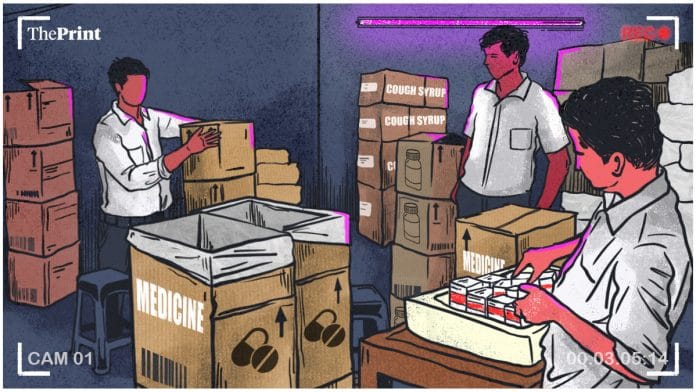
What the Supreme Court encountered in this case was neither a legitimate return on innovation nor an ordinary monopoly margin, but a rip-off bordering on dacoity. The Court noted that the excessive markups occurred in the trade channel between the price at which a pharmaceutical manufacturer supplies a vial to a distributor (PTR) and the final MRP printed on the packaging.
When an anti-cancer injection supplied to a hospital pharmacy at Rs 2,700 carries an MRP of Rs 27,000, a markup of 900 per cent is not funding clinical trials or laboratory equipment. Instead, such a margin can serve as a commercial bounty for hospital networks and supply-chain intermediaries, incentivising them to ensure that a particular brand, rather than a cheaper alternative, is prescribed and dispensed.
The Court also noted the asymmetry of power and information between patients and healthcare providers. While an ordinary retail consumer who is overcharged for a product can choose to walk away, a patient undergoing advanced oncology treatment has virtually no flexibility to forgo the medicine.
Does this not bear a close resemblance to the oppressive salt tax imposed by the British colonial authorities on Indians until MK Gandhi’s Dandi March? Gandhi argued that when sovereign authority permits or enforces a toll on something indispensable to biological survival, commerce ceases to serve a social purpose and becomes a form of institutional extortion.
The financial burden of medicines on household expenditure
The National Health Accounts (NHA) estimates for India for 2022–23, released by the Ministry of Health and Family Welfare in May 2026, put out-of-pocket expenditure at 43.4 per cent of total health expenditure. Although considerably lower than the peak of 64.2 per cent in 2013–14, this represents an increase from the preceding report for 2021-22, when out-of-pocket expenditure had fallen to an interim low of 39.4 per cent.
The 75th round of the National Sample Survey Office (NSSO) found that medicines alone account for roughly 70 per cent of out-of-pocket healthcare costs. Similarly, the 2025 survey on household social consumption showed that medicine purchases account for nearly 20 per cent of total hospitalisation expenses in rural households and 15 per cent in urban households.
Studies by the Public Health Foundation of India estimate that medical expenses push roughly 55 million citizens below the poverty line every year. Even public safety nets such as the Ayushman Bharat Pradhan Mantri Jan Arogya Yojana (AB-PMJAY), which offers up to Rs 5 lakh in annual coverage per family, can see an entire year’s entitlement consumed by just a few cycles of advanced cancer treatment.
The Pradhan Mantri Bhartiya Janaushadhi Pariyojana, launched in 2015, seeks to make medicines more affordable. However, it accounts for only 1 per cent of the value and 4 per cent of the volume of medicines on the National List of Essential Medicines (NLEM).
Meanwhile, in response to the Supreme Court’s persistent questioning, the Union government’s affidavit stated that it had invoked Trade Margin Rationalisation (TMR) to cap distributor-to-retailer margins at 30 per cent across 137 oncology drugs, building on an earlier pilot covering 42 formulations. The Department of Pharmaceuticals estimated that the measure would reduce retail prices by up to 70 per cent and save patients Rs 2,500 crore annually.
The Bench then raised a crucial question: why should trade margin rationalisation remain an ad hoc intervention restricted to cancer drugs?
Under the Drugs (Prices Control) Order, 2013 (DPCO), the National Pharmaceutical Pricing Authority (NPPA) can apply a statutory retailer margin of 16 per cent when calculating ceiling prices for scheduled drugs on the NLEM. However, the NLEM covers only about 388 molecules, accounting for roughly 17 to 20 per cent of India’s pharmaceutical market turnover. The remaining 80 per cent consists of non-scheduled drugs, for which manufacturers can set initial launch prices freely, subject to a statutory limit of 10 per cent on subsequent annual price increases.
Let us examine the statutory architecture of Indian drug regulation. Its foundations lie in the Essential Commodities Act, 1955, under which the DPCO is issued, alongside the administrative framework of the NPPA, established in 1997 under the Ministry of Chemicals and Fertilizers.
For decades, the DPCO framework focused almost entirely on fixing ceiling prices for molecules explicitly listed in the NLEM. Under the DPCO 2013, these ceilings were calculated using a market-based formula: the simple average of the PTRs of all brands with a market share of at least 1 per cent, plus a notional retailer margin of 16 per cent.
This formula had an unintended flaw: MRPs were anchored to prevailing market averages rather than actual manufacturing costs.
In 2016 and 2017, NPPA chairman Bhupendra Singh challenged this status quo. Recognising that access to life-saving healthcare was being undermined by excessive markups on inadequately regulated supplies, the regulator expanded its focus beyond basic medicines to medical devices and advanced consumables.
Invoking Paragraph 19 of the DPCO 2013—an emergency provision empowering the government to impose price ceilings on drugs and medical devices under extraordinary circumstances in the public interest—the NPPA cut coronary stent prices by up to 85 per cent in February 2017. In August 2017, it followed this by capping the prices of orthopaedic knee implants, reducing costs by up to 70 per cent.
The response to the NPPA’s actions was swift and coordinated. Global medical device manufacturers and domestic private hospital groups mounted substantial lobbying efforts. In early 2018, Bhupendra Singh was abruptly transferred out of the NPPA before this regulatory approach could be institutionalised across other clinical domains.
This time, the Justices have taken action, and awareness of the issue has grown. Let us hope that Sarojam Radhakrishnan’s struggle and sacrifice lead to a better, more transparent ecosystem for pharmaceuticals and medical devices.
Sanjeev Chopra is a Senior Fellow at the Centre for Contemporary Studies, Prime Ministers Museum and Library (PMML), New Delhi, where his Fellowship topic is Borders, Boundaries and Bluewaters of Bharat. He tweets @ChopraSanjeev. Views are personal.
(Edited by Prashant Dixit)