




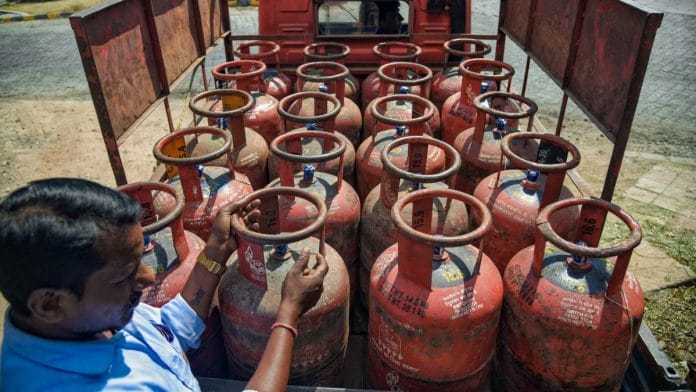

Global energy markets were thrown into chaos on 28 February. Strikes on Iran effectively closed the Strait of Hormuz, the critical chokepoint in global energy trade. For India, the stakes were existential. At the time, it relied on the route for close to 45 per cent of its crude oil and nearly 90 per cent of LPG imports. For almost four months, the Gulf routes that carried the lifeblood of its energy infrastructure were severely disrupted.
The situation was especially grave, as the disruption came when LPG had become a mass household fuel. With India boasting more than 33 crore LPG connections, the fuel shortage immediately escalated from a mere supply-chain hiccup to a direct threat to household energy security.
Faced with this unprecedented challenge, India’s response was anchored by a simple, non-negotiable principle: domestic kitchens must be protected first. What followed was a masterclass in whole-of-government coordination, strategic supply augmentation, and demand management.
Maintaining uninterrupted supplies
How did a nation so dependent on imports survive a four-month blockade without a single domestic kitchen going dark? The answer lies in a coordinated framework of supply augmentation and aggressive energy diplomacy.
The government immediately invoked emergency measures. Refineries were directed to maximise LPG production by utilising propane and butane streams, actively restricting the diversion of these intermediates to petrochemicals and other downstream uses. This decisive action resulted in a sharp lift in daily indigenous LPG production, surging from 35 TMT to 54 TMT. A major pillar of this response was strictly prioritising the output for the public sector Oil Marketing Companies (OMCs)—Indian Oil, Bharat Petroleum, and Hindustan Petroleum—ensuring that the available product flowed to household consumers.
Simultaneously, India flexed its diplomatic muscle to aggressively diversify supply chains. In addition to the available Gulf sources, procurement was rapidly expanded to alternate sources, including the United States, Norway, Canada, Algeria, and Russia.
Also read: The chaos behind India’s first census
Managing India’s LPG reserves
Managing a crisis of this magnitude cannot be handled in silos. The response required structured coordination among the Ministry of Petroleum and Natural Gas, OMCs, refineries, state governments, civil supplies departments, and distributors.
Unlike crude oil, India does not have a massive national strategic buffer for LPG. Its storage capacity is limited in strategic terms. Therefore, its short-term “strategic reserve” response was heavily tactical: conserving available stock, maximising indigenous output, reallocating supplies away from non-priority uses, and diversifying imports. The government directed OMCs to meticulously prepare plans for maintaining LPG stocks for at least 30 days, triggering a shift toward stronger long-term reserve planning. Close inventory monitoring was executed at every level—from refineries and bottling plants down to distributors—avoiding distributorship-level dry-outs in even the most remote corners of the country.
A major operational risk was consumer panic. Fearing shortages, consumers who typically booked cylinders after 55 days began booking within 15 days. Unchecked, this panic buying would have converted a manageable physical constraint into an artificial, crippling shortage. To combat this, the government instituted strict booking gaps: 25 days for urban markets and 45 days for rural markets. This helped stop hoarding and black market sale. Coupled with assurances of 100 per cent domestic supply and continuous public messaging, the measures restored calm and ensured equitable distribution.
The necessity of rationing commercial LPG
One of the toughest yet most vital decisions was the immediate rationing of commercial LPG. The Centre introduced a cap of 20 per cent (of pre-crisis levels) on commercial LPG supply by OMCs.
During a period of constrained supply, commercial demand simply could not be allowed to compete unrestrictedly with household cooking needs. Commercial LPG operates in a deregulated market where buyers can purchase cylinders without stringent booking requirements or digital authentication. If left unchecked, this freedom would have led to speculative stocking, hoarding, and disproportionate absorption of scarce resources by intermediaries.
By capping commercial supplies, India achieved three primary goals:
- Household protection: Domestic LPG was fully protected as a cooking necessity
- Demand moderation: Immediate pressure on scarce stocks was reduced.
- Anti-diversion control: The opportunity for commercial users to absorb disproportionate quantities was mitigated.
Also read: India’s RPwD Act is continuing to evolve beyond 2016. Courts, citizens are still rewriting it
Mandating the delivery authentication code
A shortage scenario inevitably widens the price and availability gap between domestic and commercial LPG, creating a dangerous arbitrage risk. The temptation to divert subsidised domestic cylinders into the black market for commercial use skyrockets.
To combat this, the delivery authentication code (DAC) was made mandatory. The DAC was not merely a digital-process requirement; it was a critical crisis-control mechanism. Alongside digital bookings via IVRS, SMS, online payments, Aadhaar authentication, and de-duplication mechanisms, the DAC ensured that a cylinder booked for a genuine household actually reached that intended consumer and was not diverted.
By maximising digital-only bookings—reaching near 100 per cent levels—India eliminated bogus or proxy deliveries. DAC compliance for refill delivery across various states hit an astonishing 95 per cent to 98.5 per cent. This digital fortress discouraged the diversion of domestic cylinders into commercial channels and preserved public confidence that household cylinders were reaching actual consumers.
Calibrated restoration of commercial supply
As the crisis stabilised, commercial LPG was not reinstated overnight. A sudden release would have caused an immediate second demand shock, triggering renewed hoarding, a collapse of logistics, and fresh backlogs in domestic deliveries.
Instead, the government opted for a calibrated, phased restoration:
- Initial restriction: LPG supply was capped at 20 per cent to establish baseline household security and prevent hoarding.
- Subsequent restoration: The cap was increased to 50 per cent, prioritising essential food-sector users such as restaurants, dhabas, community kitchens, and 5 kg cylinders for migrant labourers.
- Further restoration: The cap was pushed to 70 per cent, expanding priority to labour-intensive industries such as steel, textiles, chemicals, and plastics where natural gas was not a substitute. This also helped support employment.
- Normalisation: On 25 June 2026, bulk restrictions were withdrawn, and commercial packed LPG returned to pre-crisis levels as supply visibility fully improved.
This staged approach bought time for OMCs to build robust customer databases, distinguish essential users from discretionary demand, and nudge eligible commercial consumers toward piped natural gas (PNG).
Also read: Urdu is not a ‘Muslim language’, BJP alienised it, Congress is silent
A model of resilience
Reflecting on the global impact of the 2026 Middle East crisis, it is evident how uniquely successful India’s strategies were. While some countries struggled with crippling fuel dry outs and unmanageable retail price surges, India managed well through an unyielding commitment to domestic supply continuity and decisive demand management.
Against all odds, the Indian household consumer saw minimal price impact, which stands as a testament to the resilience of a well-diversified Indian economy. India’s response proved the viability of a disciplined, household-first energy security model. Despite severe disruptions, the government ensured continuity by maximising indigenous production, diversifying imports, and preventing panic buying. It cemented a vital governance philosophy: Commercial inconvenience is manageable; household fuel insecurity is not.
Sukhmal Jain is the former director (marketing) of Bharat Petroleum Corporation Limited. Views are personal.
(Edited by Prasanna Bachchhav)