





India’s advances in cell and gene therapy are rapidly moving toward clinical reality. The question now is whether we can build the systems needed to deliver these therapies to the patients who need them.
Cell and gene therapy (CGT) could transform treatment for inherited blood disorders such as thalassemia and sickle cell disease. An estimated 10,000–12,000 children are born with thalassemia major in India every year, while the country carries the world’s second-highest burden of sickle cell disease. For many patients, treatment has meant lifelong transfusions, supportive care or, for a relatively small number, bone-marrow transplantation. CGTs, however, can potentially correct the underlying genetic defect through a single intervention.
Groundwork is already underway for clinical trials of BIRSA 101, India’s first indigenous CRISPR-based gene therapy for sickle cell disease. The country’s first human gene therapy trial for haemophilia A has also reported encouraging early results. NexCAR19, an indigenously developed CAR-T therapy for relapsed or refractory B-cell cancers, has demonstrated that sophisticated cell therapy can be developed and commercialised in India at a fraction of the cost of comparable imported treatments.
But in a country where rare diseases affect an estimated 70 to 96 million people, developing a therapy is only the beginning. Access is an equally pressing concern.
CGTs are unlike conventional medicines. They depend on specialised manufacturing, highly controlled biological materials, trained clinical teams and, in many cases, complex processes in which a patient’s own cells are collected, modified and returned. A therapy may be scientifically successful and have regulatory approval, yet remain inaccessible if the infrastructure required to manufacture and administer it exists only in a handful of specialised centres.
Also Read: Modi govt is pushing gene editing frontier. Winning against internal critics
India’s capacity problem
India’s dependence on imported critical inputs illustrates the problem. The country remains heavily reliant on global supply chains for clinical-grade viral vectors and plasmids, among other materials. This adds to costs and leaves domestic manufacturers vulnerable to international disruptions.
At the same time, India has a limited number of good manufacturing practice (GMP)-compliant facilities capable of manufacturing these therapies at scale, while specialised cold-chain logistics are needed to transport sensitive biological materials without compromising their quality.
The answer is not simply to build more centres of excellence. Publicly funded, shared manufacturing facilities could allow academic institutions and smaller companies to access expensive GMP cleanrooms, regulatory expertise and scale-up infrastructure without having to create the entire system independently.
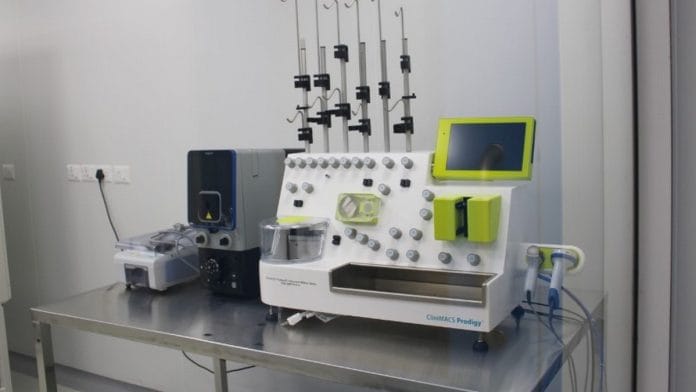
A national network for apheresis — a procedure used to collect cellular material from a patient’s blood — could help decentralise cell collection by equipping and certifying regional hospitals and blood banks. Even existing tertiary hospitals could become part of this network. Enclosed and automated cell-processing systems, sometimes described as “GMP in a box”, could bring certain manufacturing capabilities closer to the point of care and reduce the time and logistical complexity involved in moving products between facilities.
Getting patients to treatment
A therapy cannot reach a patient who has not been diagnosed, referred or assessed for eligibility. We therefore need stronger pathways for early identification of genetic disorders and for moving patients from primary healthcare settings to specialised centres.
Existing programmes such as the Rashtriya Bal Swasthya Karyakram already provide a pragmatic, tiered model of screening, but this needs a targeted upgrade for the genomic era. Screening must connect seamlessly with treatment so that a child at a rural primary clinic can be referred quickly to a specialised tertiary centre.
Regulation must evolve alongside infrastructure. India’s CGT ecosystem is governed through a framework involving institutions including the Department of Biotechnology, the Indian Council of Medical Research and the Central Drugs Standard Control Organisation, apart from the country’s biosafety and clinical-trial regulations. This framework is essential because these therapies carry scientific and clinical uncertainties that demand rigorous oversight. The government has already implemented joint oversight of CGTs by central and state authorities to help the system evaluate new technologies at the pace at which the science is advancing. This could help speed up approvals without compromising safety.
Also Read: US has the first gene therapy drug for hearing loss. India racing to catch up
Affordability is the next test
Even with agile approvals, market availability means little if affordability remains unresolved. NexCAR19 has demonstrated the potential of indigenous development to bring down the price of advanced therapies. Yet a therapy costing Rs 30-40 lakh remains beyond the reach of most Indian families. The existence of a domestic therapy therefore does not automatically make it an accessible therapy.
Under the National Policy for Rare Diseases, eligible patients can receive financial support of up to Rs 50 lakh. As more potentially transformative therapies enter clinical practice, financing models will need to evolve beyond one-time assistance. Value-based pricing and outcome-based reimbursement offer one possible direction. Rather than requiring the entire cost of a therapy to be borne upfront, payments could be structured over time and linked, where appropriate, to measurable clinical outcomes. Such models could reduce catastrophic expenditure for families while also encouraging developers to focus on the real-world effectiveness of these therapies.
The GenomeIndia Project, which has sequenced around 10,000 whole genomes from diverse Indian populations, could further support the development of precision therapies suited to the country’s genetic diversity. Policy initiatives such as the National Biopharma Mission, BioE3 Policy and Bio-RIDE are also intended to strengthen infrastructure, technology transfer and collaboration across the research-to-manufacturing pipeline.
These efforts need to converge around not merely developing advanced therapies in India but making them deliverable too. Success should therefore not be measured only by the number of therapies developed or approvals granted. For a child born with a genetic disorder, scientific progress is meaningful only when he spends his childhood learning in a classroom rather than in a hospital ward.
Abhishek Kumar Singh is a Research Assistant at IISc, Bengaluru, a LAMP (Legislative Assistant to Member of Parliament) Select 2024 and former policy and health communications fellow at ICMR. Views are personal.
(Edited by Asavari Singh)