



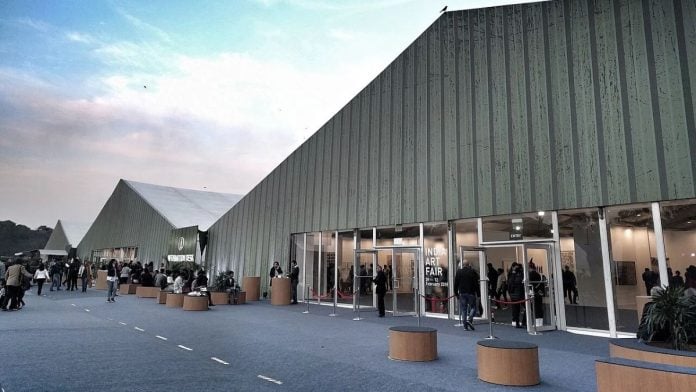
It has been a great time at the auctions for Indian art lately. In the secondary market for Indian fine art and collectible auctions, record prices were witnessed at a considerable level and frequency. In 2025, this secondary market recorded turnover of approximately Rs 2,543 crore, more than triple the observed value from 2015.
It wouldn’t be an exaggeration to say that India’s art market may indeed be approaching an inflexion point.
MF Husain’s 1954 Untitled (Gram Yatra) sold at Christie’s New York in March 2025 for $13.75 million, or approximately Rs 118 crore. Another Husain, titled The Red Girl (1952), sold at a hammer price of Rs 65 crore this September, setting a record for an auction held within the country.
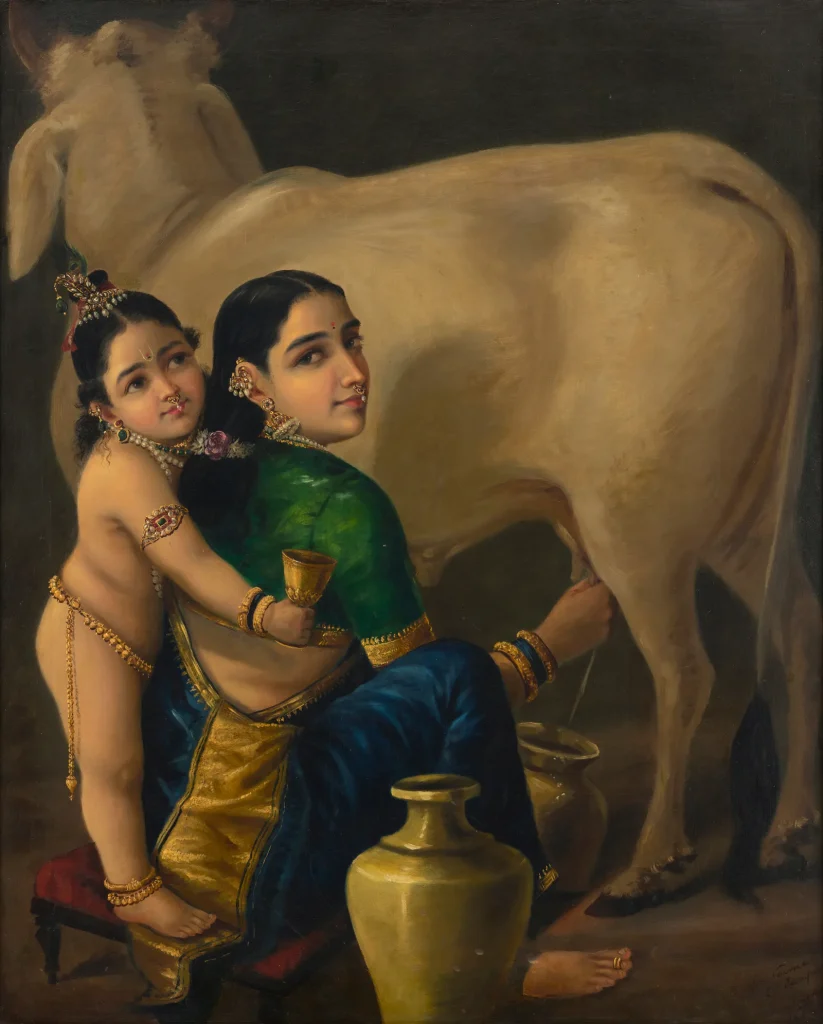
Raja Ravi Varma’s Yashoda and Krishna (1890s) achieved Rs 167.2 crore at Saffronart in April 2026, setting a new benchmark for any Indian artwork sold at auction. Tyeb Mehta’s Trussed Bull sold at Rs 61.8 crore in April 2025, the artist’s highest value, before Rickshaw Puller reached Rs 69.1 crore at Volte Una’s inaugural single-artwork auction in October this year.
In another auction, a late 16th-century miniature painting attributed to Basawan, titled A Family of Cheetahs in a Rocky Landscape, previously in the ownership of the Prince and Princess Sadruddin Aga Khan, sold at Christie’s in October 2025 for £10.245 million (somewhere in the ballpark of Rs 120 crore).
While miniature schools of painting have consistently done well in international auctions due to their historical demand, this recent case was extraordinary.
Whether this moment becomes a lasting cultural achievement will depend on what the market chooses to support beyond the next record-breaking auction sale.
An exceptional auction cycle can renew attention towards styles, genres, or even entire regions (in this case, the Indian subcontinent) that may have yet to capture the allure of the larger global art industry. Yet record prices alone do not explain the present moment. It is important to understand the changing mechanisms of patronage, the nature of demand and the infrastructure that supports the market.
A changing geography of patronage
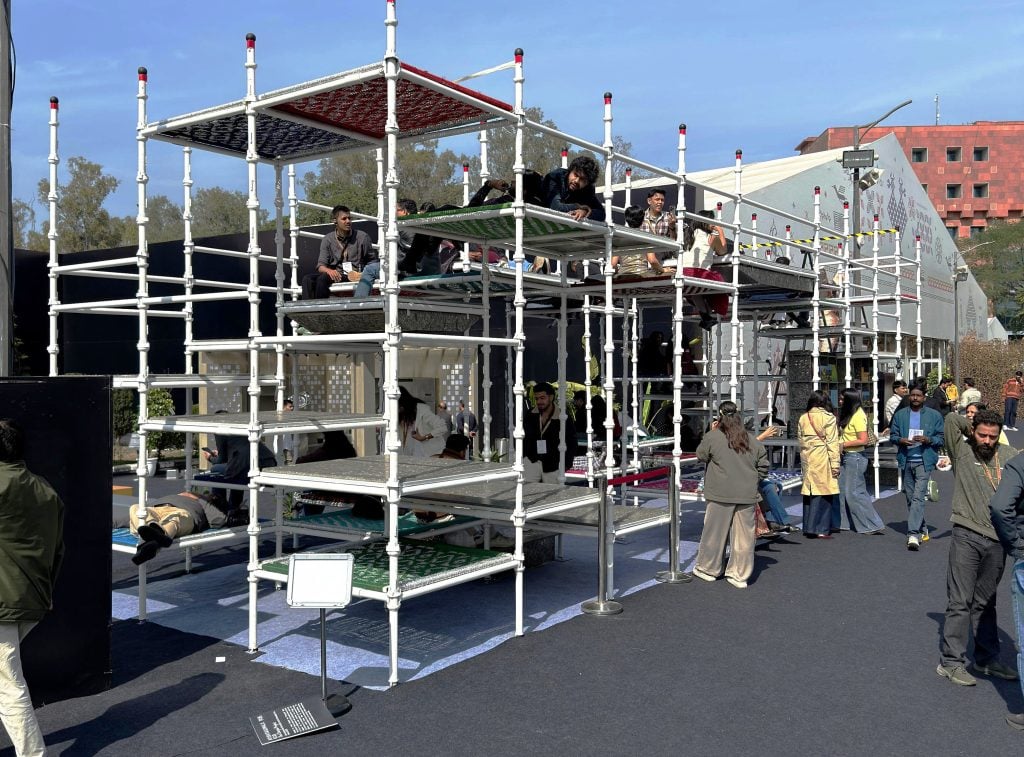
Since its inception in 2008, India Art Fair has provided a platform for international engagement, who have also now expanded their year-long programming across different cities. Art Mumbai, now in its fourth edition, is displaying 94 galleries and foundations this November, including 21 international galleries. This growing participation of established overseas names, alongside a strong Indian contingent, reflects a lucrative market.
The association of Indian art and culture with international fairs is nothing new but goes back to the very inception of the concept of modern-day trade fairs. The Great Exhibition of 1851, held in London, presented an extensive selection of Indian manufactures. The Paris Universal Exhibition followed in 1855, for which objects were sent from Bombay and various districts of the Presidency.
Duplicates from the display became the core inventory of the city’s erstwhile Victoria and Albert Museum in 1872, which today is better known as the Dr Bhau Daji Lad Museum. The history is a reminder that the movement of Indian objects across international exhibitions, and the institutions established to preserve them, has long been part of the country’s cultural economy.
The interaction with Western programming, fairs and institutions has undergone considerable transitions in recent decades. While an engagement with overseas entities is crucial to the growth of our art and culture industries, the dynamic has changed with the growth in the buying capacity and confidence of domestic collectors. Indian galleries are also increasingly able to participate in international fairs from a position of greater commercial strength.
The Delhi-based Vadehra Art Gallery, for example, fully sold out its booth during this year’s showcase at Frieze London in October. This shift is also taking place amid visible restructuring in Western markets. Pace Gallery announced changes to its roster and workforce, prompting questions about the sustainability of the mega-gallery model. The international art market is not immune to economic pressures, and India’s growing prominence is not exempt from similar factors.
But what are the collectors collecting?
The art market’s growth is part of a wider expansion in luxury goods, design, and collectible objects. Collecting paintings often sits alongside the acquisition of imported cars, watches, furniture, textiles, rare books, jewellery, antiques, and historical objects. These overlapping interests are increasingly visible at fairs and exhibitions that bring together audiences across art, architecture, interiors, and collectible design.
Art Mumbai and AD Design Show are going to take place over the same weekend in November, at the Racecourse and Jio World Convention Centre, respectively, in Mumbai. India Design ID, which held its Mumbai edition in October, similarly brings together architecture, interiors, craft, and collectible design.
The motivations behind an acquisition are rarely exclusive. A painting may appeal for its aesthetic qualities, historical associations, prestige, or potential appreciation. This is particularly relevant to 20th-century Indian modernism. Artists of the period lived through colonial rule, Independence, Partition, the formation of the republic, the 1971 Bangladesh Liberation War, and the Emergency.
Their works, spanning figuration, abstraction, mythology and social commentary, form part of the country’s shared historical inheritance. Many of these modernists have passed away, while significant works are already held in private collections and institutions. As demand for established names grows, competition for the limited number of works returning to the market can intensify. The strength of the secondary market therefore reflects not only speculative interest, but also the historical significance and finite availability of these works.
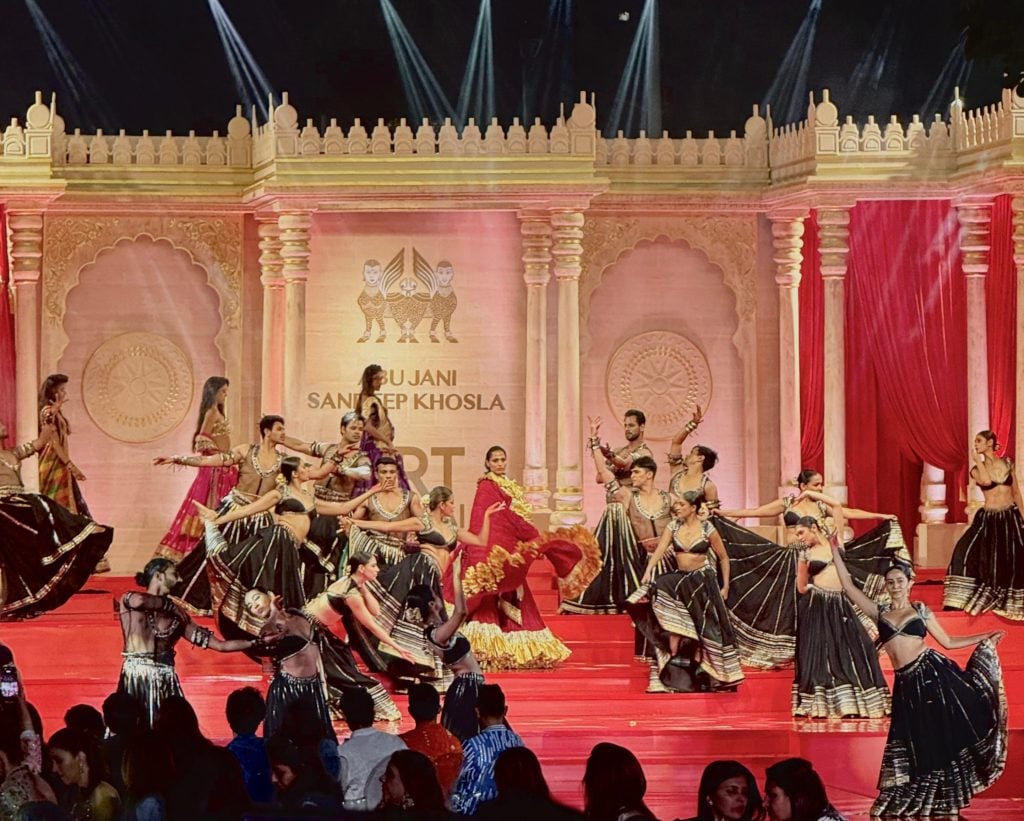
Yet the expansion of a market does not necessarily mean that its benefits are evenly distributed. Record prices for established modernists can attract new collectors and bring wider attention to Indian art, but they can also concentrate capital around a small group of artists whose historical importance and market positions are already well established.
The more subjective question is whether this interest extends to younger practitioners, living artists and galleries working with emerging practices. A market can become more valuable without becoming more diverse, and greater financial activity does not automatically translate into better conditions for artistic production.
Contemporary artists, meanwhile, are navigating a separate set of disruptions: the isolation of the pandemic and the rapid expansion of generative artificial intelligence (AI). Just as photography challenged painting’s traditional role in representation in the 19th century, AI is prompting renewed questions about authorship, originality, and artistic intention. The dread over AGI (Artificial General Intelligence) potentially enslaving/destroying humanity also causes an existential dread, not dissimilar to the impact of nuclear weaponry in the mid-20th century.
It is too early to identify a coherent movement emerging from these changes, but they are already reshaping the conditions in which artists make and present their work. When technically accomplished images can be generated instantly, the question is no longer simply what an image looks like, but what makes it an artwork.
The infrastructure behind the market
A sustainable art market requires more than collectors and auction houses. It needs an upward-moving economy, thriving primary industries (quintessentially what generates roti, kapda and makaan, and every associated industry that goes into making them), and a section of population with enough disposable income to provide patronage. It depends on institutions that support artistic production, research, experimentation, and public engagement. India’s expanding biennale and independent-space ecosystem is, therefore, as important to the market’s future as the auction records that attract headlines.
The Kochi-Muziris Biennale, heading into its seventh edition, is scheduled for 2027–28, and will be curated by Kader Attia. The Bengal Biennale, returning for its second edition from November 2026 across sites in Kolkata and Santiniketan, provides another platform connecting the region’s historical artistic inheritance with contemporary practice.
The annual Serendipity Arts Festival in Goa has widened public engagement through multidisciplinary programming across visual arts, photography, craft, performance, film, food, and music. The Sā Ladakh Biennale, again inaugurated in 2026, brings contemporary artistic practice into dialogue with the ecological, cultural, and historical landscapes of the western Himalayas, including the region’s Tibetan Buddhist heritage. In Delhi, the India Biennale 2026, backed by the Ministry of Culture, brings art, architecture, and design together across historic monuments, museums, galleries, and public spaces. Its interdisciplinary scope is significant: it recognises that the cultural ecosystem cannot be understood through the visual arts alone.
Private and public museums play a crucial repositoria role. Newer institutions like the Kiran Nadar Museum of Art (KNMA) in New Delhi, Nita Mukesh Ambani Cultural Centre (NMACC) in Mumbai, and the Museum of Art and Photography (MAP) in Bangalore have established themselves as newer, privatised spaces.
Alongside these larger platforms, bodies such as Khoj in New Delhi, 1Shanthiroad in Bengaluru, Chemould CoLab in Mumbai and Chander Haat in Kolkata provide spaces for experimentation, residencies and the development of new work. The Chennai Photo Biennale Foundation has expanded its activities beyond the biennale itself, including lens-based residencies developed with the Wavelength Foundation. The Jaipur Centre for Art offers residencies that connect artists with local craftspeople, historians, and material traditions. These organisations support practitioners at various stages of their careers, often outside the conventional commercial gallery system.
Indian artists are also participating in international exhibitions through official national representation, inclusion in the main curatorial exhibitions of biennales and independently organised presentations. India’s return with an official pavilion at the 2026 Venice Biennale, after a seven-year gap, featured five artists—Alwar Balasubramaniam, Ranjani Shettar, Sumakshi Singh, Skarma Sonam Tashi and Asim Waqif—in an exhibition curated by Amin Jaffer.
Other international presentations offer different forms of visibility. In London, Bharti Kher’s work has been presented at the Victoria and Albert Museum, including the monumental sculpture Gaia, while her sculptures have also featured in a display at Yorkshire Sculpture Park. Such presentations demonstrate the multiple routes through which Indian artists engage with international audiences and institutions.
Established galleries have an equally important role. Beyond commercial transactions, they preserve archives, provenance records, exhibition histories, and specialist knowledge. Their sustained engagement with artists and estates helps establish the historical and critical context through which works are understood. Auction houses may create price benchmarks, but galleries, museums, foundations, biennales, and independent spaces help build the cultural infrastructure that gives those works their lasting significance.
The distinction between collecting and patronage is particularly important in this context. Acquiring an existing work can preserve it within a collection and, in some cases, bring it into public view. Patronage, however, can also involve assuming responsibility for what does not yet exist: commissioning new work, financing research, supporting residencies, providing production resources or enabling artists to experiment without the immediate pressure of commercial returns.
DAG (erstwhile Delhi Art Gallery) works across New Delhi and Mumbai, undertaking both exhibition-related and alternative public programming that is branching to various cities. Experimenter gallery’s yearly programme called Curator’s Hub in Kolkata has drawn art professionals and casual audiences and is highly acclaimed. Foundations like JSW and RMZ, as well as those like St+art, are undertaking projects both inside white-cube spaces and in the world.
These forms of engagement are not mutually exclusive. Indeed, a strong collecting culture can become a stronger culture of patronage when private acquisition is accompanied by a sustained interest in artistic practice and its conditions of production.
Beyond the gold rush
India’s art market may well be at an inflexion point. Its expanding collector base, international visibility, and growing institutional infrastructure offer considerable opportunity. But the measure of its maturity cannot be the next record-breaking sale alone. It must also be the willingness to support artists throughout their careers, preserve the histories behind their work, sustain independent institutions, and build a collecting culture that extends beyond financial speculation.
Historically, patronage has taken many forms. Royal courts and emperors commissioned and sustained artists and workshops, whereas 20th-century galleries and collectors helped establish the conditions in which Indian modernism could flourish. Today, the responsibility is increasingly distributed across private collectors, foundations, museums, biennales, galleries, and independent cultural organisations. The challenge is to ensure that the resources generated by the market contribute to this wider ecosystem.
Much of the attention remains concentrated on the gold rush of auctions: record-breaking prices, celebrated names and a finite body of works that continues to command the market. Yet the lasting wealth of an art ecosystem cannot be measured by the value of what has already been produced. It lies equally in what it enables to emerge—in the artists it sustains, the histories it preserves, the institutions it builds and the spaces it creates for new work.
Shatadeep Maitra is a fine-arts professional, curator and author of books and exhibitions like The Babu & the Bazaar: Art from 19th and 20th-Century Bengal and Indian Blue.
Views are personal.
(Edited by Saptak Datta)