






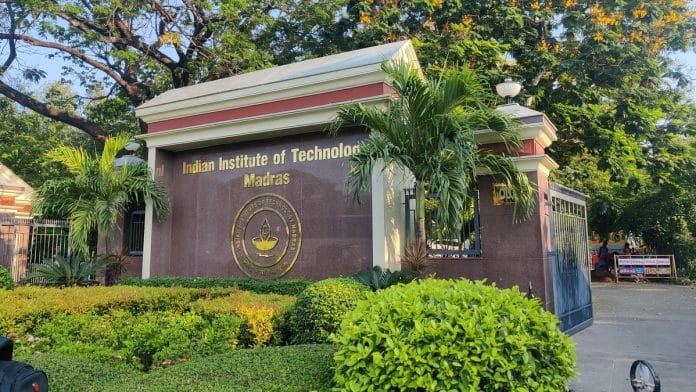

IIT Madras director, Professor V Kamakoti, announced last week that the institute would launch a School of Medical Sciences capable of awarding MBBS and MD degrees. The rationale is that modern medicine is increasingly technology-centric, and India currently remains dependent on imported high-end medical equipment. Closer integration between engineering and medicine could help India build indigenous capability.
Established in May 2023, the Department of Medical Sciences and Technology currently offers a four-year Bachelor’s programme in Medical Sciences and Engineering. Its website states: “Bringing Engineering to Life. By giving clinicians an engineer’s perspective of the workings of the human body, and engineers a clinician’s outlook, The Department of Medical Sciences & Technology at IIT Madras seamlessly integrates medical science and engineering by offering a new paradigm to transform clinical practice.” That in itself is an ambitious goal. The proposed school would begin producing practising clinicians.
While there is a genuine national urgency underneath this announcement, the question worth asking is whether a full medical school inside a premier technical institution is the best institutional response to it.
Depth over breadth
There is no doubt that IIT Madras, with its global brand and its vast alumni network, can assemble the financial resources and the talent required to attempt this. The more important question is what India wants its premier technical institutions to become. The danger is that institutional growth becomes a substitute for institutional strategy. Many tend to equate ambition with expansion into new fields of study. For example, what new area can we take on next?
But there is an alternative, and more demanding, definition of institutional ambition. It is built around what an institution can become genuinely exceptional at if it concentrates talent, capital and attention on a narrow set of problems for 20 years, until 2047. A leading educational institution’s greatest asset is not its ability to enter every important field. It is its ability to build exceptional depth in a few capabilities over decades.
IIT Madras already has an enormous unfinished agenda in front of it, for the institution and the country. There is tremendous room to strengthen its capabilities in deep-tech, advanced manufacturing, artificial intelligence (AI), robotics, energy, biotechnology and medical device engineering; to expand its high-quality PhD and postdoctoral capacity; to build stronger research collaboration networks; and to translate more research into companies and industrial capability. Becoming world-class in a few of these areas may be the most ambitious goal for IIT Madras, and India in general. Why are India’s most prestigious institutions increasingly responding to national ambition by expanding their mandates rather than deepening their comparative advantages?
Continuous learning and evolution do not require continuous expansion. For example, Carnegie Mellon University and Georgia Tech show a different model: ambition through depth in engineering, computing and robotics, paired with partnerships with external medical institutions. Similarly, MIT pursues serious work at the engineering-medicine interface through the joint Harvard-MIT Health Sciences and Technology programme. Caltech runs joint MD-PhD arrangements with USC and UCLA rather than building a medical school of its own. The UC Berkeley-UCSF Joint Medical Program advances health equity and social justice by educating physicians who practice at the intersection of medicine, public health and community health. The closest American precedent is the University of Illinois’s Carle Illinois College of Medicine: an engineering-based MD school built through a partnership with an external hospital system, Carle Health, admitting small cohorts rather than absorbing a full teaching-hospital apparatus into the engineering campus.
None of this means IIT Madras should copy any of these institutions; their funding environments and histories differ. It means ambition and expansion are not the same thing.
Also read: Kamakoti is not the typical IIT grad. No passport, failed JEE, he is now set to reform the NTA
Choosing the right architecture
Under its Atmanirbhar Bharat strategy, India has a legitimate need to build indigenous medical technology: devices, diagnostics, imaging, implants, AI-enabled healthcare. IIT Madras is well-placed to contribute. But there is more than one way to connect engineering and medicine. One pathway is to build a full medical school and clinical ecosystem inside the institute. Another is to deepen its engineering and medical-technology capability while partnering with established medical institutions and hospitals for clinical research, validation and translation, the way MIT, Caltech and Carle Illinois have each done in their own way. The relevant question is what institutional architecture produces the greatest national contribution and outcome for the resources and attention committed. And what would happen if IIT Madras kept deepening its medical-technology work through partnership rather than building a full MBBS-MD degree programme?
Attention is the scarcer resource
India is expanding the number of IITs while trying to strengthen the research capacity of its existing institutions, and public funds are not unlimited. Opportunity cost is where this gets serious, because the scarce resource is not only money. Senior leadership attention is limited. The time of exceptional faculty is limited. Institutional administrative capacity, infrastructure, and the ability to sustain a priority for decades are all scarce. A new medical school is not simply another academic programme. It is a different beast, even for those with financial resources. It brings clinical faculty recruitment, patient-care responsibilities, accreditation and regulatory burdens, new infrastructure, and an entirely new category of institutional risk. Every new mission consumes attention that would otherwise go somewhere else, possibly towards more exceptionalism. The question that rarely gets asked in these moments is what existing capability receives less of that attention once the institution takes on the new one. A simple budget comparison misses this opportunity cost.
Holding public investment accountable
This is not an argument against funding IIT Madras. It is an argument for being more demanding about what that investment is meant to produce. India has concentrated extraordinary talent and public resources in a few elite institutions for decades. This concentration creates an obligation to ask not only whether these institutions are respected, but whether their institutional capabilities are compounding. A successful alumnus is an individual outcome. A new centre or programme is an institutional activity. The harder question is what globally consequential capabilities the institution itself has built: research that changed fields, technologies that reached global markets, patents and licensing with real industrial impact, and companies that emerged from the research base. The standard for a premier research institution, let alone for one of the top institutions, should be more than producing impressive people. It should be producing capabilities that compound over time, for the nation.
India does not need every IIT to become broader
India does not need every premier institution to accumulate the same collection of disciplines, especially to achieve its “Self-Reliant India” aspirations. There is a different opportunity worth more attention: deliberate institutional differentiation. Imagine an IIT system in which different institutions were resourced to build exceptional depth in different areas of national importance, connected through strong mechanisms for collaboration rather than duplicated mandates: one institution globally exceptional in advanced manufacturing, another in AI and computation, another in energy and climate technology, another in materials and semiconductors, another in aerospace and robotics, another in biotechnology and medical technology. It could make the system considerably stronger, built as a portfolio of differentiated capabilities rather than a collection of institutions each trying to do everything. Viksit Bharat demands that from its elite educational institutions.
Before committing to a mandate of this scale, the questions India and IIT Madras ought to ask are not complicated. What precisely is the capability gap the new medical school is meant to close? Why should IIT Madras own the full clinical pipeline rather than partner with existing medical institutions the way its strongest global peers have chosen to? What has the existing engineering-medicine programme in India actually demonstrated, and what evidence would justify the jump from a hybrid technical degree to a full clinical school? Have partnership and distributed models been seriously explored and compared against the in-house model? Which existing capabilities lose faculty time, capital and leadership attention as a result? And what would success actually look like, when measured not in MBBS and MD degrees conferred but in medical technology developed, research translated, and import dependence reduced?
The test of patience
IIT Madras has earned its reputation through decades of work in engineering and technology, and that is a genuine national pride and asset. The temptation to expand in response to a real national need is understandable. But the harder institutional decision is often not what to add. It is what to leave out, so that something else can become exceptional. India’s development challenge is not a shortage of important things to do. There are many. There is a shortage of institutions that can sustain focus long enough for outcomes to compound. That is why the question worth asking is not simply what India can do. It is what India chooses to patiently build.
For Viksit Bharat, a developed nation, institutional excellence should be measured not by how many fields an institution enters but by how deeply it builds, and whether its capabilities produce outcomes that matter. The question before IIT Madras, and before every Indian institution weighing a major new mandate to expand, is not whether the destination is attractive. It is whether the institution can hold its focus long enough for excellence to compound. For the institution. For the nation.
Vasu Eda is the author of Get Job Ready (Penguin Random House). He is working on a forthcoming book, Innovation and the Future of India. He is on X @VasuEda. Views are personal.
(Edited by Prashant Dixit)