









Imagine a scenario where you see an old man being heckled and threatened by someone. What would you do? Would you intervene and stand up for the old man, or would you try to turn away and mind your own business?
What if it was more than ten people heckling the man—a mob? Would you still speak up? What if he were being attacked for his identity, different from yours?
As children, we’ve seen heroes on the screen standing for what’s right, facing multiple villains, and taking on corrupt systems. We cheered them on. It felt good to think that we would do the same. As adults, we’ve learned to look away out of fear of consequences. We believe that such bravery belongs only on screen. And yet, every once in a while, you come across someone who proves that it doesn’t.
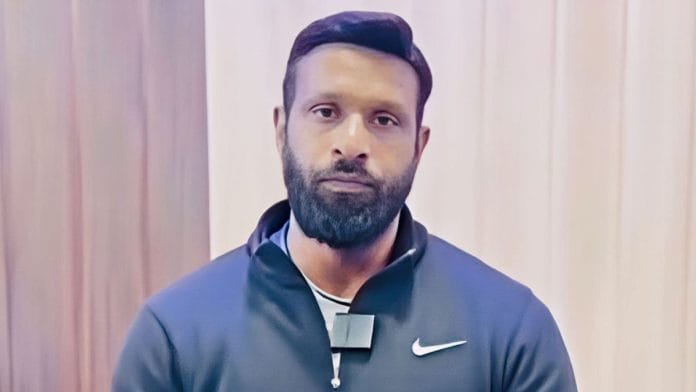
A few days ago, Deepak Kumar, a Hindu man, stood up for an elderly Muslim shopkeeper in Uttarakhand. He was being harassed by a mob claiming to be from the Bajrang Dal. Their issue was absurd, their method cruel. The shop was called Baba School Dress. The mob argued that the word “Baba” could “cause confusion” with Siddhbali Baba, a well-known Hanuman temple in Kotdwar. Never mind that there were other shops with “Baba” in their names. The problem, clearly, was not the word—it was that a Muslim man was using it.
Seeing 70-year-old Wakeel Ahmed being surrounded and bullied was too much for Deepak to ignore. And when the mob turned to him and asked his name, he replied: “My name is Mohammad Deepak.”
This was an answer the mob was not ready to hear. They turned their anger toward Deepak, gathered outside his home, raising communal slogans, trying to intimidate him into silence.
And that leaves us with the question we rarely ask ourselves honestly. We love stories of courage, but would we be Deepak when the time comes?
Deepak’s answer sparked a rage much deeper than the shop’s name and the imagined hurt sentiment behind it. It was betrayal. How dare someone who, by religion alone, is supposed to stand with us, choose to stand with a Muslim? He was a ‘traitor’ at that moment.
I understand this logic all too well; I have seen it from the other side. As a Muslim, I know how quickly the language of “community interest” turns into a tool of excommunication. Step out of line, question the dominant narrative, speak about injustice within your own group—and suddenly you are no longer “one of us.” You are called a sell-out, a traitor, and even told that you are not a Muslim anymore. I have faced online rage, abuse, threats, and attempts to silence me, simply for refusing to conform.
Deepak was not only targeted by mobs on the ground, but his story drew national scrutiny. While most of the media coverage was positive, some outlets did a hit job—making the idea that he is a communal traitor explicit. They dug into his social media and business affairs and failed to find anything substantive.
Also read: Why Indian liberals respect Mamata—she’s a politician challenging their defeatist consensus
The idea of India
I would like to see many more ‘traitors’ of this kind.
Can we have an India without such ’traitors’? Do we want a society where loyalty to one’s little group is the only virtue? And should one be loyal to all religious groups or only the ‘right ones’? Should one be loyal to their local community only? Their family? Themselves? Where do these divisions stop?
When I speak against injustice, when I choose to be a dissenting voice within my own community, or when I write about atrocities faced by Hindu or Christian minorities in neighbouring Muslim-majority countries, people like Deepak become my source of strength. So do people like Ahmed al-Ahmed, who put his own life on the line during the Bondi Beach terror attack. Different places, different moments, but the same instinct: To protect human life without first checking identity.
They represent an idea I hold onto deeply—that it is possible to step beyond tribal identities and still stand firm, that empathy does not require shared religion, caste, or background. It only requires the willingness to see another human being’s pain and refuse to look away.
And that is the idea of India for me. An India—Bharat—that believes in Vasudhaiva Kutumbakam, the world as one family. An India rooted in inclusion, where people of all religions, languages, regions, and castes stand equal as citizens. This fight is not about one incident or one man; it is about protecting that very idea.
The alternative is an India that our enemies wish for, a divided India. Religion is only the starting point. There are endless lines of fracture that can be exploited by the hateful and politically ambitious.
India remains India because people like Deepak still exist—quiet, ordinary, uncelebrated, yet deeply courageous. They are the real majority, even if they are rarely the loudest. As long as such people stand their ground, choosing humanity over hatred, conscience over tribe, India will endure. The day we lose them is the day we lose what truly makes this country India.
Amana Begam Ansari is a columnist and writer. She runs a weekly YouTube show called ‘India This Week by Amana and Khalid’. She tweets @Amana_Ansari. Views are personal.
(Edited by Theres Sudeep)
😂😂😂yeh amana begum she writes pro establishment columns – paisa leke aur jab muslim logo ke ghar pe bulldozer chalte hai tab yeh aurat shaant hoti hai aur jab Bangladesh mein hindu ko maarte hai toh yeh aurat pagal ho jaati hai aur columns likhti hai 😂😂 direct pm care fund se paisa milta hai shayad columns likhne ke liye