







On this civil services day, 21 April 2026, I recall an initiative that was taken thirteen years ago, interventions in education in Dantewada, a Left-Wing Extremist district. It got the Collector of Dantewada the PMs Excellence Awards.
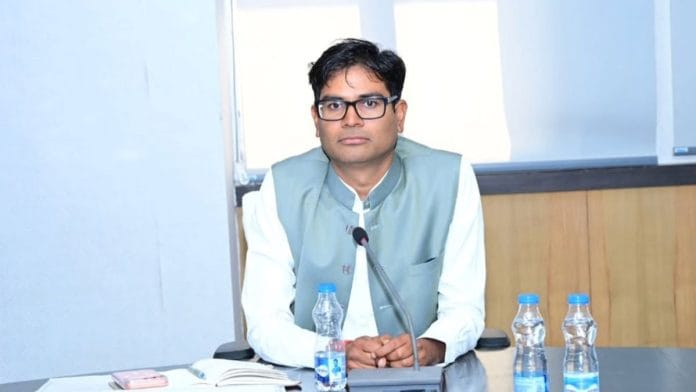
Sanjay Kothari, then Secretary of the Department of Administrative Reforms and Public Grievances DARPG —the department responsible for the Civil Services Awards felt that successful examples should be documented and used as case studies for the training officer trainees and mid-career professionals in the IAS and State civil services. The case study was to be a collaborative venture involving an academic, a practitioner and the protagonist (winner of the Civil Services Award). Thus, your columnist was teamed up with academic Manisha Priyam and the Dantewada Collector, OP Choudhary of the 2005 batch to prepare a case study—Against All Odds.
Three years earlier, in June of 2010, I was posted as the Mission Director of the National Horticulture and Micro Irrigation Mission—NHM & NMMI—in the Agriculture Ministry at New Delhi. I was tasked with the mandate of promoting high value agriculture—fruits, flowers, honey, nuts—with a special focus on tomatoes, onions and potatoes, the three crops which always defied the demand-supply matrix keeping your columnist, and everyone else in Krishi Bhawan on a permanent tenterhook.
Then Planning Commission members, Saumitra Chaudhary and Abhijit Sen—both distinguished economists in their own right—were convinced that NHM should carefully examine the district agriculture plans of the Left-Wing Extremist (LWE) districts and focus more on cash crops and high value agriculture (HVA) to improve their economic condition. The Krishi Vigyan Kendras (KVKs) were identified as the key growth drivers—as agriculture was one of the most important sources of livelihood. My Lalgarh experience came in handy. I suggested that the special forces establish their camps within or in close proximity to the KVK premises. This gave confidence to the extension officers to stay on the campus, and to the farmers to attend extension programmes without fear. For the security forces, the buildings were certainly more secure than staying in tents in the open. Among those who acted on this suggestion was the Collector and District Magistrate of Dantewada, OP Choudhary of the 2005 batch.
Also read: I saw West Bengal’s battle with Naxalism. State’s approach wasn’t limited to police action
Against all odds
OP had grown up in Chhattisgarh, in the neighbouring district of Raigarh. In his words, parts of his home district seemed very comparable to Dantewada—remoteness was similar and it was inhabited similarly by a very poor tribal population. But the difference between these two comparable regions was the superior provision for education in Jashpur (part of Raigarh). Poverty alone did not explain lack of schooling, and once provided, good educational opportunities had a potential for change comparable to none other. Education was indeed the only passport to overcome all odds. He was also candid in admitting the stellar work done by missionary institutions in spreading learning.
Immediately after taking over as the Collector of Dantewada—part of the erstwhile Bastar district—he decided to do a reality check. He was appalled to see that while enrolment was near universal in the rest of the country, only 50 per cent of children were attending school in the district. Official figures showed that only 61 of the 1,529 schools were dysfunctional, but in his tours across the district, he saw out-of-school children everywhere. The administration cross checked this information with household level information about out-of-school children, and ground level checks to see if the schools were truly functional. Serious gaps were discovered—out of the 43,361 children in the relevant age-group of 6-14 eligible for mandatory elementary education, a staggering 21,816 were out of school. The excuse was remoteness, inaccessibility and lack of teachers. The biggest challenge however was the general indifference to the closure of schools. Most students were first generation learners. Poverty existed elsewhere in the country as well, but the school enrolment ratios were quite high in those locations.
OP was grappling with a complex situation. He had to ensure that citizens were not deprived of their rights in a conflict situation that made the ‘demand for education’ irrelevant.
Also read: From guns to guitars—Nagaland has changed over the last three decades
An agenda for action
What followed was a clear action agenda—reopening the closed schools wherever possible. But where the conflict was very intense, the plan was to move the children to Ashrams (residential schools). He began by motivating Gondi and Halbi speaking youth to join as facilitators to encourage parents to enrol students. He was working toward getting departmental approvals for pre-fabricated bamboo structures for school buildings, installation of satellite TV and AV equipment for smart classrooms, a partnership with Pratham (India’s leading education NGO working towards universal education access), and leadership camps for teachers.
Thus far, when the Naxals gave a command, the villagers had followed their instructions meekly. But OP challenged the dominant discourse and initiated his steps with firm determination.
The administration was able to convince parents of over 12,000 children to enroll them in Ashram schools, and for all subsequent levels of schooling.
OP had to build confidence, appoint teachers and provide the physical infrastructure. He also realised that while there was no dearth of schemes, funds, functionaries and policy directions, the challenge was to get all the instruments in the orchestra to work in a harmonious sync. His job as the ‘conductor’ of the symphony was cut out! His first task was to ensure that the flow was simultaneous, continuous and unidirectional. He did so by leveraging all resources in the district—Integrated Action Plan (IAP), Sarva Shiksha Abhiyan(SSA), Rashtriya Madhyamik Shiksha Abhiyan (RMSA), tribal department scholarship schemes, Backward Region Grant Funds (BRGF), Mahatma Gandhi National Rural Employment Guarantee Act (MGNREGA), District Minor Mineral Royalties (DMF), Deendayal Antyodaya Yojana-National Rural Livelihood Mission (DAY-NRLM) for skill education, besides CSR funds from NMDC and ESSAR.
Ashram schools were a priority and he realised that no single scheme or programme could cater to every aspect of a residential educational project. This was not only because of funding constraints, but also the rigid guidelines and compartmentalisation of expenditure heads.
To illustrate, an Ashram school portacabin project would require hostel building, school building, toilets, drinking water facilities, kitchen shed, internal and approach roads, electrification, desks, benches, boards, teaching and learning material, audio visual rooms, musical instruments, sports materials and recurring facilities for students such as books, uniforms, stationary, food, sports material, salaries for teachers and other staff and some miscellaneous expenditure. His strategy was to first exhaust funds from the available schemes before leveraging untied funds under the Integrated Action Plan and Backward Regions Grant Fund. It took him some time to convince the corporates for CSR—they preferred to spend on visible and tangible causes rather than on an intangible intervention like education.
Also read: From Brutus to hero—How former Sikkim CM Dorjee’s image changed in state’s history
Why did the Dantewada model work?
Three factors—political buy-in, collector’s office as a listening post, and non-interference in anti-insurgency operations
First and foremost, OP first ensured that Chief Minister Raman Singh’s pet projects—the PDS, health cards, expeditious payment for tendu leaf collection and vanadhikar (forest rights) pattas—received his utmost attention. But once these interventions were streamlined, he was able to focus on his education initiatives in earnest. He was happy to give credit to the political leadership for all the positive steps.
Second, he turned the collector’s office into a 24×7 listening post. Interacting with the teachers and extension officers of development departments at the grassroots gave him an insight about the communication strategies of the LWE leadership. The administration was therefore able to receive a lot of information about their trek routes, funding sources, key silent supporters, and the next course of action. The quality and authenticity of this information was routinely shared with the forces engaged in combat operations.
Last, but not the least, OP also made it a point to desist from one-upmanship vis a vis the security forces. Many collectors start giving unwanted and unwarranted advice to the security forces on how to operate. Even though the Collector’s office had become the nerve centre for multiple channels of information—which were shared with the SP—OP recognised that the cops and security forces were engaged in the equally important task of ensuring effective action against those engaged in extortion of funds, destruction of infrastructure, and violence against state functionaries. In a short time of two years, this district went from one of the most backward districts in the state to being described as the education hub.
It is important to mention that after a successful innings in the civil services, OP joined electoral politics on the BJP platform and is now the Finance Minister of Chhattisgarh.
This is the second article in a series on Left-Wing Extremist regions.
Sanjeev Chopra is a former IAS officer and Festival Director of Valley of Words. Until recently, he was director, Lal Bahadur Shastri National Academy of Administration. He tweets @ChopraSanjeev. Views are personal.
(Edited by Theres Sudeep)