









Menstruation was a taboo subject when I was growing up. And as I got older, I realised that the topic of menstruation was off the table even among girlfriends. The secrecy and shame that surrounded this monthly event were a fact of life. Post-2014, the BJP did bring about some social change when the PM Modi-led government launched “Beti Bachao Beti Padhao”, and conversations around toilets, menstrual hygiene, sanitation, sanitary pads, etc were brought to the mainstream.
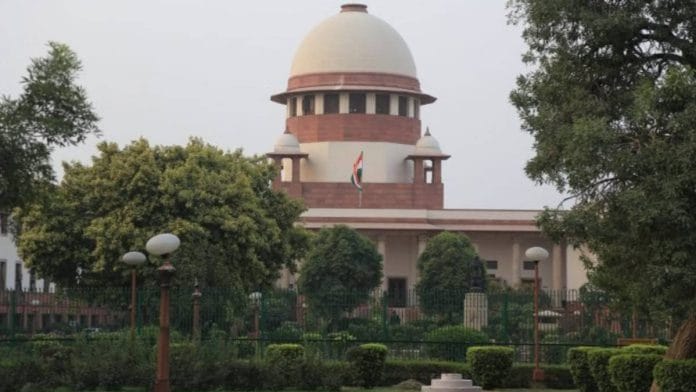
Therefore, in the run-up to International Women’s Day 2026, I was pleasantly surprised to see conversations and discussions in the highest court of the land around this topic. I was also excited to speak on women’s reproductive health in India at a UN-led event in India’s capital, where the United Nations Resident Coordinator, Stefan Preisner, presided over a discussion on the strides made around menstrual hygiene in India.
The right decisions
“A period should end a sentence, not a girl’s education”—these words, attributed to Melissa Berton, American activist and founder of The Pad Project, were used by Justice JB Pardiwala and Justice R Mahadevan to preface their 30 January judgment on menstruation facilities for school-going children. Menstruation is a fact of life, which is responsible for continuing life itself, so there is no need for shame.
It was heartening to note that the Supreme Court held that menstrual health is an aspect of the right to life and the right to free and compulsory education under Article 21 and 21A, respectively.
There were three key points to the ruling of Justices Pardiwala and Mahadevan. 1) Under Article 21, Menstrual health and hygiene are integral to the Right to Life and Dignity. 2) As per Article 21A, the paucity of menstrual health facilities acts as a barrier to girls’ education. 3) The State is obligated to remove all biological and social obstacles to the girl child accessing education.
This ruling by the SC will have far-reaching implications for the menstrual health landscape in India. Primarily, the taboo around the ‘M’ word is gradually eroding. At the women’s health event at the UN HQ in Delhi, it was gratifying to hear the observation of foreign visitors that there are menstrual pad vending machines in airports and railway stations, something they haven’t really observed in other countries. This indicates that menstrual hygiene is publicly acknowledged, and the country’s social progress is visible to the outside world.
Also read: Period pain is real. Blanket menstrual leave policy isn’t a fix
Nothing special
In Puttuswamy vs Union of India, Justice Chandrachud had observed that privacy is the constitutional core of human dignity. The judgment explains that the Constitution protects the autonomy, bodily integrity and personal choice of an individual, all of which were essential for living a life with dignity.
The SC further extended this principle in Dr Jaya Thakur vs Union of India to protect the dignity of women and children, recognising the right of access to menstrual health products and facilities as necessary for women and girls to live with dignity and to exercise their rights to education and health. This recognition of privacy as an intrinsic part of living with dignity has enabled the court to extend everyday protection to everyday realities of women’s lives.
A bench consisting of CJI Surya Kant and Justices Joymalya Bagchi and Vipul M Pancholi heard the special leave petition filed by SM Tripathi, seeking mandatory period pain leave for women. When delivering the judgement, they noted that “affirmative action for women is constitutionally recognised.”
While I appreciate that a man filed such a petition covering a women’s rights issue, he has not quite understood the mindset of women who have fought the battle of equality. They don’t wish for anything exceptional or special and want to be treated equally with respect and dignity, irrespective of their gender and physical attributes.
Barely a week after Women’s Day, the SC has given a judgment disposing of the PIL, stating, “These pleas are made to create fear, to call women inferior, that menstruation is something bad happening to them.”
As a teenager, and more so now, when one has lived a full and unfiltered life, most of us have largely left our gender behind and forgotten about it. Period or no period, we would have marched for justice and worked as hard as our male colleagues and not say “we are menstruating” in the face of our duties. This model is the norm for most working women.
Similarly, women in the Armed Forces, who have fought for the legal right to stand shoulder to shoulder with their male counterparts, routinely handle their menstruation even while functioning under rigorously demanding operational conditions. When you’re out in combat, there’s no time to do hauji (be shameful) or be coy under limited toilet and water facilities, a former client in the Armed Forces once told me. I am sure that they change their sanitary pads or tampons “inside a tank as in a forest or LOC alike ”, while deployed on the front.
In the landmark case of Babita Puniya, in which I represented the women in the armed forces, I humbly submitted that women officers have already proved their capability in the Armed Forces. Denying them permanent commission is both unjust and unconstitutional.
Women officers in the forces routinely manage the physiological realities of menstruation while carrying on demanding duties in the field and in operations. Making menstrual leave mandatory would be two steps backwards for these resilient women officers.
Then there are women sportspersons. Indian Women’s Cricket is now as elite as Men’s cricket. It is hardly possible for the key players to take four days off every month, especially in the middle of crucial international competitions. “We push through because we love the game and we play for our country,” said Jemimah Rodrigues, who reveals that menstruation drains energy, tests mental strength and obviously affects performance. But the women still go out on the field and play.
Also read: Menstrual leave doesn’t work in ‘real world’. And that real world is designed by, for men
A feminist judgment
“The moment you say it is compulsory in law, nobody will give them jobs,” the bench observed in the judgment.
I call this a feminist judgment; it is the feminist constitution of this country that recognises affirmative action in the constitution.
Menstruation is an age-old phenomenon. Women have worked in fields and run their families effectively with resilience and dignity, even while menstruating.
Suddenly becoming unequal when you attain adolescence, even though this is a completely natural process, is unacceptable. During adolescence or puberty, both male and female bodies undergo changes which should be accepted as naturally as possible without attaching any shame to them.
It is the taboo and the shame that we need to get rid of. There is no natural acceptance of menstruation, and that is the malady that women are battling. Normalising menstruation is the right step toward menstrual justice. Progressive movies like Pad Man (2018) are setting the groundwork for breaking these stigmas. NGOs are working relentlessly toward eliminating the taboos around periods.
Of course, women battling severe period pain should be able to take leave as an exception rather than the norm. I do wish to bring focus on the health challenges of women who may suffer pain and go through emotional distress during periods. It demands greater scientific understanding and awareness about the psychological, nutritional and physical health of women, which may require medical attention and support in those situations.
While difficulties faced by any woman have to be resolved, we cannot make it look like entitlement in our struggle for equality.
Mandating period leave as a regulation will cause employers to lose four (wo)man days in a month. This translates to over a month and a half per year. This would definitely affect women’s employability, leading to a grave injustice.
Each generation inherits a different India. Can you imagine Rani of Jhansi saying she can’t go into battle today as she is on her period? Or Ahilyabai Holkar, who conducted daily public outreach courts, oversaw military matters and personally supervised the construction of temples and public works in the sweltering heat of medieval India. Or Savitribhai Phule, who walked daily to her school to manage the education of hundreds of girls. The lives of these exemplary women show that the biological inconveniences of womanhood never held them back from exercising intellect, courage and authority in public life.
India is a land where we worship the menstruating Goddess, Kamakhya Devi. The Ambu Bachi mela celebrates the cycle of the Goddess, which symbolises fertility and cosmic renewal. Such celebratory traditions reveal that the biological and physiological rhythms of the cycles of women have a regenerative power.
Rather than limiting the power of our menstruating Goddesses, discussions should be on providing sustainable solutions for sanitary napkins.
Most pads today are manufactured with polymers that pollute the soil and are non-biodegradable. Menstrual products should instead be made of self-degradable materials procured from plants and farm waste i.e cellulose base or banana fibre or water hyacinth, etc.
At the recent UN conclave on women’s reproductive and menstrual health, these discussions broached the subject of a sustainable future for menstrual justice. These are the PILs that we should be asking for. In choosing sustainable menstrual health solutions, we not only protect our rivers and our soils but also honour the sacred cycles of the menstruating Goddess.
Meenakashi Lekhi is a BJP leader, lawyer and social activist. Her X handle is @M_Lekhi. Views are personal.
(Edited by Theres Sudeep)