









Chinese analyses of the escalating tensions surrounding Iran suggest that a prolonged war is increasingly plausible. These assessments emphasise that the timing, pace, and intensity of the conflict are shaped by deliberate political calculations in Washington and Tel Aviv. 2026 is identified as a potential inflection point in Iran’s political trajectory—one with the potential to produce far-reaching consequences across the Middle East and beyond.
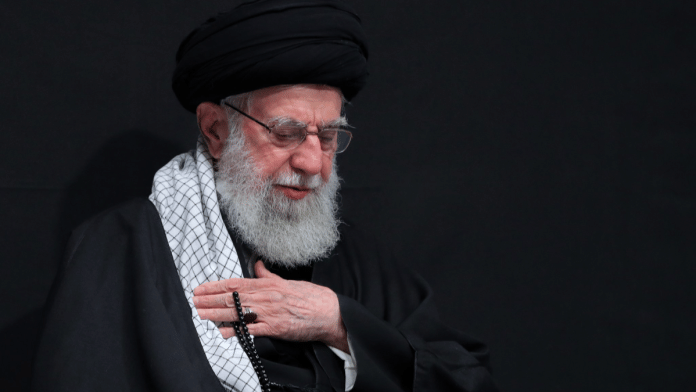
Liu Yanting, a Chinese analyst of Middle Eastern affairs, contends that the death of Supreme Leader Ali Khamenei would create a critical window for Iran’s military to assert direct control. In this scenario, a successful intervention by the armed forces could transform Iran into a military-dominated state, akin to Egypt or Pakistan, where authority is grounded in coercive capacity rather than revolutionary ideology. Yet even under such a restructuring, entrenched structural challenges, systemic corruption, economic decline, energy shortages, and institutional fragility would likely persist.
More broadly, Iran’s post-Khamenei trajectory is viewed as contingent on four interrelated factors: The scale and persistence of domestic unrest driven by economic hardship; the cohesion and loyalty of the Islamic Revolutionary Guard Corps as the regime’s central pillar; sustained external pressure from the US aimed at constraining or reshaping the regime; and the legitimacy and effectiveness of the succession process overseen by the Assembly of Experts.
Within this framework, Chinese discourse places particular emphasis on the role of the US, evaluating both the strategic feasibility of deeper American involvement and the broader geopolitical consequences such developments could produce, particularly for Beijing.
Also read: Indians laughing at their countrymen in Dubai are a disgrace. We have much to learn
US–Israel objectives
Chinese discourse suggests that both the US and Israel have to confront substantial obstacles in any attempt to weaken or destabilise the Iranian regime. Tian Wenlin, director of the Institute of Middle East Studies, Renmin University of China, argues that Israel is exploiting what he describes as Washington’s “riding a tiger” dilemma, seeking to expand a confrontation that the US initially intended to keep limited. From this perspective, regime overthrow in Iran would be inherently difficult. Its political system is institutionalised and resilient rather than dependent on a single leader, while its missile and drone capabilities continue to provide a credible deterrent. The US has so far avoided deploying ground forces and has refrained from formally designating hostilities as a war, signalling a preference for a swift, low-cost outcome. Yet once kinetic operations commence, their trajectory becomes highly uncertain.
Ding Long, professor at the Institute of Middle East Studies at Shanghai International Studies University, contends that an initial phase of US–Israel airstrikes could be brief, potentially lasting only several days, after which developments would depend on Iran’s response, the resilience of its administrative and military apparatus, and the extent of domestic unrest. Iran’s regional partners, including Hezbollah and the Houthis, could further broaden the confrontation, transforming a targeted campaign into a multi-front, networked conflict.
Commentator Ding Yichao adds that this abrupt leadership vacuum, followed by the death of the Supreme Leader, would amplify uncertainty. In his assessment, US strategy relies primarily on limited decapitation strikes targeting leadership nodes and command centres, aiming to weaken the regime without committing to comprehensive regime change.
Analysts also highlight the interplay between strategic calculations and domestic political incentives. Chen Feng observes that Washington may pursue a foreign policy success to bolster domestic standing, influence global energy dynamics, and counter trends toward de-dollarisation amid concerns over potential midterm electoral losses and weakening support for MAGA-aligned agendas. In contrast, Israel views Iran’s nuclear ambitions and proxy networks as existential threats, favouring sustained pressure without unilateral de-escalation.
Liu Zhongmin, also of Shanghai International Studies University and vice president of the China Middle East Society, warns that even limited escalation could destabilise the Gulf, trigger energy market volatility, and deepen US entanglement. Strikes on Iran’s leadership absent a formal declaration of war, he notes, risk contravening international norms and producing broader regional consequences, including refugee flows, extremist mobilisation, and spillover into Afghanistan and Pakistan.
A recurrent theme in Chinese commentary is that deterrent strength commands respect, while perceived concessions invite further pressure. For Iran, demonstrating resilience is therefore critical to maintaining strategic balance. Shen Yi, professor of international politics at Fudan University, emphasises that logistical constraints, finite munitions, and Iran’s decentralised governance and security networks make a swift and decisive victory improbable.
Mixed views in China
Public sentiments in China reflect a combination of attentiveness and qualified sympathy. On Weibo, posts highlighting Iran’s retaliatory resolve and missile strikes over Tel Aviv have circulated widely, with hashtags claiming that Iranian missiles breached Israeli defences attracting massive engagement. Victor Gao, Chair Professor at Soochow University and Deputy Director of the Center for China and Globalization (CCG), calls the US and Israel aggressors, asserting that Iran is largely exercising its right to self-defence.
Beneath this surface-level support, criticism is also evident. Some observers argue that Iran’s ageing air force, limited air defence capacity, and uneven missile precision reveal deeper structural weaknesses. Decades of strategic miscalculation, particularly prioritising hopes for rapprochement with Western powers and closer ties with India over diversified defence partnerships, including with China, have left the country exposed at a critical juncture.
Beijing’s cautious official response has drawn scrutiny. China has largely confined itself to expressions of concern, reaffirmations of sovereignty, and calls for dialogue, while avoiding direct condemnation of the US or Israel. For some analysts, this restraint reflects strategic patience: Beijing is assessing the durability of the Iranian regime before adopting a firmer stance. Public opinion is divided. Some perceive Iran as strategically weakened; others focus on potential economic spillovers, including higher oil prices, market volatility, and added pressures on growth and RMB internationalisation. Simultaneously, deeper US entanglement in the Middle East could ease strategic pressure on China in the Indo-Pacific. Overall, China–Iran ties are interpreted as pragmatic and interest-driven, with Beijing’s calibrated restraint preserving long-term flexibility regardless of political developments in Tehran.
From an economic and strategic perspective, the stakes are considerable. Disruption in the Strait of Hormuz would directly threaten China’s energy security, while a collapse of the Iranian regime could undermine years of Chinese investment and infrastructure engagement. Analysts advocate careful balancing between Tehran and Washington. Proposed measures follow three tracks: Diversifying energy routes, including via Gwadar Port under the China–Pakistan Economic Corridor, to reduce reliance on the Strait of Hormuz; expanding RMB-denominated energy settlements to limit dollar exposure; and maintaining diplomatic neutrality, building on past mediation efforts such as the Saudi–Iran rapprochement. Even in the event of regime change, economic imperatives are expected to sustain Iran’s oil exports to China.
Some analysts frame the crisis as a broader test of systemic resilience. Priorities include accelerating pipeline cooperation with Russia and Central Asia, expanding strategic reserves, reducing reliance on maritime chokepoints, securing critical minerals through domestic processing and diversified sourcing, and protecting trade corridors, while advancing alternatives such as the China–Laos Railway.
Iran stands at a critical juncture, its trajectory marked by uncertainty and substantial risk. The crisis functions as a broader stress test of deterrence credibility, military escalation, and shifting geopolitical alignments. As Washington and Tel Aviv probe the limits of calibrated force, Tehran is contending with both internal vulnerabilities and sustained external pressure. But, for Beijing, policy is guided by strategic pragmatism rather than ideological affinity, prioritising energy security, diplomatic flexibility, and alternative supply routes, while avoiding premature entanglement. Stability, in this calculus, is preferred over direct involvement, for now. Yet the potential for miscalculation remains high: Escalation, regime destabilisation, energy disruption, or protracted conflict in the Middle East would carry immediate and far-reaching consequences for China, issues that are dominating contemporary Chinese discourse on the crisis.
Sana Hashmi is a fellow at the Taiwan Asia Exchange Foundation. She tweets @sanahahsmi1. Views are personal.
(Edited by Theres Sudeep)