







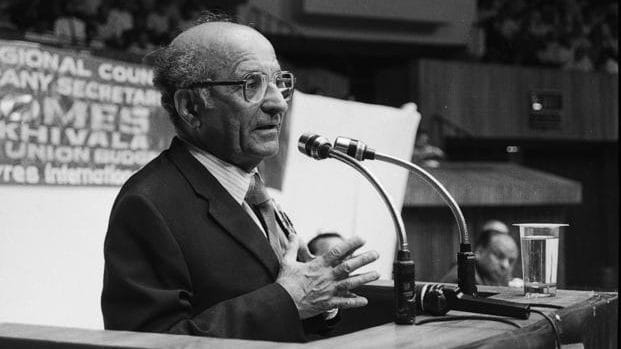


As we approach the 51st anniversary of the Proclamation of Emergency on 25th June, we must remember that, unlike China, the Indian state did not need an armed battalion and tanks to trample the basic liberties of its people; it only needed a signature from the President to declare an “emergency” on grounds as vague as “internal disturbance” under Article 352. Within hours, several prominent opposition leaders were in jail, newspapers had their electricity supply cut, and the largest democracy in the world learned how, in a matter of hours, a constitutional government could be taken over by power-hungry leaders.
Nanabhoy “Nani” Ardeshir Palkhivala, who watched as the events unfolded, later made a claim that should unsettle everyone: Indians feared their own government more during those 21 months of the Emergency than at any point in time in the preceding two centuries of the British Raj. The turbulent period shaped how the Constitution operates in practice, and how its underlying ethos is understood and contested, while exposing the inherent dangers of concentrated and extraordinary state power.
Conceived as safeguards for moments of crisis, the emergency provisions were borrowed from Germany’s Weimar Constitution, which Adolf Hitler abused in the interwar years. The emergency exposed the constitutional vulnerabilities of a newly formed republic. It was this assault on fundamental freedoms of the people and the unchecked expansion of state authority that alarmed Palkhivala. Among the foremost defenders of the constitutional spirit during the Emergency, he stood out not only as a brilliant lawyer but also as a public intellectual defending individual freedoms. As an erudite orator and scholar, he articulated the Constitution’s moral foundations and brought complex constitutional questions into public discourse.
For Palkhivala, the Emergency represented the culmination of repeated attempts by Indira Gandhi to deprive Indians of their freedoms. He later recalled that around 1.66 lakh individuals were detained across India, including prominent opposition leaders, intellectuals, and journalists: Jayaprakash Narayan, Morarji Desai, and Kuldip Nayar, among others. Palkhivala’s assessment of the scale of repression during the Emergency was later broadly validated by the findings of the Shah Commission of Inquiry appointed by the Union government.
The excesses of concentrated state power
The Shah Commission of Inquiry, established after the Janata Government was voted into power in 1977, documented what the catchy slogans of “national renewal” and “discipline” had concealed. Relying on public hearings, testimonies, and official records, the Commission found prisons built for 1.83 lakh inmates housed over 2.2 lakh prisoners, with 1.2 lakh awaiting trial. The coercive sterilisation campaign killed the dream of bearing children for over 1 crore people, hundreds of whom were unmarried, and over 1700 deaths were linked to the procedure. The Parliamentary debates and court judgments were censored before publication, and the newspapers that did manage to get electricity sorted into “friendly”, “neutral”, or “hostile” categories.
Palkhivala observed the machinery of the state with the guardrails off, trampling over the rights of anyone who dared to oppose it. He understood something that constitutional scholars often miss – the protection of liberty cannot rest on the good conscience of those in power; it survives only when power is dispersed across many institutions rather than concentrated in the hands of a few.
The Emergency regime of Indira Gandhi sought legitimacy for its crimes against the people and ran extensive campaigns extolling the ‘true gains’ of the Emergency. Beneath the official narrative, fear permeated society. The atmosphere of fear was sustained through the coercive power of the state.
New chains
Following the Emergency, the government introduced the 44th Amendment to the Constitution in 1978, establishing safeguards against the future abuse of emergency powers. The proclamation of a national emergency on grounds of ‘war’, ‘external aggression’, or ‘armed rebellion’ is now subject to judicial review. The rights to life and personal liberty, and the rights of the accused, are now inviolable and cannot be suspended under any circumstances. The six freedoms guaranteed under Article 19 are also partially inviolable. They can be suspended only if the emergency is declared on the grounds of war or external aggression, not in response to threats resulting from an armed rebellion.
Palkhivala was not content merely with condemning the regime; he argued that the Emergency exposed deeper weaknesses within the Indian civic and political culture. He identified three defects in the character of the Indian nation: the lack of discipline and public spirit, a lack of a sense of justice and fairness, and a lack of moderation and tolerance. These were the fatal flaws that threatened Indian democracy from within and could lead to another proclamation as long as they persisted.
For Palkhivala, keeping the public memory of the Emergency alive was essential to prevent its recurrence. He warned against forgetting, because those who cannot remember the past are condemned to repeat it. His warning has not aged. The Emergency remains a reminder of how fragile constitutional freedoms can become when institutional restraints weaken and public vigilance declines.
Palkhivala warned that the best safeguard against another Emergency was not a more carefully drafted Article 352, but citizens who instinctively value freedom and remain alert to threats against it, regardless of their source. In the Spring of 1977, India reaffirmed its commitment to freedom at a considerable cost. As long as the lessons of the Emergency remain alive in public memory and are internalised by every upcoming generation, the prospects of preserving constitutional democracy will remain strong.
Nilay Sherkar is an intern at Centre for Civil Society and a postgraduate student of Political Science at the University of Mumbai. Vikrant Pande is a consultant at the Centre for Civil Society. Views are personal.
(Edited by Prashant Dixit)