





The waters of the Palk Strait have long connected India and Sri Lanka, but they have also been a source of tension. Today, they could provide an opportunity for a different kind of cooperation.
India and Sri Lanka have a good relationship and maintain a regular political dialogue. Defence, maritime, and economic cooperation have expanded in recent years. The more complicated dimension has historically been the relationship between Tamil Nadu and Sri Lanka.
The legacy of the separatist conflict continues to influence that relationship, while the fisheries dispute has periodically created tensions between communities on both sides of the Palk Strait. These are sensitive matters that require patience and political understanding.
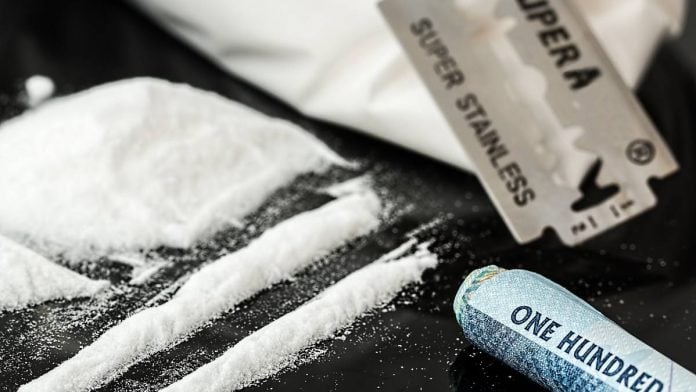
There is, however, another issue that crosses the Palk Strait and affects both societies: drugs.
The growing narcotics problem in Sri Lanka and Tamil Nadu is a serious challenge. It could also provide an opportunity for cooperation in an area where their interests are fundamentally aligned.
Sri Lanka’s drug problem is no longer simply an urban phenomenon. It has spread into communities across the country, including rural areas. Jaffna and the Northern Province, which have had to contend with the long social consequences of the war, are also facing serious concerns about drug use among young people.
The emergence of synthetic drugs, particularly crystal methamphetamine, or ice, has added a new dimension to a problem previously more closely associated with heroin and cannabis.
Tamil Nadu faces its own substantial challenge. Its large population, transport networks, ports, and proximity to Sri Lanka create vulnerabilities to international trafficking, while the state is also dealing with consumption and addiction within its own communities.
The two situations are not identical. But their geography means they cannot be looked at entirely separately.
A practical initiative
The issue is already receiving attention at the highest political levels on both sides of the Palk Strait. Sri Lanka has made combating the drug menace a national priority, while Tamil Nadu has also intensified its campaign against narcotics. During the recent visit of Defence Minister Rajnath Singh to Colombo, President Anura Kumara Dissanayake sought India’s support for Sri Lanka’s efforts against drug trafficking.
This creates an opening for a practical initiative.
At the highest political levels, Sri Lanka and Tamil Nadu could begin a direct dialogue on the narcotics challenge, with the involvement of the Indian central government. A joint mechanism could then bring together relevant authorities from both sides.
Its agenda need not be prescribed in advance. Each side could bring its own experience and identify where cooperation would be most useful.
There is considerable scope for exchanging knowledge on trafficking networks and routes, enforcement, maritime surveillance, tracing the proceeds of organised crime, and prevention, treatment and rehabilitation. The purpose would not be for one side to prescribe how the other should deal with its domestic drug problem.
This is particularly relevant to the Palk Strait. The waters between Sri Lanka and Tamil Nadu are already closely watched because of fishing and maritime security. The same geography can also be exploited by criminal networks.
Information available to authorities on one side may not reach those on the other. Closer communication between relevant agencies could help close some of these gaps and provide a clearer picture of the networks operating across the region.
The Indian government has an important role to play. Tamil Nadu’s geographical proximity and direct connection to the Palk Strait make its participation essential. But narcotics trafficking also has wider national and international security implications. The central government’s involvement could connect state-level cooperation with India’s capabilities in intelligence, narcotics control, maritime security, and international law enforcement.
For Sri Lanka, the mechanism could bring together relevant national authorities without requiring elaborate bureaucracy. What matters initially is the political commitment behind it.
Also read: Sri Lanka has one last chance to become a strategic hub in Indian Ocean
Collective effort
The value of such cooperation would extend beyond narcotics.
The India-Sri Lanka relationship itself does not need a reset. It is already on a good footing. But the Tamil Nadu dimension has accumulated its own history and sensitivities. The legacy of the separatist conflict and the fisheries dispute have sometimes made dialogue more difficult than it should be.
Practical cooperation on a shared problem could help change that dynamic.
The narcotics issue is particularly suited to this purpose. Neither side wants criminal networks to use its waters or territory as a conduit for drugs, nor does either want young people to become victims of addiction. There is no territorial claim to dispute and no historical grievance that must first be resolved. There is simply a common problem.
The timing is significant. Synthetic drugs and increasingly sophisticated trafficking networks are changing the narcotics environment. Criminal organisations can move information and money across borders with increasing ease. Governments, therefore, need to understand these networks collectively rather than responding only to individual seizures and arrests.
The proposal need not be ambitious. A high-level political dialogue between Sri Lanka and Tamil Nadu supported by the Indian government, followed by a joint mechanism for cooperation, would be a useful first step. The priorities could then be determined by those directly confronting the problem.
If successful, it could create new channels of communication and practical cooperation between institutions on either side of the Palk Strait. More importantly, it could build confidence in dealing with an issue that affects both societies, without requiring agreement on the more difficult questions that have shaped their relationship.
The Palk Strait has often been viewed through the lens of what divides Sri Lanka and Tamil Nadu. The civil war and fisheries dispute will remain part of the relationship. But relationships are also shaped by new experiences.
A shared effort against narcotics could create one.
The drug menace is a serious threat to both societies. It could also become an unexpected bridge across the Palk Strait.
Milinda Moragoda is a former Cabinet minister and diplomat from Sri Lanka and founder of the Pathfinder Foundation, a strategic affairs think tank. He is on X @MilindaMoragoda. Views are personal.
(Edited by Aamaan Alam Khan)