









United States President Donald Trump’s social media posts are, to say the least, interesting and by now, at most foreign ministries across the world, there must be a diplomat intern whose sole task is to monitor the musings of the man. But one of his new posts concerned the automotive industry, and given the global nature of the industry, it may have global ramifications.
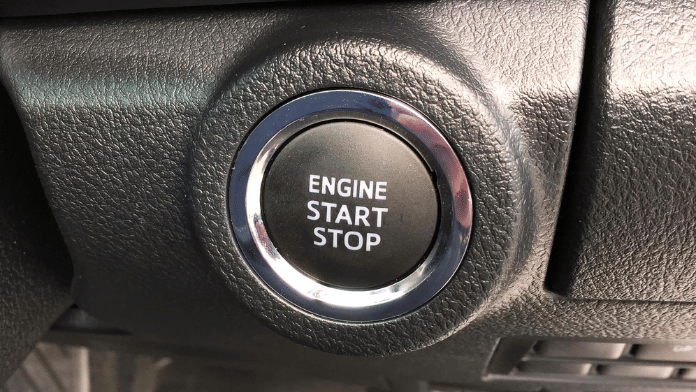
In a post on his X account, following a press conference with Lee Zeldin, director of the US Environmental Protection Agency (EPA), it was announced that his administration was killing the “Obama Switch”. The “Start/Stop” button adopted by former President Barack Obama is used in most modern vehicles. In the past, Trump and Zeldin have rolled back fuel economy standards put in place by previous administrations.
In fact, several articles have since pointed out that there was never an “official” mandate to install the “Start/Stop” featu
Now, the “Start/Stop” function is there on virtually every new vehicle sold in India, as well. And yes, I agree that it can be extremely irritating, particularly in manual vehicles and I, too, have often been forced to restart. But it will be remiss of me not to admit that the systems have improved substantially with the engine restarting instantly and actually helping fuel efficiency dramatically; some estimate that such systems add 5-8 per cent to fuel economy.
Currently, my long-term vehicle is a Maruti Suzuki Victoris Automatic. The “Start/Stop” system is a key part of what the carmaker calls their “Mild Hybrid” system and I have driven it for over 1600 kilometres around the city. I have received a fuel efficiency of 14.3 kilometres per litre, which for a car of its size is very impressive. Yes, the Victoris is not an exhilarating car by any stretch of the imagination, but it is perfect for city driving thanks to its sheer fuel economy.
Also Read: India-EU FTA doesn’t mean cars will get cheaper. Read the fine print
Changing emission norms
Along with rolling back the “Obama Switch” and fuel economy standards, Trump and Zeldin have also gradually rolled back emission norms. While American states and cities can and do impose stricter emission norms, Trump’s decisions are peculiar and against the current global way of thinking in the automotive industry and should not be seen as surprising for a man who doubts climate change.
But will Trump be able to hold back the rapid changes in the industry? Personally, I doubt it. While there should be some debate around some of the more preposterous claims by climate scientists, as any Delhi resident knows, air pollution is quite real and vehicles contribute significantly towards it. In addition, the automotive industry has a three to five year cycle of development for major engineering changes.
There has also been a lot of debate surrounding India’s upcoming third-generation Corporate Average Fuel Efficiency (CAFE3) and Bharat Stage 7 (BS7) tailpipe emission norms, which are both expected to come into place by 2027. These will almost certainly mark the death knell for smaller diesel engines and are a major reason that many carmakers in India will be launching both strong hybrids and plug-in hybrids in the coming months. Kia and Renault have already announced their upcoming hybrids. The CAFE3, in particular, will push carmakers to launch more electric cars.
Incidentally, some might question why diesel engines, particularly smaller capacity engines, are going extinct, a very real possibility with these new norms, because on a simplistic level, they are far more carbon efficient than petrol. Diesel engines are “compression” engines not using a spark plug, but using the high heat and compression inside the cylinder to ignite the fuel, between 16 and 20 times the air pressure.
Unfortunately, this heat and pressure that makes diesel engines efficient is also their Achilles heel because nitrogen, which is inert at regular atmospheric pressure, combines with oxygen inside a diesel engine cylinder producing nitrogen oxides (NOx). NOx is a problem as it is far deadlier to humans than other pollutants, and there really is no way around it without expensive catalytic converters as emission norms become stricter.
Right now, Diesel’s enduring popularity in India continues with an estimated 18 per cent of passenger vehicles sold in 2025. Although carmakers feel the high fuel efficiency of hybrids will convince Indian car buyers that “hybrids are the new diesels”.
According to the latest trends, the Indian car market is more in line with the global car market, with a growing demand for electric vehicles. In fact, if there is one car market in the world which is actually getting isolated from global trends, it is the American market. Sure, I’d love to drive a Ford F-150 pickup truck, which remains America’s best-selling vehicle, but I’m afraid it won’t even fit into my driveway, and no American manufacturer produces right-hand drive vehicles in their factories stateside (so much for that aspect of the traded “deal”).
Of course, this all stands to reason with Trump’s isolationist worldview, but frankly, I doubt Trump will be able to drive major changes in the automotive industry in the long run — in the US or anywhere else in the world.
Kushan Mitra is an automotive journalist based in New Delhi. He tweets @kushanmitra. Views are personal.
(Edited by Insha Jalil Waziri)