



A disturbing question today confronts West Bengal: does the right to practise one’s religion depend on the permission of those who claim to defend the majority faith?
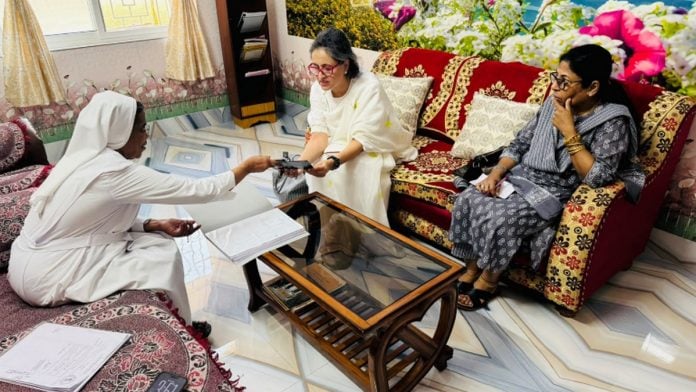
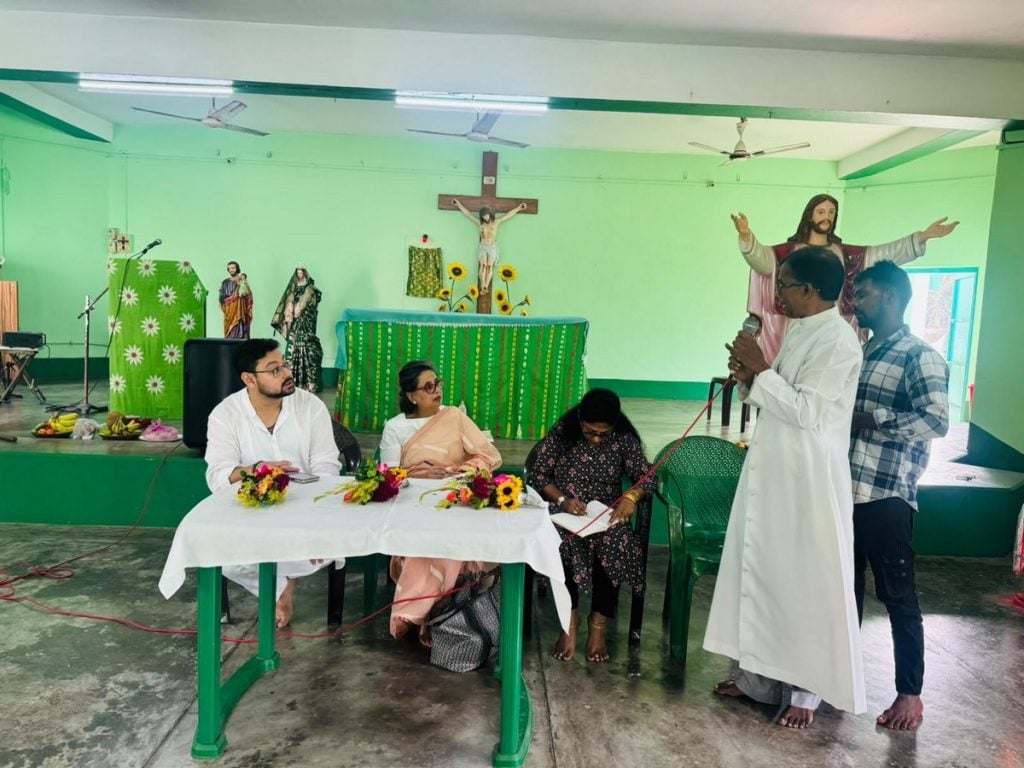
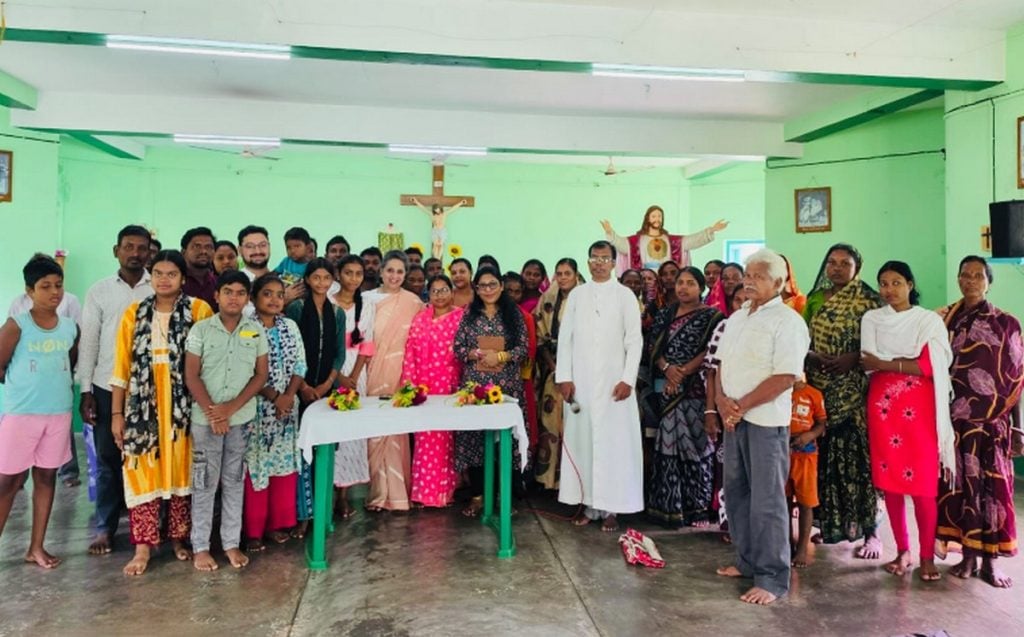
I raise this question after leading a fact-finding team to investigate the recent targeting of Christian communities across rural Bengal. Christian residents, church leaders and nuns told us about denial of burial rights, restrictions on water supplies, social ostracism and a campaign of intimidation and harassment by Hindutva vigilante groups.
Several of these incidents have already made headlines, particularly one in Paschim Medinipur involving the exhumation of a buried body and a forcible cremation. Since our fact-finding tour in early October, more attacks against Christians have occurred in Bengal, prompting opposition parties and Catholic bishops to write to the Home Minister seeking urgent intervention. In the most recent incident, a new church at Narayantala in South 24 Parganas was attacked.
Political change in Bengal has come with a stark message: minorities must keep their heads down and stay silent. Some of the families we met had been told by self-styled mob leaders, in so many words: “Our government has come.” This strikes at the heart of constitutional rights, including the right to pray and practise one’s faith.
Also Read: Bengal is being ‘Gujaratified’. What this means
Rights are not permissions
Article 25 guarantees to “all persons” freedom of conscience and the right freely to profess, practise and propagate religion. Article 25 does not disappear just because the ruling party changes. Minority rights are basic to a democracy, because the individual is the smallest minority. In democracies, electoral mandates are temporary; the constitutional structure that protects citizens is permanent. Christian communities are not asking for special privileges. They are asking to live as equal citizens.
The term “propagate religion” in Article 25 was debated in the Constituent Assembly. It was deliberately retained and gave minorities confidence in the new Indian republic. BR Ambedkar warned the Assembly that a majority which refuses to recognise the absolute rights of minorities and treats their security as a concession or a special gift puts the whole democratic order at risk. “It is for the majority to realise its duty not to discriminate against minorities,” Ambedkar added. Personal rights and freedoms that depend on majority permission are not rights at all.
When lathis overtake the law
Allegations of so-called “forced conversion” cannot be a licence for mob justice. Certainly, coercive or fraudulent conversion is wrong; the Supreme Court held as much in Rev. Stainislaus vs State of Madhya Pradesh in 1977, in which it upheld state laws against conversion by fraud, force or inducement. But any credible allegation of coercion or unlawful conversion should be investigated impartially, on the basis of evidence and under the law. The remedy for unlawful conversion is the law, not the vigilante’s lathi.
Simply an accusation of “forced conversion” cannot become a pretext for assaulting worshippers, destroying religious property or forcing people to take part in so-called “ghar wapsi” rituals against their will. A person who chooses a faith or attends a prayer meeting of their own free will has not been coerced. Personal spiritual choice is not a crime.
The political dominance of a majority community cannot be confused with permission to police the beliefs of others. India Hate Lab counted at least 60 incidents targeting Christians across 13 districts in Bengal between May 13 and September 20 this year. During Christmas 2025, church groups recorded more than 20 incidents in north India alone, with carol singers harassed and celebrations disrupted. The United Christian Forum logged 127 incidents of violence against Christians in 2014. A decade later, in 2024, the figure had risen to 834.
Christians are 2.3 per cent of India’s population, and the 2011 Census found that share essentially unchanged over the previous decade. A community that has stayed at about one in fifty Indians for generations is not a demographic threat. It is a convenient target.
In Bengal, where Muslims form a substantial minority, Christians are a much smaller and often less visible community. The 2011 Census put their share of Bengal’s population at less than one per cent. Christians are thus a minority within a minority. They have less political visibility and are highly vulnerable.
The Hindutva fixation with religious minorities takes different forms. Muslims are confronted with questions of identity, loyalty and belonging. Christians are inevitably targeted with allegations of “forced conversion.”
But the constitutional principle is the same. No community should have to prove its innocence before it can pray. No religious majority should be allowed to decide how another community practises its faith. The answer to an allegation of unlawful conversion is an impartial investigation, not a raid by violent right-wing vigilantes.
Also Read: Why Modi govt’s effort to discredit the Opposition isn’t working this time
Bengal govt’s selective justice
Hard questions must be asked of the Bengal government. Chief Minister Suvendu Adhikari has promised steps against forced conversion, which he calls “subversive and anti-national”. At the same time, a BJP spokesperson says the administration has zero tolerance for wrongdoing. Then why is the law not being brought to bear on those indulging in violence? The Bangiya Christiya Pariseba has alleged that there have been 26 incidents over three months and only 11 FIRs followed. Are perpetrators being identified and prosecuted? What has Adhikari done to prevent further attacks on Christians? Delay and silence are not neutral choices. They implicitly tell one community that the law is its shield and another that the law will not protect it.
There’s an intriguing irony here. Many ministers in BJP-led governments were educated in missionary-run schools. Many send their children to universities in Christian-majority countries. I myself studied in Christian institutions for most of my student life. All of us know that Christian educational institutions did not cost us our faith, nor are they the conversion factories they are made out to be.
For centuries, Christian communities have been woven into India’s spiritual landscape. Christian churches, schools and charities have educated, sheltered and nurtured millions of Indians, most of whom have not shared their faith. A community that has given so much does not need the mob’s permission to pray or worship. The right to pray or choose one’s personal path to God is an absolute right and does not depend on the majority community’s—or anyone’s—permission.
Sagarika Ghose is a Rajya Sabha MP, All India Trinamool Congress. She tweets @sagarikaghose. Views are personal.
(Edited by Asavari Singh)