



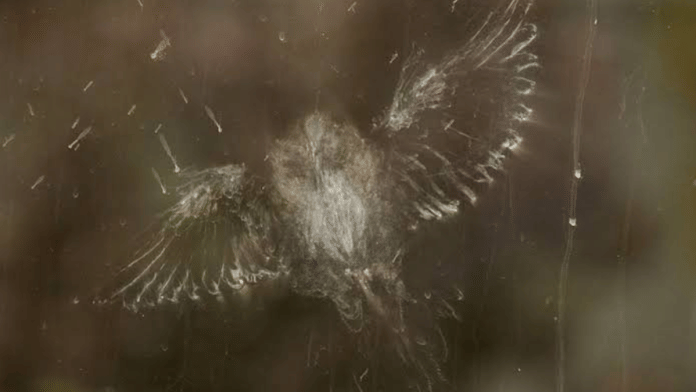
How many ways can a bird die? Close your eyes and make a list. Chances are, you might not have listed the everyday killer: a building with a glass façade.
For birds, even the common ones you see in your local park, it is hard to distinguish between glass and free space, whether it is a window embedded in a concrete wall or not.
Often, the reflection of trees adds to this confusion. The birds fly into the glass, suffering cerebral haemorrhage, fractures, trauma and death.
Even if the fall is not fatal, cats or larger birds soon make a meal of them, sealing any hope of recovery.
The numbers don’t lie
The data for this is only just emerging, and it is worrisome. Unlike the United States, where almost one billion birds are killed in collisions with glass annually, we have no data for India.
What we do know is that the most common victims are the migratory birds, travelling toward North America from Central America and Mexico or back down during autumn. However, in India, it is a year-round phenomenon.
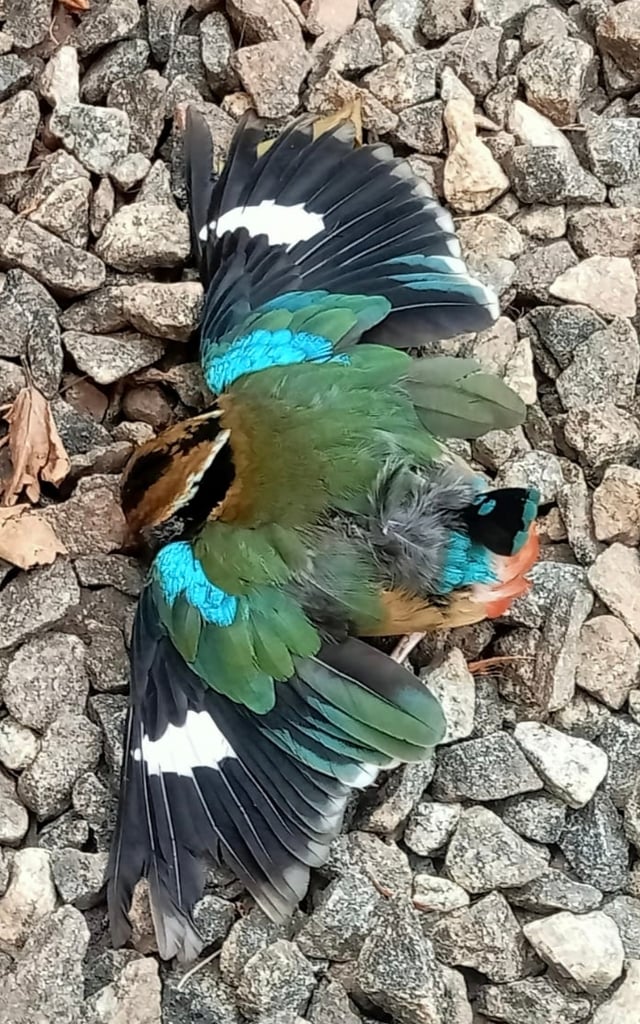
Data from wildlife rescue organisations in Bangalore have found White-cheeked Barbets, Coppersmith Barbets, Emerald Doves, an Indian Pitta and Rosy Starling among the victims. Peeyush Sekhsariya, Senior Associate at Vidhi Centre for Legal Policy, has been exploring this phenomenon painstakingly. He has seen an entire flock of about 30 Rosy Starlings at the base of a building, killed in a collision against its glass façade.
Along with Ashwin Vishwanathan of the Nature Conservation Foundation, Sekhsaria identified 110 species killed by architecture.

In December 2025, Nizamudhin Moinudhin and other scientists from several institutes published a paper in the journal Ornis Hungarica, titled “Glass traps: Investigating bird mortality at glass-fronted buildings in the Nilgiris”. The study documented collisions at two buildings in the bird-rich Nilgiri Biosphere Reserve, in Forestdale and Coonoor. The researchers counted 35 collisions that killed 22 birds. Of these, 16 died, 18 were injured, and one flew away.
It isn’t the tall buildings that pose the problem. In fact, almost 44 per cent of the birds fly into façades that are relatively low— four storeys or less. In general, less than 0.1 per cent of bird hits are from 11 or higher storeys. Reflective glass, now growing in popularity in tourist areas, is likely to pose an even greater danger. Sekhsaria even cited a report of a bird collision from Arunachal Pradesh, where visitors are observing more of this glass now than ever before.
Also Read: Pigeons are not the problem. Our bajra charity is
What can be done?
Surprisingly, the solutions are not complex or unknown. One is ridiculously simple and backed by science. If you cannot remove or retrofit the glass, then you only need to stick a film on the outward-facing glass surface. The film must contain dots with 2 inches between them horizontally and 4 inches between them vertically. This has shown to enable birds to understand that they cannot navigate this space. This can also be embedded in the glass.
Other solutions are more complex, including glass embedded with UV lights and more.
If all it takes is a film, why is this not being used? Why is this not causing heartbreak and horror like the loss of the House Sparrow did?
When people don’t know, they aren’t moved to act. We don’t have enough data to show the extent of bird collisions. Preliminary data suggests that this could be a horrifyingly high number.
In our front yards, our balconies and offices, the fallen bird carcass is a regular sight. But bird collisions will need to be backed by data to be accepted as a serious threat. Only then can capacity be built among municipal actors and across ministries and state departments to act on the issue. Their deaths deserve a more rigorous study across geographies. But this also needs funds, which are hard to come by.
Without data and a successful campaign, the regulation of the preventive film, or other devices, is next to zero. Why should any company produce bird-safe glass or endless film for which there is no market? For the scant demand in India, the film is imported and exorbitantly priced. However, should government buildings themselves procure these films for retrofitting, this could change.
It is hard to ignite a trend. And the current vicious cycle of no demand, no film, and no usage proves that as yet, another bird hits your window.
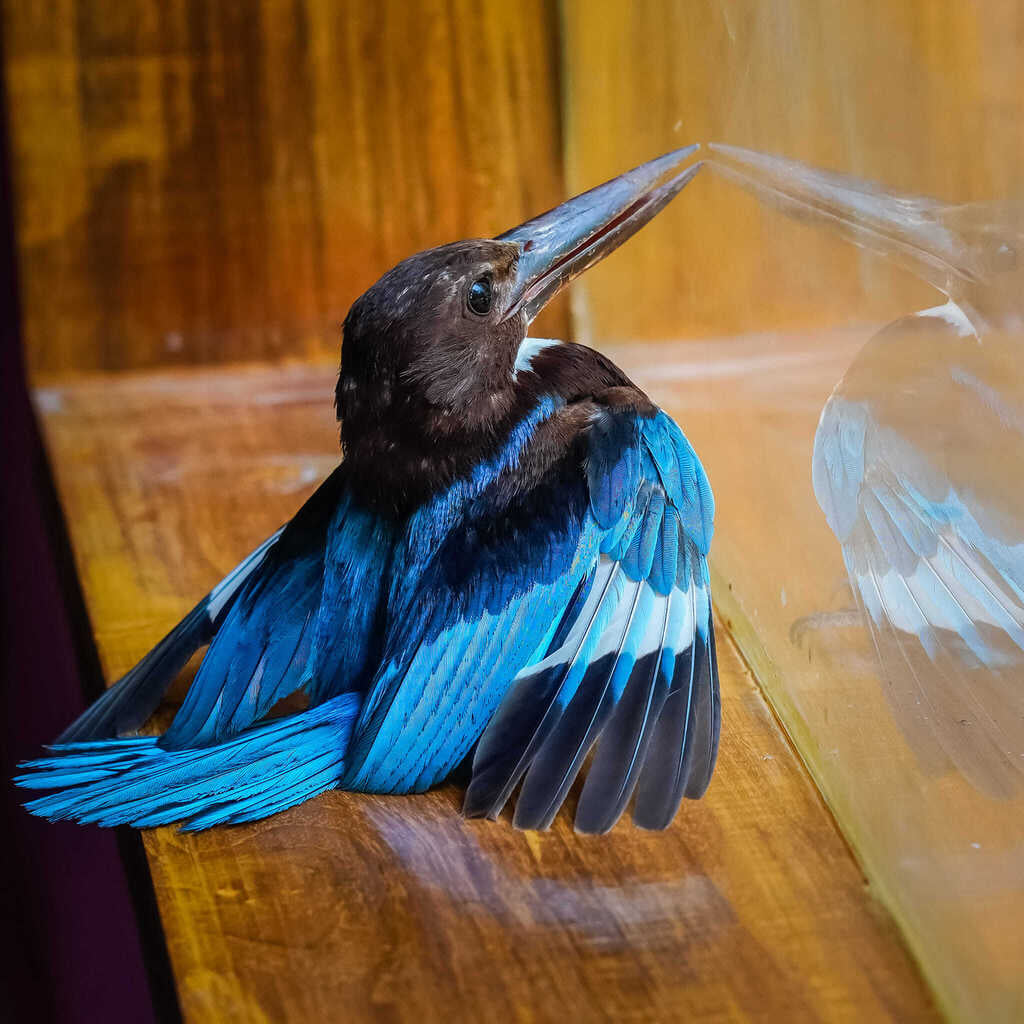
Preventing bird collisions is not written into any law, guideline or mandate in India. Not everyone cares about how many birds are dying because of their design. Even fewer architects will lend their ears to the gravity of the issue, for preventing collisions does not increase revenue.
Saving the lives of thousands of birds is still optional in India. We need regulation and standards to reduce collisions. We need these to be reported, both by state and non-state actors. Violations should be reported and penalised. Almost half of the building stock India will need in 2050 is not yet built, so why stain it with the preventable death of bird life?
India is home to over 1,300 species of birds and many more travel through the Central Asian Flyway, an equivalent of a highway for migratory birds. What a pity it would be if we let these magnificent birdlife smash their heads against our buildings when it is possible to prevent it.
Bharati Chaturvedi is an avid birder. She is the founder of the environmental non-profit organisation, Chintan India. She tweets at @Bharati09. Views are personal.
(Edited by Insha Jalil Waziri)
And the shenanigans start. The same journo will be gushing at the shiny facades when visiting China, SE Asia or any other foreign land.