





There is no room in Indian strategic culture for a policy of ‘appeasement’, which is unfortunate in the present context. The popular narrative of appeasement as a form of craven diplomacy resorted to by the weak in order to pacify the strong is an unfortunate distortion of reality as well as the concept. The popular imagination of Chamberlain’s short-sighted policy of feeding Hitler’s appetite through concession-making and Nehru’s opening of the door to the post-colonial world for the PRC at the Bandung Conference are still the sum total of what our strategic culture thinks of as ‘appeasement’.
But historical record shows that it has often been used by major and great powers to realign interests with potential adversaries in order to pursue core power and security interests more efficiently. Britain’s appeasement of the US in the 1900s and Stalin’s appeasement of imperial Japan in the 1930s are strong examples in this regard.
There is a reason why the time is ripe for India to examine the methods and rewards of a policy of appeasement. India is contending with systemic economic strain and its military capabilities are mired in structural challenges – from procurement delays to indigenisation and modernisation. It can be argued that India’s relative military power is decreasing vis-à-vis the loose constellation of adversaries that now stands arrayed against it. In the 2010s, Indian military officials spoke confidently of India being able to handle a two-front war against Pakistan and China. The zeitgeist has shifted since, and the list of adversaries has also grown. At the same time, India’s much-anticipated manufacturing take-off failed to occur in the last decade — requiring a macro-policy reboot if India is to attain political stability at home and military preparedness to face the challenges of future warfare.
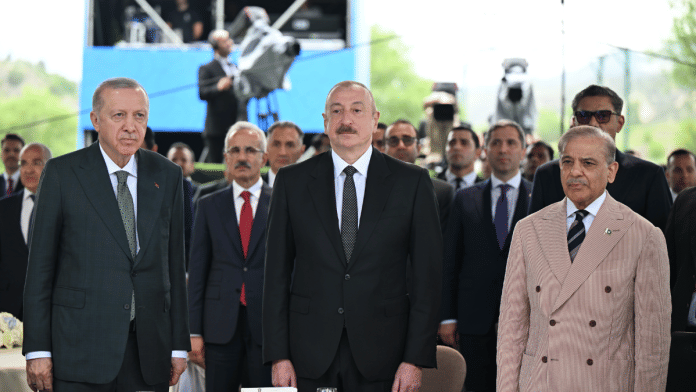
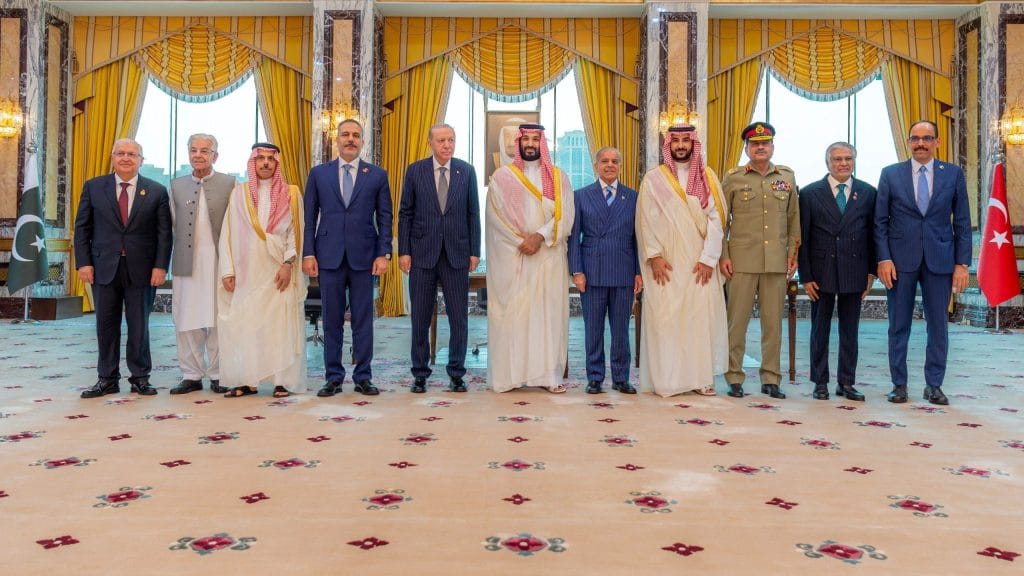
India now faces a more hostile Pakistan that is being equipped by both Turkey and China’s future-ready defence-industrial base, which enables scale through affordability, speed due to quick procurement-deployment cycles and lethality through the setting up of complex networked kill-chains. To its west, India is also witnessing a growing list of quasi-adversaries such as Azerbaijan and Turkey. The recent Mecca Joint Defence Agreement signals that India may have to brace for a possible downturn in ties with Saudi Arabia. Most crucially, the future of India-Bangladesh ties remains greatly uncertain. The countries’ still-souring relations are set to deepen both Chinese and Pakistani influence in Dhaka, as both Delhi and Dhaka seek to exercise leverages in the absence of any new shared understanding of future progress and stabilisation.
A strategic culture that puts a premium on assertion and displays of strength has moved India toward leverage-cards in managing ties with Bangladesh as well as Turkey and Azerbaijan. India’s military support to Armenia, recent spurt of engagement with Cyprus and tolerance of Sheikh Hasina’s speeches from Delhi are all examples of this. However, a careful examination of the record also suggests that such an approach may have been more counterproductive than beneficial to Indian interests. This may be because the leverages themselves are not strong enough to effect the desired changes in the other’s strategic orientation.
Given that we now face strong domestic economic challenges, a growing list of quasi-adversaries and under-delivering leverage-cards, there is cause for broadening our strategic lens and adding more arrows in the quiver.
Appeasement has a bad name
Appeasement has acquired an unenviable reputation since 1939. It is crucial to understand the origins as well as sustainment of this ever since.
The reputation problem lies in the simple fact that the western strategic elite consensus, popularised through mass media and textbooks, sought a simple story that explained the road to the Second World War. It was useful to blame one person, Neville Chamberlain, and his policy of appeasement for emboldening Hitler. On the other side of the Atlantic, President Roosevelt himself was hopeful that the agreement reached at Munich had successfully satisfied Hitler’s grievances and prevented an outbreak of war. This formed the association between weak-willed pragmatic concessions and encouragement of further grievance, territorial greed and expansion. Interestingly, the Anglo-American strategic consensus found great resonance even in a newly post-colonial India.
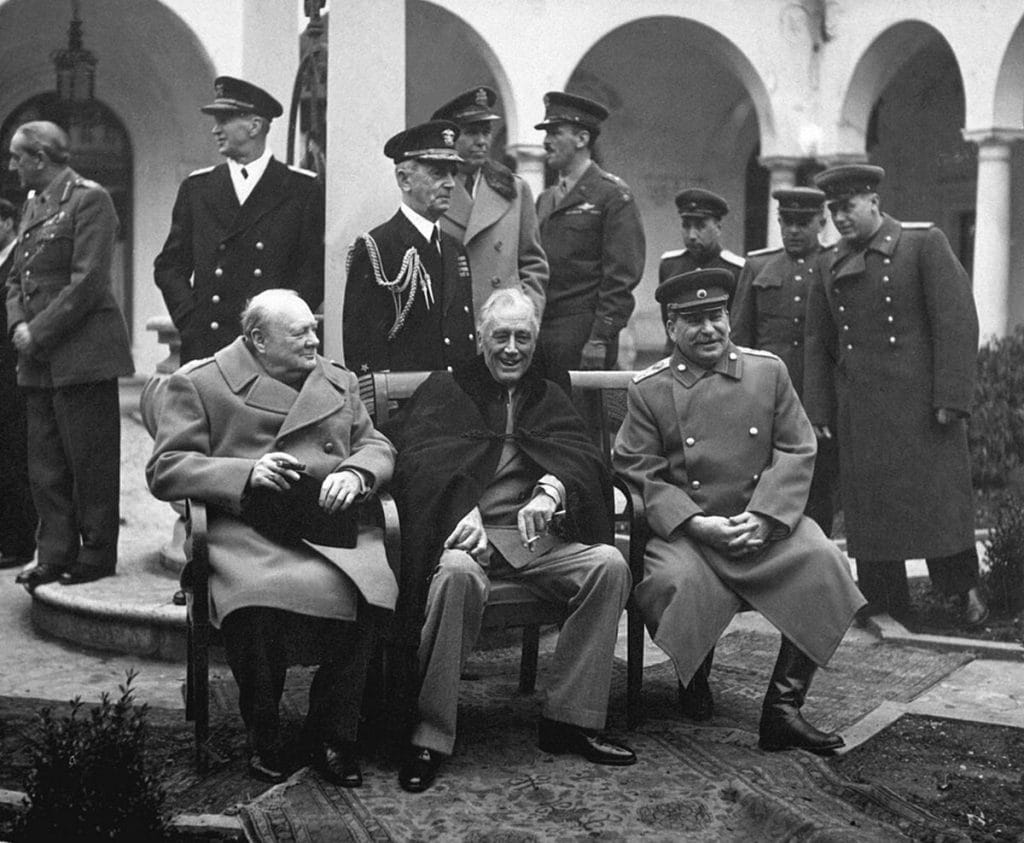
Churchill’s own heroic account of the war — accepted by mainstream historians — necessitated a negative contrast to his own projected image of a maverick and defiant war leader who possessed gumption, moral clarity and courage. More conveniently forgotten is the record of Churchill himself appeasing Stalin’s appetite for territory, justifiably perhaps, in Eastern Europe from at least 1943 and in line with realpolitik. Roosevelt was no less keen in this initiative.
As the Second World War ended, the US swung to the other extreme of power projection and pursued a strategy of absolute security and forward basing that required a moral resolve against negotiating ‘spheres of influence’ with the Soviet Union. In other words, a Pax Americana based on a preponderance of power left little room for appeasement as a form of realpolitik. It was only after the setback in Vietnam that the US began appreciating the limits to its power, thereby opening the door toward appeasement of communist China.
With a return to triumphalism after winning the Cold War, the US’ wars in the Middle East themselves relied significantly on the ‘Munich’ analogy in order to override and silence sceptics and peace activists. This applies as much to Saddam’s Iraq and Gaddafi’s Libya as it does to Trump and Netanyahu’s war on Iran.
Appeasement and power-maximisation
But there are scores of examples, other than Chamberlain and Hitler, where appeasement has not led to disaster but to success. While the word appeasement has been popularised by its most stark failure, its stories of success are unsung. This is a point that the historian of great powers Paul Kennedy very aptly noted in his 1976 essay “The tradition of appeasement in British foreign policy”. It is another matter that critics of Chamberlain ignore how closely tied his policy of appeasement was to British rearmament itself— but that is a subject for another day.
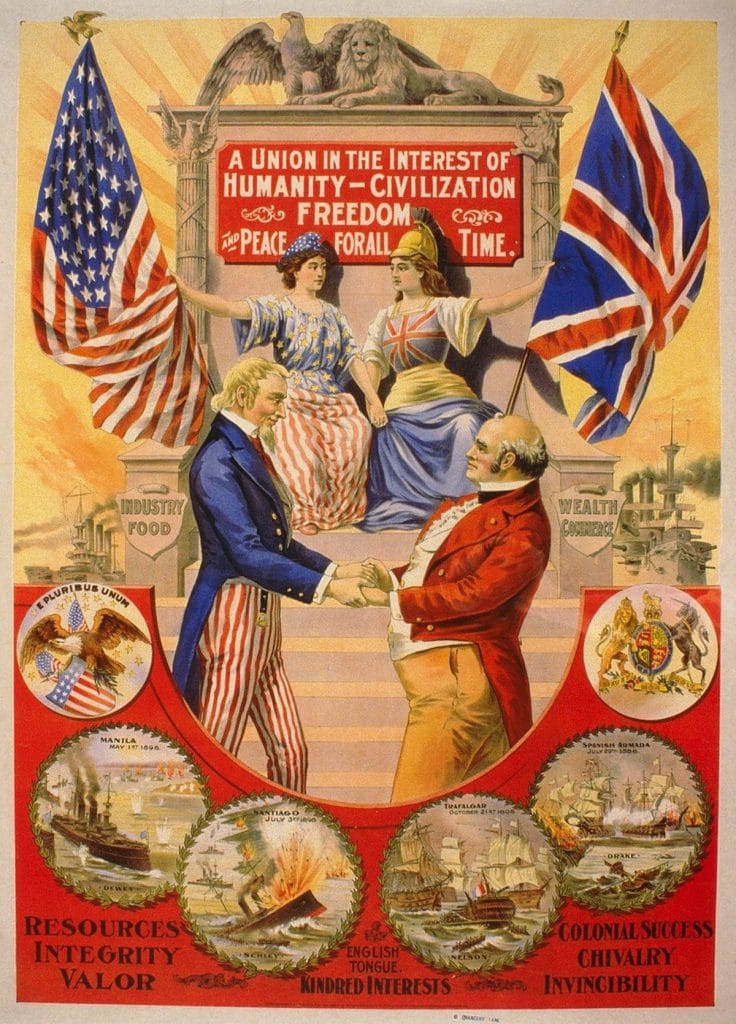
Britain’s deliberate policy of appeasement toward the US throughout the 1890s yielded the great success that is now known as ‘the Great Rapprochement’. This policy entailed the sacrifice of British interests in the Western hemisphere, but achieved in return the fulfilment of its core interest: the prevention of German hegemony in Europe in alliance with the US. Britain’s own imperial expansion and consolidation in the Indian subcontinent after 1857 relied heavily on appeasing various power centres from time to time. This included the princely states through the Royal Proclamation of 1858, and various sub-groups ranging from Afghans and Sikhs to Gurkhas.
The US’ own appeasement of communist China from the early 1970s (such as making concessions on the One China principle and supporting the PRC’s representation at the UN) achieved the required strategic reorientation to arrange overwhelming forces against the Soviet Union to win the Cold War.
No less a practitioner of cold realpolitik than Josef Stalin himself embarked on a policy of appeasement toward Imperial Japan after the latter’s takeover of Manchuria in 1931.
Facing industrial setbacks, a still-nascent defence industry and adversaries on both fronts, Stalin offered and delivered one significant concession after another to Imperial Japan after its entry into Manchuria. These included non-aggression pacts, favourable commercial agreements, acceptance of the puppet state of Manchukuo, the selling of stakes in the Manchurian railway, the closing down of Chinese consulates in the Far East and restraint in response to provocative Japanese attacks on Soviet patrol boats. Stalin did so in order to avert a possible pre-emptive Japanese attack on the Russian Far East before Soviet military power was prepared. He sought to buy time until the five-year plans enabled a stronger deployment of forces in the Far East by the end of the decade.
By decisively crushing Japanese forces in 1939 — after relying on years of appeasement — Stalin ensured that his rear flank was secure for the entire span of the coming war with Nazi Germany. Appeasement is almost always borne of constraints, but its aim is always to maximise power and achieve security interests.
China itself undertook a form of appeasement toward post-Soviet Russia from the late 1990s with the aim of ensuring that Russia never chose to pursue a policy of balancing China’s rise in Eurasia — from Central Asia to the Korean peninsula. Beijing, after all, wisely sought to break the cycle of revenge between the two Eurasian great powers in order to secure its own rise.
Appeasement and its conditions and caveats
I offer these brief examples just to underscore the observation that appeasement is not just a defensible policy but also the most efficient recourse at times, depending on circumstances. This does not mean that it is always guaranteed to succeed. There are notable failures (beyond Munich) as well. The literature on the subject also offers useful caveats. For instance, it is wiser to appease the weak than to appease the strong. One can think here of the potential folly of seeking to appease China.
Furthermore, if pursued when one is too weak, the appeased state may indeed interpret concessions as a sign of weakness — inviting further trouble and provocations. But this simply clarifies that it is a form of strategic policy like any other — such as coercion, alliance-making, deterrence, spheres of influence, war, and mediation. Its application and success depend on circumstances, investments, the nature of the adversary, a sense of timing and so on.
A dramatic failure of one singular policy of deterrence, after all, does not sully the entire concept of deterrence as a form of strategic policy. No less a critic of appeasement than Churchill himself clarified the matter in an address to Parliament in 1950: “Appeasement from weakness and fear is alike futile and fatal. Appeasement from strength is magnanimous and noble and might be the surest and perhaps the only path to world peace.”
When a polity or a strategic culture erases the concept and policy of appeasement as a legitimate option, it inevitably shrinks its own range of options vis-à-vis its strategic challenges.
Indian strategic culture’s wariness of appeasement
There are a myriad of sociological, political and strategic reasons why ‘appeasement’ as a deliberate medium- to long-term strategic policy never held much appeal in the Indian strategic mindscape. In the present context, it evokes an almost negative response given the prevalent perception of India marching toward great power status and finally asserting its weight on the regional and world stage. In such a zeitgeist, appeasement — even when national interest demands it — risks causing cognitive dissonance and negative self-perception.
Historically, a loose association with Colonial Britain’s policy of ‘appeasement’ toward minorities had sullied the concept and idea since the early 20th century. Its extension into the realm of domestic politics (the right-wing charge against secular appeasement) had only reinforced this negative association.
In terms of foreign policy, a certain reading of the road to the 1962 India-China war as resulting from Nehru’s ‘appeasement’ policy towards China was a striking — yet distorted — retelling of the Chamberlain-Hitler morality play. More contemporary historical accounts — as noted earlier — now ironically place as much blame for the war on Nehru’s intransigence towards China on the boundary issue as on his supposed idealism or naivete.
Also Read: Three countries, no common enemy—why the Mecca defence pact is weaker than it looks
Can appeasement work for India?
Post-colonial Indian strategic culture’s insecure fixation with displays of strength and weakness leads to very little political (and intellectual) capital in the hands of a government that might seek to pursue a longer-term policy of appeasement toward potential adversaries. Hence, even as there is a desire to improve relations with Turkey and Bangladesh, efforts toward the same have generally become mired in mutual recriminations as well as alternating tactical measures between conciliation and strong-arming.
Every indication of a more positive momentum borne of pragmatism is soon followed by a more dramatic setback caused by fresh grievance. As India’s strategic landscape becomes increasingly and unprecedentedly challenging, ideas such as relying on improved relations with Cyprus to signal leverage to Turkey and leveraging remnants of the Awami League to extract better behaviour from Dhaka are likely to be counterproductive.
India shares an enclosed region with two nuclear-armed powers that each claim an Indian state for itself. The China-Pakistan strategic partnership has gone from strength to strength, while the India-US strategic partnership is being reconsidered. In this landscape, India is obliged to ensure that its growing list of additional potential adversaries — from Turkey to Bangladesh to Saudi Arabia — is reduced. Relying on brief sprouts of engagement followed by coercive signalling may not deliver the same. This is why India needs to give more thought and consideration to the objective of affecting strategic orientations through policies of appeasement while building economic and military power in the background.
Sidharth Raimedhi is a Fellow at the Council for Strategic and Defense Research (CSDR), a New Delhi-based think tank. He tweets @SRaimedhi. Views are personal.
(Edited by Asavari Singh)
Appeasement is a word I am not fond of, so will avoid it in my submission. 2. Come to terms with the world. A large part of it is Christian. Another huge swathe is Muslim. Apart from the professional engagement diplomacy is expected to carry on with foreign countries, governments, their citizens and elites, start with the domestic agenda. Majoritarianism at home inevitably casts a shadow on relationships abroad. Bangladesh the country I think of a lot nowadays. FCRA. Rhymes with USCIRF. 3. Then the terms of engagement with the rest of the world. Hide your strengths, bide your time. At the moment we seem to be doing the exact opposite. India needs to get a better handle on the rest of the world, moving out wards from South Asia.