








If just two months after the invocation of ‘Pakistan se azaadi’, I’m back to writing about the same country, I owe you an explanation. Here are my two points.
The first, this week, it’s only partly about Pakistan. Soon enough we switch to what’s more important and central to India’s national interest. This will involve some navel-gazing but productively so, and even a rap on our own knuckles if such a thing were possible. Or maybe you find this too rude and would prefer a wake-up call. You choose.
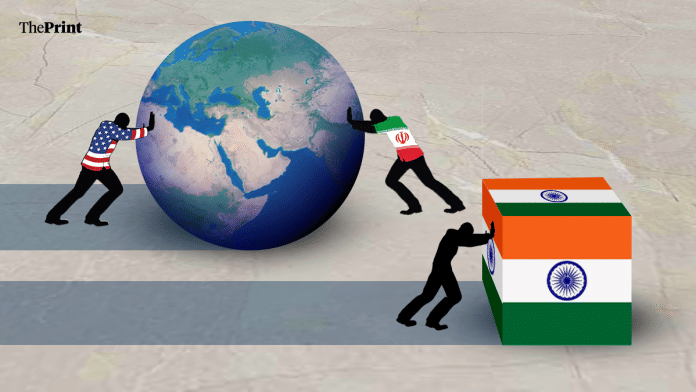
The second is just the rona-dhona (poor translation, but holy outrage) over the fact that Pakistan is now somewhere on the table with the US and Iran while we aren’t, and why so? Have we slipped into irrelevance? Lost our moral stature?
The Opposition will attack the government, because it must. Touchingly, even the government has struggled for the right answers. That we can’t be dalals (brokers) like Pakistan isn’t one.
It’s easy to understand why the government can’t speak the hard truth: that India isn’t a neutral party here. It’s on the Arab-Israel-US side (I’ve listed them alphabetically). Of course India has significant shared interests with Iran and won’t be ranged against it. Nor can it show solidarity with it. It’s a tricky act. When this war ends—as all wars do—India’s interests will lie with both, the winner and the loser.
That’s also the reason the Chinese never offered to mediate, or even stir the UN Security Council. They’re smart. They’re watching their rivals weaken themselves. They aren’t burdened by nostalgia or sentimentality. They’re building their strength. And what’s called the Global South—though erroneously as I said in this National Interest column on 26 August 2023—they’ve already sewn up with BRI (Belt and Road Initiative) projects in at least 32 countries, all financed with high-interest debt.
The Chinese are calm. They won’t even act in envy even if India was invited to mediate or at least carry messages which is all Pakistan is doing. They’ll be amused because they know geopolitics isn’t emotional or minor tactics. It’s a patient, long-duration business. You grow dominance over time and never get distracted.
Also Read: The Vishwaguru delusion, mine vs yours, is ruining our view of the world
We dedicate a few paragraphs to Pakistan now. From day one, Pakistan scored over India on one count: strategic clarity. Although history tells us that it’s been self-destructive for them. But they don’t see it that way. Or they wouldn’t have dedicated their entire strategic capital to one purpose: weakening if not destroying India.
Early in the 1950s, they joined the US-led military alliances to ‘fight’ communism. A gullible Nehru took it so seriously he even took Field Marshal Ayub into confidence, explained to him the common threat from “Communist China” from across the Himalayas and hoped Pakistan would make common cause with India. Not long after the Pakistanis were sitting in Peking (as it was then spelt), finalising their “border settlement”, most of it across parts of Kashmir they had occupied.
The upshot: By early 1960s the Pakistanis had aligned with both the US and China with the singular objective of taking Kashmir militarily. It led them into their 1965 war of choice. They lost. Their country went into disaffection. Ultimately, Ayub lost his job and Zulfikar Ali Bhutto an election. The ‘wrong’ side (Awami League) won a majority and the results of Pakistan’s first real election were scrapped.
Once again, the Pakistanis played a ‘masterstroke’ further to their military alliance with America and their special friendship with China. They leveraged both now by pulling off that incredible secret diplomacy, taking Henry Kissinger to China in July 1971. It made a global sensation, shook India and obviously the Pakistani leaders, General Yahya Khan and Bhutto, were feeling on top of the world. It’s just that in five months from this act of ‘brilliance’ they had lost half their country.
In fact East Pakistan, if anything, had a higher population than the West then. I can explain this better with an aside. In a tongue-in-cheek letter to the editor of a Pakistani newspaper, the late Mani Lal Tripathi, our consul-general in Karachi, once suggested that since the larger population had already rejected the idea of Pakistan, what was left should change its name: “may we suggest Sindhudesh instead?” He was responding to an op-ed in that paper demanding India stop calling itself India as “that entity ended with Partition” and should only call itself Bharat.
In 1979 Pakistan was back to the same ‘brilliance’ in joining the Americans against the Soviets in Afghanistan. Much benefit came to it, but along with it came millions of refugees and permanent jihad culture. It was the same jihadis nurtured in Pakistan, or in the so-called Af-Pak, that later took down the twin towers. But Pakistan again became a ‘stalwart ally’ of the Americans in 2001, receiving about $22 billion in military and economic aid (or geostrategic rent) in the following decade until Osama bin Laden was found in Abbottabad and the spigot closed.
What was it left with? An incurable jihadi culture threatening its own state, deep and violent sectarian divides, human bomber trend—ask the Shias whose mosques are the favoured targets—and now what their own ministers describe as a full-fledged war (khulli jang) with Afghanistan, against their strategic offspring, the Taliban.
All four moves that made global headlines over these 70 years (beginning 1954), have left Pakistan weaker, poorer, with declining internal cohesion, its most popular leader left to rot in jail, and a caricature of a field marshal strutting about with his baton like it was the 19th Century. If they think they’re making yet another such brilliant move, good luck to them. Pakistan is a great vindication of Henry Kissinger’s most quoted line: It may be dangerous to be America’s enemy, but to be America’s friend is fatal.
We in India just have to raise the fences and strengthen them, and build more deterrence. That’s the only guarantee of peace in the Subcontinent.
It will also be good for Pakistan because only conventional deterrence will prevent them from harming themselves. The nutgraf of this expanded argument is, Pakistan’s ‘brilliance’ isn’t strategic. It’s tactical, short-term and they neither know what to do the day after, nor when somebody calls their bluff. What’s tactical can’t become strategic in the absence of national heft.
Also Read: Trump brings the Age of Humiliation for friends. Modi needs stoicism abroad, humility at home
Now we turn to navel-gazing and delivering that rap on our own knuckles. All sides swear by strategic autonomy. But geopolitics isn’t a game for the faint-hearted, nor for those with critical dependencies on all key competitors in the world.
This isn’t a recent thing. It’s always been so, and it has blighted our strategic autonomy. From food to armaments, capital to technology and employment to fuel, India has never been fully self-reliant. Nor is it likely to be so for a long time, unless we look inwards and fix what condemns us to being such an also-ran. Moral authority, soft power, is for losers.
I can list five critical gaps the ongoing war has exposed for us. The first is energy, and the next two flow from it: fertilisers and inflation. Military hardware and technology is the fourth and it will get more challenging with such a humongous demand in a world at war. The fifth is jobs. With almost a crore Indians employed in the GCC nations accounting for about 40 percent of our remittances, and millions in the US, does India have the strategic autonomy to say what’s just in this war and what isn’t?
A nation has to raise itself and earn strategic autonomy as the Chinese have done. This failure cuts across the tenures of various parties. If India sees no choice other than to follow the big-power (not UN) sanctions on buying oil from Iran, Venezuela and Russia, and sometimes from all of them, it underlines the cruel fact of our fragilities. If we can forget self-congratulation for a moment each morning and reflect on this, it will be the rap on the knuckles we need. Only honesty, acceptance of truth, realism, diligence over another two decades can take us to that status. There’s no need to get ahead of ourselves.
Also Read: Pakistan is fighting a two-front war. I saw it coming 15 yrs ago