




New Delhi: It was the afternoon on 23 June, 2025, when one Baburam Murmu approached a puppy sleeping peacefully by the road at Patgaon in Assam’s Kokrajhar district, and nearly severed the little animal’s front paw with a knife. By nightfall, the puppy had bled to death.
On 12 June this year, a magistrate convicted Murmu of animal cruelty and killing an animal, but ordered his release under the Probation of Offenders Act 1958, instead of sending him to prison. The said Act lets courts release first-time or minor offenders on probation of good conduct or after due admonition, instead of punishing them.
Murmu, who was never arrested, remains a free man. Last year’s wanton cruelty to an unnamed puppy is not even a memory.
This case, and its outcome, encapsulates the story of India’s animal protection law. Even when cruelty to animals is manifest and gruesome, and the police and courts willing, the law of the land does not allow for punishment that is remotely proportionate to the harm caused.
The Assam case is no legal oddity; it sits at the intersection of a legal system in flux. The enduring weakness of the Prevention of Cruelty to Animals Act (PCA Act) 1960, coupled with the Supreme Court’s volatile stray dog proceedings and sustained public outrage have combined to mount an unprecedented challenge to India’s animal welfare landscape—or the lack of it.
The Assam case
Despite its final outcome being questioned by many, the Assam case does offer a glimmer of hope. First, it must be kept in mind that animal cruelty prosecutions are rare, and convictions even more so. In Patgaon, Senior Inspector (SI) Amirul Hussain of the Assam Police registered a First Information report, conducted an investigation, and filed a chargesheet within a week of the crime.
Speaking to ThePrint, SI Hussain, the investigating officer in the case, said that cruelty towards animals is illegal and unacceptable as “all living beings are equal”. He recalls being emotionally disturbed on viewing a video of the injured, subsequently deceased, puppy on social media.
Crediting his senior officers, especially Indian Police Service officer Pushparaj Singh, for advising him to register a criminal case in the matter, Hussain says the community (Patgaon) cares deeply for its animals. He says that despite the release on probation, “a conviction is a conviction”—allowing the abuser a chance to change while serving as a deterrent for any future criminals.
That isn’t all. Six witnesses helped the prosecution prove the guilt beyond reasonable doubt. Sub-Divisional Judicial Magistrate (SDJM) Begum Nazira Ahmed delivered a verdict within a year of the chargesheet being filed. On sentencing, the judge said that “considering his conduct, nature of the offence and the fact that he has a minor daughter who is fully dependent on him, I am of the opinion that this is a fit case to grant the benefit of the Probation of Offender’s Act to the accused person”. The guilty man was not incarcerated, but the violent killing was acknowledged and recorded.
Also Read: ‘Thrashed, bagged & dumped’: Mumbai society dog’s suspected killing sparks outrage, police probe
Antiquated statute, stalled amendment
The PCA Act was a groundbreaking statute in 1960, the year it was enacted in. India’s first law for animal welfare, it was focused on preventing unnecessary pain and suffering to animals.
Section 11 of the PCA Act criminalises a range of abusive conduct, including beating, kicking, overloading, torturing, poisoning, and treating animals in a manner that causes unnecessary pain or suffering. It also created a statutory framework for the Animal Welfare Board of India.
The issue is that the core punishment structure of the statute remains largely unchanged 60 years later. The astonishingly weak penalties are a maximum fine of Rs 50 for a first offence; for certain repeat offences within three years, the fine ranges from Rs 25 to Rs 100, with the possibility of imprisonment up to three months.
These figures have not been revised since the Act came into force. Taken together with inconsistent enforcement and uncertain sentencing, the principal anti-cruelty statute is effectively rendered meaningless.
There has been a sustained public demand for stricter anti-cruelty measures, with thousands attending recent rallies such as ‘India Unites for Animal Rights’. Animal welfarists have rallied around the slogan “No More 50”, using the phrase to illustrate the absurdity of responding to violence against animals with a punishment that is barely punitive at all.
Ambika Shukla, animal rights activist and trustee at People for Animals, is at the forefront of this movement. In a conversation with ThePrint, she says, “In 1960, in a new country struggling with a host of issues, our forefathers were prescient enough on the issue of animal cruelty to prioritise a comprehensive law to tackle it. The failure of successive governments to update it since then is deliberate and unforgivable.”
Anjali Gopalan, member of the Animal Welfare Board of India (AWBI) and Nobel Peace Prize nominee, agrees about the lack of political will. “The punishment for cruelty is Rs 50… which world are we living in?” she says.
Over the years, requests have poured in from parliamentarians, actors, sportspersons, animal activists, and other members of the public, all seeking an overhaul and strengthening of the PCA Act.
In November 2022, the Ministry of Fisheries, Animal Husbandry and Dairying circulated a draft Prevention of Cruelty to Animals (Amendment) Bill 2022 for public comment. The draft proposed 61 amendments—defining ‘gruesome cruelty’, bringing bestiality as a serious offence, enhancing penalties for cruelty, and recognising duties linked to the ‘five freedoms’ of animals.
In response to a parliamentary question answered on 3 February 2026, the ministry confirmed that the proposed bill remains “under examination” and has still not been tabled in Parliament.
New law stronger, but incomplete
India’s new criminal law, the Bharatiya Nyaya Sanhita (BNS), improves at least one part of the picture. Section 325 of BNS criminalises mischief by killing, poisoning, maiming or rendering useless any animal, and provides punishment of up to five years in jail, or a fine, or both.
Importantly, the provision is broader than the old Indian Penal Code framework because it is not tied to the ‘market value’ of the animal, and can thus apply to stray animals such as cows, dogs, and cats.
Gopalan agrees that Section 325 is a marked improvement, but stresses upon the need to strengthen the PCA Act alongside it. “I’m not saying nothing works, but there’s a problem if you don’t change the archaic PCA because so much harks back to this law.” She highlights the fact that the Supreme Court itself has spoken of the need for a PCA Act amendment on multiple occasions.
Advocate Divyam Khera points out that although the BNS offers stricter punishment for killing or injuring an animal as compared to the PCA Act, the law no longer includes any provision for prosecuting bestiality or sexual assault of an animal.
Bestiality is not expressly named as a standalone offence in the Bharatiya Nyaya Sanhita (BNS), which replaced the Indian Penal Code (IPC) in July 2024, creating a significant legal vacuum. Under the IPC, Section 377 covered “carnal intercourse against the order of nature” with a man, woman or animal, and that provision was historically used to prosecute bestiality cases.
“Raping an animal has effectively been decriminalised”, he says while speaking of numerous “disgusting videos”, circulating on social media, of cows, dogs and other animals being sexually abused. In Khera’s experience, the police too is at a loss as to which sections now apply to this crime.
Recalling his experience of reporting such a crime recently, Khera says “the first question the police asked me is under what law do we register the FIR?” He adds, “We are forced to circumvent around the act and use complementary laws since there is no direct law covering the actual criminal act”.
The judicial norm
The Supreme Court has long upheld Article 51A(g) of the Indian Constitution which mandates compassion for living creatures as a fundamental duty of every citizen.
In Animal Welfare Board of India vs A. Nagaraja (2014), the Supreme Court recognised the five freedoms for animals—freedom from hunger, thirst and malnutrition, freedom from fear and distress, freedom from physical and thermal discomfort, freedom from pain, injury and disease, and freedom to express normal patterns of behaviour.
The court held that the PCA Act confers statutory rights on animals, but sardonically noted that the “penalty for violation of those rights are insignificant, since laws are made by humans”. This was one of many cases where the court has urged the government to strengthen the PCA Act.
The two-judge bench of Justices K.S. Radhakrishnan and Pinaki Chandra Ghose said, “Court has also a duty under the doctrine of parens patriae to take care of the rights of animals, since they are unable to take care of themselves as against human beings.” Parens patriae is Latin for ‘parent of the country’, and refers to the inherent responsibility of the court to act as a guardian for those who cannot speak for themselves.
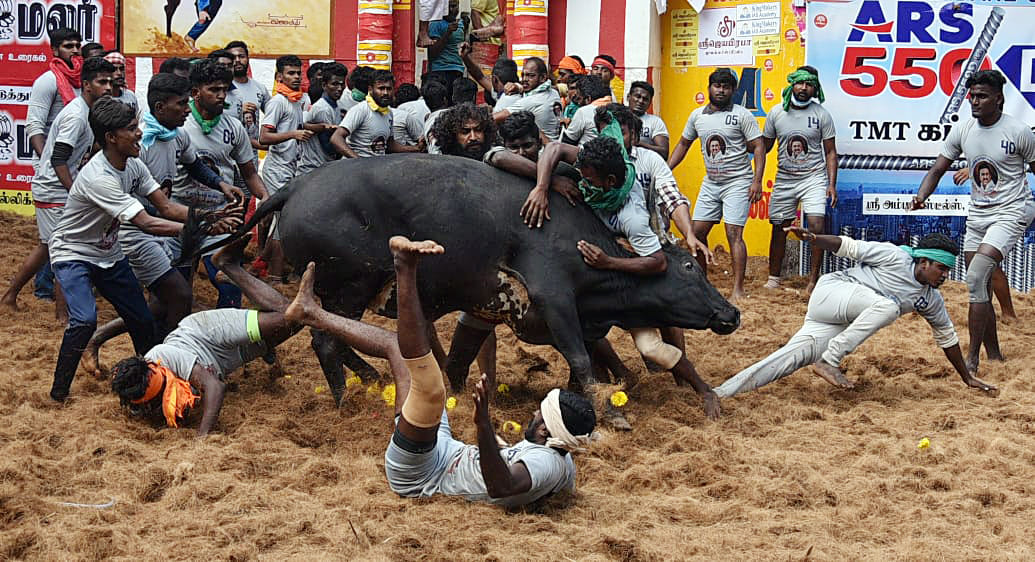
In the 2023 Jallikattu review, the Supreme Court cautioned that it was not within its powers to extend Article 21 to animals as direct bearers of fundamental rights, even while continuing to recognise the legal importance of minimising pain and suffering.
Most recently, in the June 2026 case of the Kerala elephant Raman, the apex court said “We cannot be a mute spectator, more so in matters pertaining to voiceless animals, whose well-being is also of paramount importance”.

Also Read: Pune donkey incident is another reminder Indians hand out medieval treatment to animals
The aberration
The Supreme Court’s suo motu intervention in the matter of street dogs marks a departure from the apex court’s animal welfare precedents, and intensified the debate surrounding street dog management.
The two-judge bench’s initial order of August 2025 directed the permanent relocation of all street dogs in Delhi. Following nationwide protests, this order was modified by a three-judge bench the same month, calling it “too harsh”. A third order, in November 2025, ordered the permanent relocation of dogs from ‘institutional areas’.
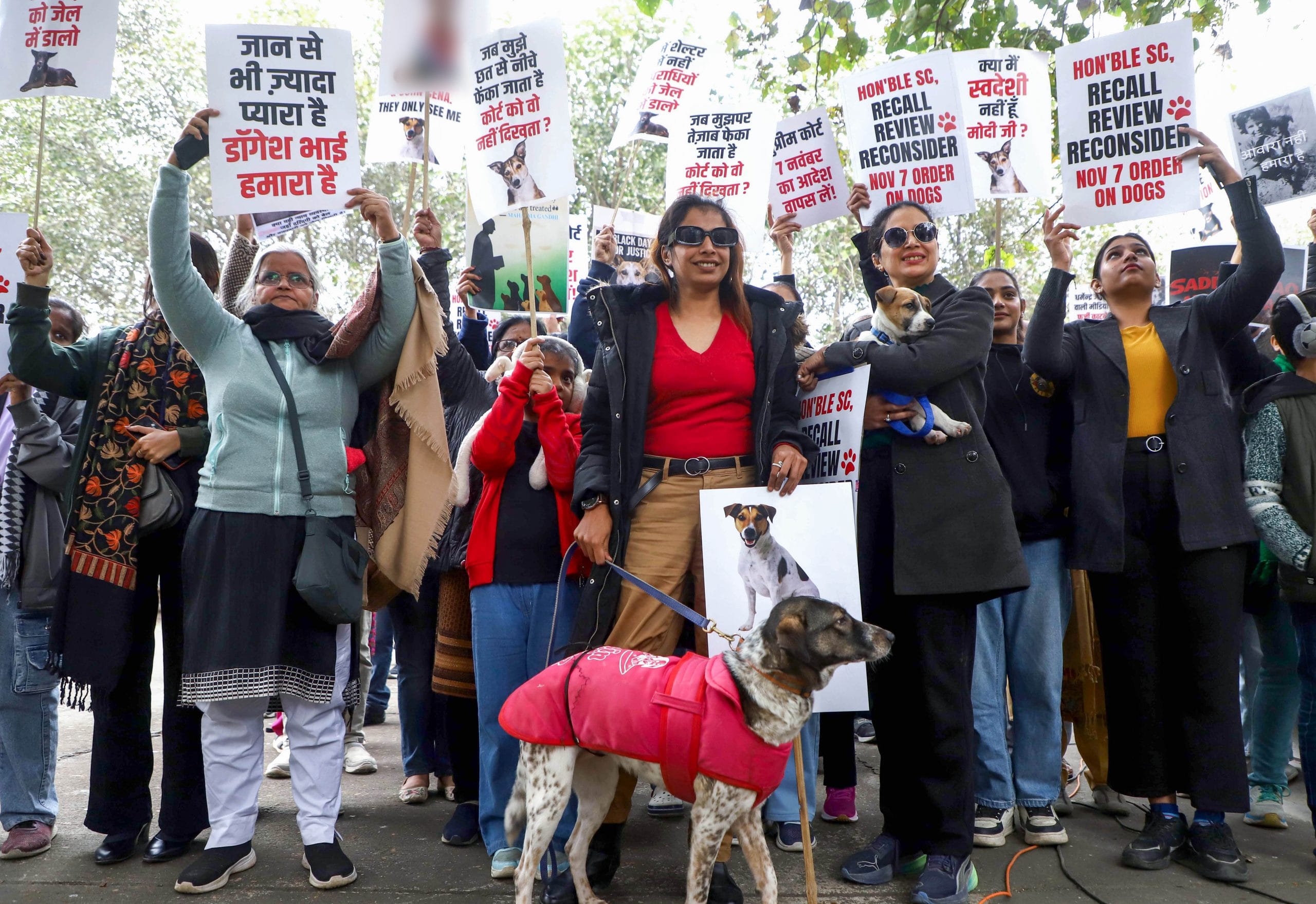
This order too invited a backlash, highlighting infrastructure and budget constraints among the larger issues of animal cruelty and the ineffectiveness of relocation. Subsequently, the court heard extensive arguments, and reserved its order in January 2026. In May 2026, the court refused to modify its November order.
Gopalan calls this order “quite unbelievable”, and says that the court has gone against its own precedent. Highlighting the impracticality, lack of resources, and absence of expert opinions, she says that “There was absolutely no discussion with those who would have been able to provide very good inputs. In this country, people have been taking care of animals on their own for many years, they have dedicated their life to it. You can learn so much from their experiences.”
Shukla agrees. Pointing to the time dedicated to deliberations in previous animal welfare cases, she says that “in this case, we have seen the Supreme Court flip-flop within the span of a few months”. She also questions the extensive reliance on media reports in the court order, highlighting that the court cited a viral meme article by the name of ‘Dogesh Bhai ka Aatank’ in a footnote of the judgment. “No judiciary relies solely on media reports without corroborating evidence,” Shukla says.
The suo motu proceedings were initiated by a Times of India report. Interestingly, Chief Justice Surya Kant, in the Sabarimala reference proceedings, questioned the practice of the apex court admitting cases on the basis of news reports.
The Animal Birth Control (ABC) Rules 2023 are the current national framework for the humane management of street dog population, upheld by both Parliament and the Supreme Court. The ABC Rules follow the international standard for stray animal management and are built around sterilisation, vaccination and the release of dogs back to their original area. These rules mandate and specify ‘humane methods’ for the capture of any dog, and also forbid arbitrary relocation.
Union Minister of State in the Ministry of Fisheries, Animal Husbandry and Dairying, Prof. S.P. Singh Baghel, in a written reply in Lok Sabha on 22 July 2025, reported the total suspected human rabies deaths to be 54 in the year 2024—down from 20,000 in the year 2007. Experts attribute this remarkable decline as proof of the ABC Rules effectiveness.
“Where is the public health crisis that the Supreme Court would have to jump in and take such extreme action?” asks Shukla.
Violence begets violence
The charged and often heated conversations in the wake of the suo motu proceedings have human consequences too. There have been multiple reports of attacks upon feeders and caregivers, with the court order often misunderstood or misconstrued as a defence.
Gopalan rues the endemic cycle of violence saying that “As a culture, as a people… we have stopped caring… whether it is about animals or women or children, look how we are treating them all.”
Media reporting through 2025 and 2026 has documented repeated allegations by feeders, rescuers and welfare activists that they were being threatened, assaulted or harassed, often by residents invoking the stray dog litigation. When such instances were brought to the notice of the bench hearing the matter in January 2026, they advised afflicted parties to file FIRs and avail of criminal remedies.
Shukla also criticises alarmist reporting by sections of the media for adding to this volatile environment. “Snarling, fanged, monstrous stock pictures are rolled out again and again until the public is convinced that dogs have no other job in the world but are waiting to bite them and their children.”
“Every day there are dogs being beheaded, murdered, hung, poisoned, relocated, drowned, beaten,” she says, adding that the violence extends to the people “who have spent years bringing down those rabies figures from 20,000 to 54”.
“All the people who have been on the right side, who have been working thanklessly, selflessly, without asking for any returns or recognition… Those are the people who are being blamed, beaten, abused, and vilified with no protection,” she adds.
A substantial body of criminology and forensic psychiatry doesn’t treat cruelty to animals as an isolated offence, but as a key marker of broader violent or antisocial tendencies. Studies from as early as 1985 link animal abuse with later aggression towards people, including domestic violence, child maltreatment, elder abuse and other violent crimes. Animal cruelty has also been linked to traits such as callousness, low empathy and psychopathy.
Law enforcement agencies take this link seriously – The Federal Bureau of Investigation (FBI) has considered past animal abuse when profiling serial killers since the mid-1980s. In 2016, it began tracking it as a distinct crime category in its National Incident-Based Reporting System as a ‘crime against society’. Robert Ressler, who developed the FBI’s serial killer profiling methodology, is widely quoted as saying that murderers often begin by killing and torturing animals.
In India, the National Crime Records Bureau released its first separate animal-cruelty data in 2026. Advocate Khera appreciates this as a “very welcome move”. Shukla concurs and calls it “positive change”, but cautions against “gross undercounting”. The scale of cruelty has “exploded” she says, the metaphorical “judicial finger in the dam has been removed”.
India has, for the first time in its history, a national number for cruelty—9,039 cases in 2024. What it does not have is a law capable of doing anything meaningful with it.
(Edited by Nardeep Singh Dahiya)
Also Read: Stray dogs have the right to live. SC order can trigger a wave of animal cruelty
Our undeveloped corrupt socialist country is also worth a meagre ₹50.