


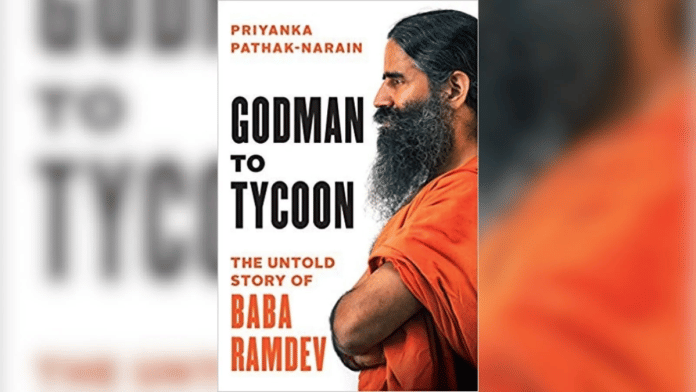
New Delhi: The Patna High Court has quashed criminal defamation proceedings against Delhi-based publisher Juggernaut Books over the publication of Godman to Tycoon: The Untold Story of Swami Ramdev, written by Priyanka Pathak-Narain. The court held that a person cannot initiate defamation proceedings merely because they are a follower or disciple of the individual allegedly defamed.
Justice Alok Kumar Sinha observed that allegations concerning an individual’s life, background or activities may give rise to personal defamation grievances but do not automatically amount to an insult to religion or religious beliefs.
He added that a general allegation that Hinduism or the religious sentiments of its followers had been hurt, without identifying the specific religious belief allegedly insulted or establishing deliberate intent, did not satisfy the legal requirements for an offence.
Setting aside the cognizance orders passed by the Additional Chief Judicial Magistrate, Hajipur, Bihar, Justice Sinha held that the prosecution suffered from “fundamental legal infirmities” and that allowing it to continue would amount to an abuse of the judicial process.
What is the case?
The dispute originated from a complaint filed on 6 September 2017, by Hajipur resident Amit Kumar, who described himself as a devoted follower of yoga guru Baba Ramdev.
Kumar alleged that passages in the book defamed Ramdev by indirectly holding him responsible for the deaths of his guru Shankaranand, as well as Swami Yogananda and Rajiv Dixit. He also objected to the book’s description of Ramdev as an “illiterate son of a poor farmer” and references to his wearing of gerua vastra (saffron robes), claiming these remarks hurt the religious sentiments of the Hindu community.
Based on statements by the complainant and two witnesses, the Magistrate took cognizance in October 2017 under IPC provisions relating to defamation, printing defamatory material and deliberate and malicious acts intended to outrage religious feelings.
Juggernaut Books subsequently approached the High Court seeking to quash the proceedings.
Invoking its inherent powers under CrPC Section 482, the High Court said it could intervene to prevent abuse of the judicial process and secure the ends of justice. Relying on the Supreme Court’s landmark 1992 judgment in State of Haryana v. Bhajan Lal, Justice Sinha observed that proceedings could be quashed where a complaint failed to satisfy the essential legal requirements of the alleged offences.
Defamation law and disciple’s legal standing
The central question before the court was whether a follower or disciple had the legal standing to initiate criminal defamation proceedings over statements allegedly targeting a spiritual leader.
Under CrPC Section 199(1), a court cannot take cognizance of an offence of defamation except upon a complaint filed by a “person aggrieved”. The bench held that this statutory requirement must be strictly enforced.
It noted that the alleged defamatory statements were directed exclusively at Ramdev and not at the complainant. An individual cannot claim to be an aggrieved person merely because their personal sentiments or reverence for a religious figure have been hurt.
Citing precedents from the Supreme Court and various High Courts, Justice Sinha reiterated that a general body of followers does not constitute a “determinate and identifiable class” under Explanation 2 to IPC Section 499 (defamation).
“The complainant cannot, therefore, step into the position of the person allegedly defamed merely because he is a disciple or a follower of that person. The statutory requirement under Section 199(1) cannot be enlarged on the basis of personal sentiments or association,” the court said.
The court also identified two legal shortcomings in the case alleging hurting of religious feelings. First, the Magistrate had taken cognizance without obtaining prior government sanction, which the court considered a mandatory requirement under the applicable CrPC provision.
Second, the complaint failed to establish the requisite deliberate and malicious intent to outrage the religious feelings of a class of citizens. Referring to the Supreme Court’s judgments in Ramji Lal Modi (1957) and Mahendra Singh Dhoni (2017), the bench held that unintended insults or biographical accounts did not automatically constitute criminal offences.
The court acknowledged that the Magistrate had conducted a preliminary inquiry by examining witnesses. However, it clarified that such procedural steps could not cure fundamental defects, including the complainant’s lack of legal standing and the absence of mandatory government sanction.
(Edited by Chingkheinganbi Mayengbam)
Also Read: Ramdev is trying to manufacture relevance with his pitch to Gen Z