





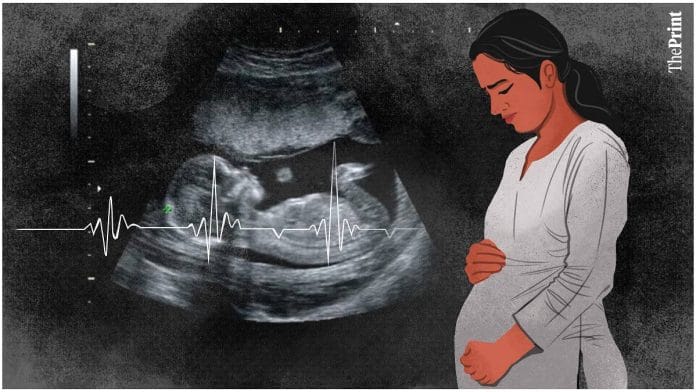


New Delhi: A division bench of the Supreme Court Wednesday dismissed a review petition by the All India Institute of Medical Sciences (AIIMS) against the top court’s 24 April order permitting a minor girl to terminate her 27-week-old pregnancy.
“It is strange that the review petitioner, All India Institute of Medical Sciences, is not inclined to obey the order of the Supreme Court and instead, is assailing the order of this Court dated 24.04.2026 in order to defeat the constitutional rights of the minor daughter of the appellant herein,” the court said Wednesday.
AIIMS is now expected to file a curative petition, which would be heard by a bench of five judges of the top court led by the Chief Justice of India.
In its review petition, AIIMS had submitted clinical evidence of the risks of late-stage abortions to oppose the court’s 24 April order. The hospital had flagged the possibility of the foetus being born prematurely, and also warned that the move would not only violate the law, which prohibits termination of pregnancy after 24 weeks, but would also impact the constitutional rights of an unborn child.
In its petition, AIIMS provided details of a one-year-old suffering from lifelong medical complications following a pre-term delivery last year after a judicial order to terminate a 24-week-old pregnancy.
The one-year-old baby was delivered prematurely following a Delhi High Court-directed termination of pregnancy in a case involving a minor in April last year. The minor girl, a rape survivor, was approximately 24 weeks pregnant when the order was passed.
AIIMS said that since the termination procedure at this stage is akin to a delivery, the child was born alive and ended up with severe complications and comorbidities, each of which is expected to persist for life. Since his birth, the child has continued to be admitted to AIIMS, and due to medical complications, has not been accepted by any NGO for care.
The hospital said the prospects of the child being adopted are “severely diminished, if not negligible”, given the permanence of his condition.
For approximately seven months, he was on mechanical ventilation as he suffered from sustained respiratory failure immediately after birth.
An attempt to wean him off support resulted in severe chronic lung disease caused by extreme prematurity, leaving him unable to breathe independently.
Besides, the child also suffered multiple episodes of sepsis, each a life-threatening systemic infection requiring aggressive medical intervention.
Finally, the child underwent a tracheostomy in December last year to help him breathe. He remains tracheostomised on room air.
Moreover, the child cannot speak, AIIMS stated in its review petition.
The child has been assessed to have Global Developmental Delay, with a current developmental age of only four to five months, and is described as severely neurodevelopmentally compromised.
Apart from medical risks, the review petition also raises legal and constitutional questions over the Supreme Court’s order since it allows termination beyond 27 weeks, which is beyond the limits prescribed under the Medical Termination of Pregnancy Act (MTP) Act as well as previous top court rulings. AIIMS said the order ignores the medical board’s advice against the termination, adding that the medical board is the final decision-making authority under the law and informs every termination order on the judicial side.
Under the law, termination beyond 24 weeks is permitted only in cases where the foetus has abnormalities.
The AIIMS medical board examined the minor girl in the current case on 25 April and recommended a normal delivery, as termination at this stage could lead to long-term disabilities from preterm delivery.
The board’s report said the procedure would not be conventional and could result in the preterm delivery of a viable foetus with a fair chance of survival, requiring a prolonged stay in the NICU with life and organ support.
On the question of an unborn child’s constitutional rights under Article 21, which guarantees the right to life and liberty, AIIMS emphasised the court cannot treat it as subordinate to the minor girl’s reproductive rights.
It added that when two competing fundamental rights are involved, judicial resolution must aim at harmonisation, and that choice must be guided by the larger public good and the interests of the most vulnerable party, which in this case is a viable unborn child.
It argued that the 24 April order also goes against the doctrine of parens patriae under which both the State and the court are duty-bound to protect a viable unborn child.
This is an updated version of the report
(Edited by Sugita Katyal)
Also Read: India saw 67% rise in recorded abortions over last 5 years, Centre tells Parliament